
Global Economic Shifts Due to New Tariffs
Understand how new international tariffs are driving major global economic shifts in 2025. Explore their impact on trade, industries, and markets, and discover what businesses and investors need to know to stay prepared.
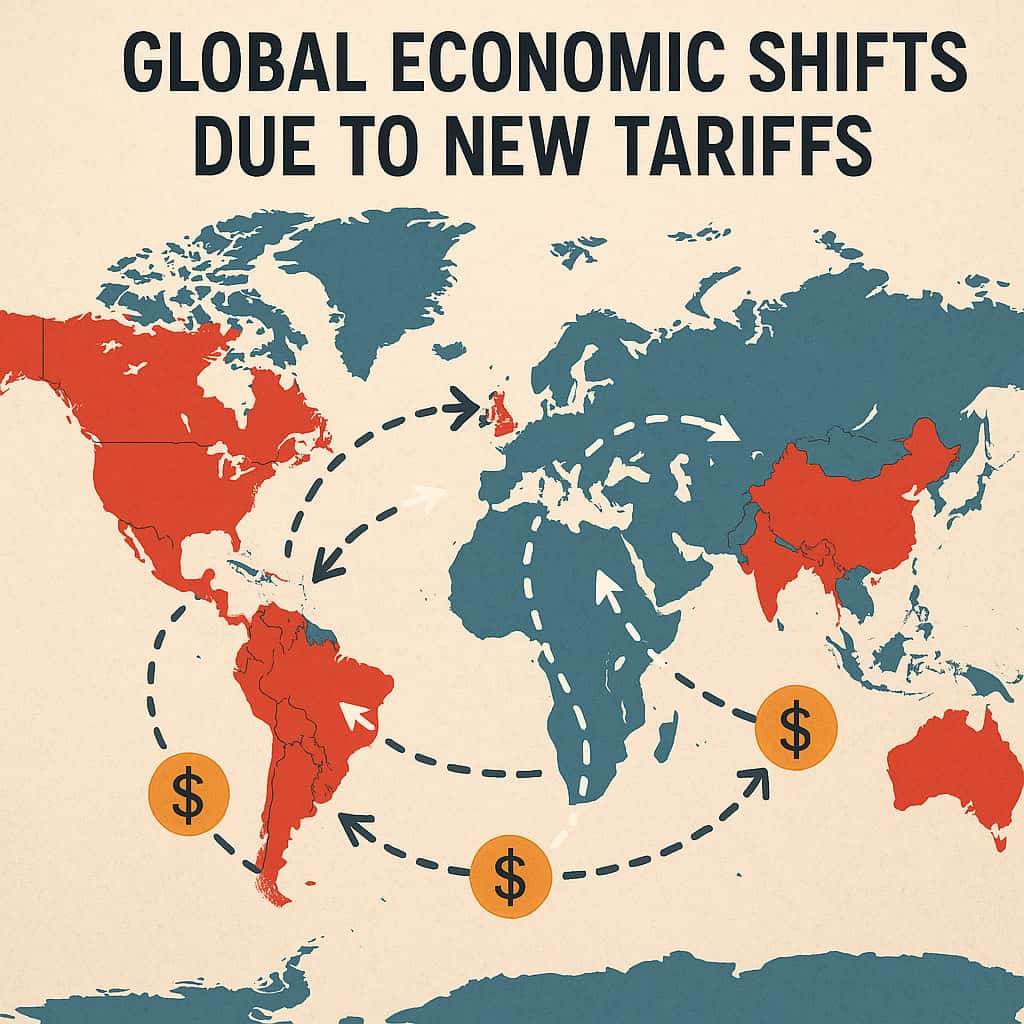
Table of contents
The recent implementation of extensive tariffs by the United States has initiated significant shifts in the global economic landscape, affecting international trade, market stability, and economic growth.
Overview of the New Tariffs
President Donald Trump's administration has introduced tariffs ranging from 10% to 50% on imports from various countries, including a 34% tariff on Chinese goods, 20% on EU imports, and 10% on Australian products.These measures aim to reduce trade deficits and revitalize U.S. manufacturing sectors.
Global Economic Implications
Economists predict that these tariffs will have far-reaching consequences:
- Increased Consumer Prices: U.S. consumer prices are expected to rise by approximately 2.3%, potentially costing households an average of $3,800 annually.
- Slower Economic Growth: The U.S. GDP growth rate could decline by nearly one percentage point, with global GDP also facing reductions.
- Risk of Recession: The International Monetary Fund warns that sustained high tariffs could push multiple economies into recession.
Impact on Key Industries
Several industries are notably affected by the tariffs:
Automotive Sector: Tariffs of 25% on non-U.S. assembled vehicles and parts may increase car prices by up to $20,000 for certain imports, significantly impacting European brands like BMW.
Consumer Goods: Footwear and fashion brands sourcing from Southeast Asia face steep import costs, affecting retailers and e-commerce companies.
Wine and Spirits: Companies like Rémy Cointreau are notably exposed, with Mexican beer importers potentially losing up to 25% in operating income.
International Responses
Countries affected by the tariffs are considering retaliatory measures:
China: Facing a combined 54% duty, China may benefit geopolitically as neighboring Asian countries reassess their reliance on the U.S.
European Union and Other Allies: Nations like the UK, EU, and South Korea have vowed responses, potentially leading to a cycle of retaliatory tariffs.
Supply Chain Disruptions
The new tariffs will likely disrupt global supply chains, as businesses navigate increased costs and potential delays. Companies reliant on imports from affected countries may face significant operational challenges, particularly in the automotive sector.
Conclusion
The imposition of these tariffs marks a significant shift in global trade dynamics, with widespread implications for economic growth, industry stability, and international relations. As the situation evolves, businesses and consumers alike must stay informed and adapt to the changing economic environment.
Written by
Marcus Vance
Business & Money
Writes on business and personal finance for Quick Trend Insights, translating markets, rates, and company strategy into what it costs or saves a household.
Related Articles
View all
Small Business AI Adoption Hit 68% Without Layoffs
Small business AI adoption reached 68% and 98% of users reported no headcount change. Here is what firms actually gained, what failed, and the real math.
Tariff Costs Are Hiding in Your Supplier Invoices
Tariffs reach most small businesses as unlabelled price increases. Here is how to find the cost on your own invoices and what to do once you have found it.

Return to Office Mandates Cost More Than They Save
Return to office mandates raised turnover 13% in a study of 54 large firms. Here is what the data shows and how to price the decision before you make it.