
How to Read Market Signals: A Beginner’s Guide
Learn how to read key market signals like volume, moving averages, RSI, and sentiment indicators to make smarter investment decisions in both stock and crypto markets.

Table of contents
Introduction
Whether you are watching the stock market or the crypto market, prices move for reasons, and those reasons leave clues. Market signals are the patterns, indicators, and data points that experienced traders and investors use to understand what is happening and what might happen next.
You do not need to be a Wall Street analyst or a crypto whale to read these signals. With a basic understanding of key indicators, you can make more informed investment decisions and avoid the most common mistakes that cost beginners money.
This guide covers the essential market signals every investor should understand, explained in plain language with practical examples.
What Are Market Signals?
Market signals are pieces of information that suggest the direction a market or asset is heading. They come from two main sources:
Technical analysis: Reading price charts, volume data, and mathematical indicators to identify trends and patterns.
Fundamental analysis: Evaluating the underlying value of an asset based on financial data, news, and real-world adoption.
Most successful investors use a combination of both. Technical signals tell you when to buy or sell. Fundamental signals tell you what to buy or sell.
Essential Technical Signals
1. Volume: The Market's Heartbeat
Volume measures how many shares or coins are being traded in a given period. It is one of the most important signals because it confirms the strength of a price movement.
Price rising + high volume = strong bullish signal (real buying interest)
Price rising + low volume = weak rally (may reverse soon)
Price falling + high volume = strong selling pressure (likely to continue falling)
Price falling + low volume = weak sell-off (may bounce back)
Always check volume before making a trade. A price breakout on high volume is far more reliable than one on low volume.
2. Moving Averages: The Trend Compass
A moving average smooths out price data to show the overall trend direction. The two most commonly used are:
50-day moving average (50 MA): Shows the medium-term trend
200-day moving average (200 MA): Shows the long-term trend
Key signals to watch:
Golden Cross: When the 50 MA crosses above the 200 MA, a bullish signal suggesting an uptrend is beginning.
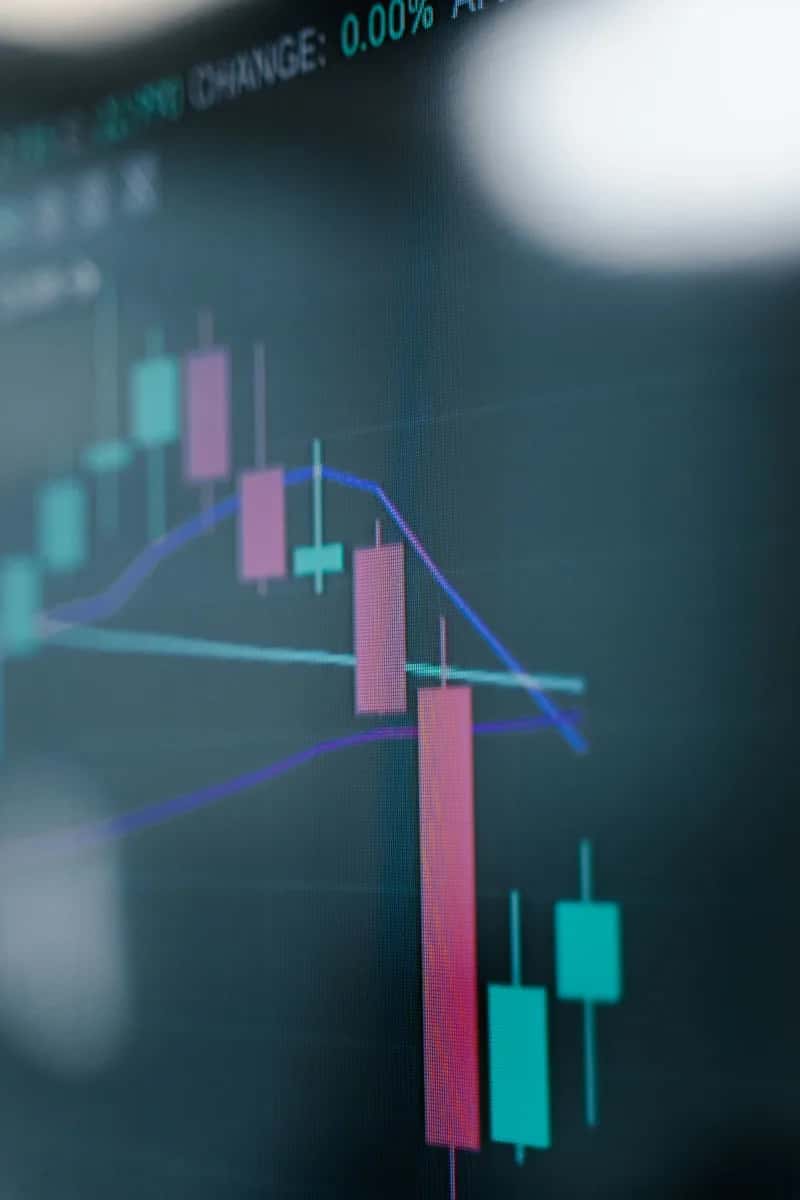
Death Cross: When the 50 MA crosses below the 200 MA, a bearish signal suggesting a downtrend is forming.
Price above both MAs: Generally bullish. Price below both MAs: Generally bearish.
3. RSI (Relative Strength Index): Overbought vs. Oversold
RSI is a number between 0 and 100 that measures how fast and how much a price has moved recently.
RSI above 70: The asset is considered overbought. It has risen too fast and may be due for a pullback.
RSI below 30: The asset is considered oversold. It has fallen too far and may be due for a bounce.
RSI does not predict exact turning points, but it helps you gauge whether a move is getting overextended. Buying when RSI is below 30 (oversold) and being cautious when RSI is above 70 (overbought) is a simple but effective strategy.
4. Support and Resistance Levels
Support is a price level where buying interest is strong enough to prevent the price from falling further. Think of it as a floor.
Resistance is a price level where selling pressure prevents the price from rising higher. Think of it as a ceiling.
When price breaks through resistance on high volume, it often continues to rise (breakout). When price breaks below support on high volume, it often continues to fall (breakdown). These levels are visible on any price chart as areas where the price has repeatedly bounced or stalled.
Essential Sentiment Signals
1. Fear and Greed Index
Available for both the stock market and crypto market, the Fear and Greed Index measures overall market sentiment on a scale from 0 (Extreme Fear) to 100 (Extreme Greed).
The famous investing advice "be fearful when others are greedy, and greedy when others are fearful" is directly applicable here. Historically, buying during Extreme Fear and selling during Extreme Greed produces better long-term returns than following the crowd.
2. Exchange Inflows and Outflows (Crypto)
When large amounts of Bitcoin or Ethereum flow onto exchanges, it typically signals upcoming selling: investors move coins to exchanges to sell them. When coins flow off exchanges into private wallets, it signals holding. Investors are taking their coins off exchanges for long-term storage.
Tools like Glassnode, CryptoQuant, and Nansen track these flows in real time.
3. ETF Flows (Both Markets)
For both stocks and crypto, tracking money flowing into and out of major ETFs reveals institutional sentiment. Consistent inflows suggest institutional confidence. Sustained outflows suggest institutions are reducing exposure. Since institutions move much larger amounts than retail investors, their behavior often leads market direction.
Fundamental Signals to Watch
Interest rate decisions: Rate hikes generally hurt risk assets (stocks and crypto). Rate cuts generally help them.
Earnings reports (stocks): Companies beating earnings expectations tend to see price increases. Misses lead to declines.
On-chain metrics (crypto): Active addresses, transaction volume, and developer activity indicate the health and growth of a blockchain network.
Regulatory news: New laws, SEC actions, or government policy changes can rapidly shift market sentiment in either direction.
Common Beginner Mistakes
Relying on a single indicator: No signal is perfect alone. Always look for confirmation from multiple signals before acting.
Ignoring volume: Price movement without volume confirmation is unreliable.
Chasing pumps: Buying after a large price spike (especially on low volume) is one of the fastest ways to lose money.
Emotional trading: Acting on FOMO (fear of missing out) or panic instead of waiting for clear signals leads to buying highs and selling lows.
Overcomplicating: Using too many indicators creates "analysis paralysis." Start with volume, one moving average, and RSI. Add more as you gain experience.
Conclusion
Reading market signals is not about predicting the future. It is about making better-informed decisions with the information available. Volume tells you if a move is real. Moving averages show you the trend. RSI warns you about extremes. Sentiment indicators reveal what the crowd is feeling.
Start with these fundamentals, practice reading charts, and over time you will develop an intuition for market movements that serves you well in both bull markets and bear markets.
The market is always sending signals. The question is whether you are listening.
Disclaimer: This article is for informational and educational purposes only and should not be considered as financial, investment, or trading advice. The content presented here does not constitute a recommendation to buy, sell, or hold any securities, cryptocurrencies, or other financial instruments. Always conduct your own research (DYOR) and consult with a qualified financial advisor before making any investment decisions. Past performance of any asset is not indicative of future results. Investing in stocks and cryptocurrencies involves significant risk, including the potential loss of your entire investment. The authors and publishers of this article are not responsible for any financial losses incurred from actions taken based on the information provided.
Written by
Marcus Vance
Business & Money
Writes on business and personal finance for Quick Trend Insights, translating markets, rates, and company strategy into what it costs or saves a household.
Related Articles
View all
Stock Buybacks Are Doing the Work in Earnings
Stock buybacks hit a record $1 trillion and quietly inflate earnings per share. Here is the 30 second check that shows how much of the growth is real.
Your Index Fund Is Not as Diversified as You Think
Ten stocks now make up 41% of the S&P 500, well past the dot-com peak. Here is what that concentration really means for a portfolio built on index funds.
Bond Yields Explained: The Signal Most Investors Ignore
Bond yields explained for beginners: what they are, why they move opposite bond prices, and why the yield curve is a signal most investors still ignore.