
The Road Ahead: How GST 2.0 Could Reshape India’s Economy
Discover how GST 2.0, India’s landmark tax reform, will reshape consumer prices, businesses, and growth. Learn about the new 5 %, 18 %, and 40 % slabs, sector-wise impacts, inflation relief, and what GST 2.0 means for the common man.
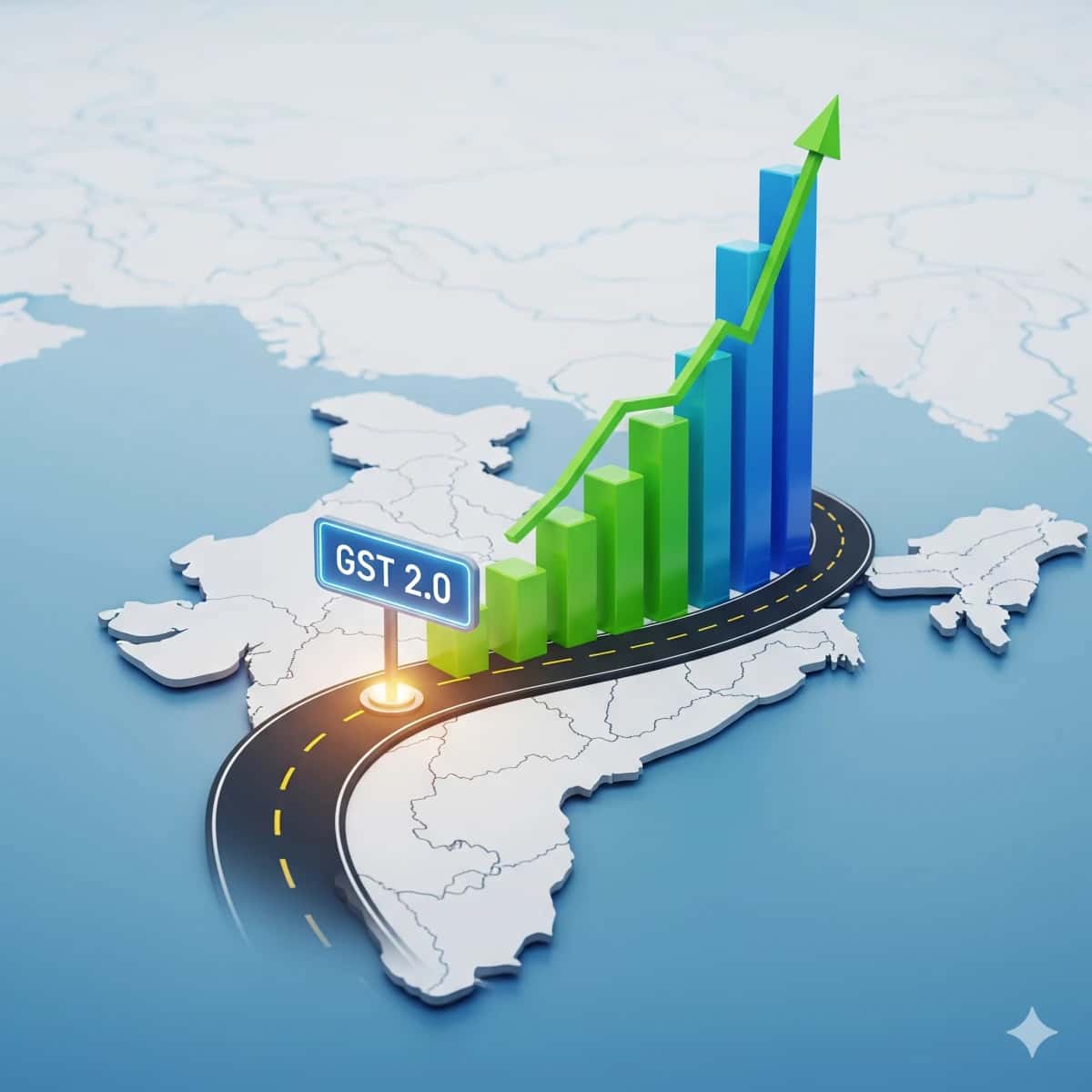
Table of contents
Introduction: Why GST 2.0 Matters Now
Goods and Services Tax (GST) was one of India’s biggest economic reforms when it was launched in 2017. But over time, multiple rate slabs, compliance hurdles, and disputes created complexity. To simplify the system, the government has announced GST 2.0, which came into effect on 22 September 2025.
This new reform aims to reduce slabs, lower inflationary pressure, and make compliance easier for businesses. With major changes in tax rates, GST 2.0 has the potential to reshape India’s economy, from consumer prices to business competitiveness and even India’s global investment appeal.
What is GST 2.0? The Key Changes
GST 2.0 introduces a three-slab structure:
- 5%, for essentials and mass-consumption items
- 18%, for standard goods and services
- 40%, for luxury and sin goods (tobacco, alcohol, premium cars, etc.).
Key reforms include:
- Removal of complex middle slabs like 12% and 28%
- Rationalisation of compensation cess
- Easier classification to reduce disputes
- Simplified return filing with fewer forms
By cutting down multiple slabs, GST 2.0 is expected to reduce confusion, improve transparency, and enhance compliance.
Impact of GST 2.0 on Consumers
For the common man, GST 2.0 could bring real benefits:
- Cheaper essentials: Food items, toiletries, medicines, and household goods become more affordable under the 5% slab.
- Affordable durables: Electronics, small cars, and white goods shift to 18%, lowering purchase costs.
- Controlled inflation, With reduced tax on basics, inflationary pressure is likely to ease.
However, luxury products and sin goods will get more expensive under the new 40% slab. The government hopes this dual effect will boost consumption of essentials while discouraging non-essential spending.
Impact on Businesses and MSMEs
Businesses, especially MSMEs, stand to gain:
- Simplified compliance: Fewer slabs mean easier classification and fewer disputes with tax authorities.
- Better Input Tax Credit (ITC): Streamlined ITC rules make it easier for businesses to claim credits and improve cash flow.
- Sectoral gains: FMCG, healthcare, and consumer durables may benefit from lower taxes.
- Challenges: Luxury, automobile, and sin-product industries may see higher costs and reduced demand.
Overall, GST 2.0 could enhance the ease of doing business and make Indian companies more competitive.
Macro-Economic Implications of GST 2.0
At the broader economic level, GST 2.0 has multiple effects:
- Boost to consumption: Lower tax on essentials → higher disposable income → increased demand.
- Investment growth, A transparent tax regime attracts foreign investors.
- Government revenue: Short-term dip possible due to lower rates, but long-term gains expected via higher compliance.
- Inflation control: Rationalised GST may help tame inflation, keeping consumer confidence stable.
If implemented effectively, GST 2.0 could contribute significantly to India’s ambition of becoming a $5 trillion economy.
The Road Ahead: Challenges & Opportunities
While GST 2.0 is promising, challenges remain:
- Businesses must adapt to the new system quickly.
- States may resist if revenue losses mount.
- Monitoring profiteering is essential to ensure tax cuts reach consumers.
- Awareness campaigns are required for traders and small businesses.
Still, with digital integration, simplified compliance, and rationalised rates, GST 2.0 could mark a new era of tax reform in India.

Conclusion
GST 2.0 represents a bold step in India’s economic journey. By reducing slabs, simplifying compliance, and rationalising rates, it promises to ease the tax burden for consumers and businesses while boosting transparency.
The real success, however, will depend on effective implementation and whether benefits actually reach the people. If done right, GST 2.0 could reshape India’s economy and pave the way for sustained growth, higher investment, and a fairer tax system.
Written by
Marcus Vance
Business & Money
Writes on business and personal finance for Quick Trend Insights, translating markets, rates, and company strategy into what it costs or saves a household.
Related Articles
View all
The 401(k) Catch-Up Rule That Hits $150K Earners
The 401(k) catch-up rule now forces Roth contributions for higher earners. See exactly who it hits, what losing the deduction costs, and if it matters.

Buy Now Pay Later Is Hiding in Your Credit Report
Buy now pay later rarely helps your credit score and can quietly hurt it. Here is what BNPL does to your report, and the debt data behind the trend now.

Why Your Car Insurance Went Up Without a Claim
Your car insurance went up with no claim and no ticket. Here is what actually drives the increase, and which levers still lower what you pay each year.