
Gift Card Breakage: What Unspent Cards Earn Your Shop
Gift card breakage turns unspent balances into revenue, but slowly. See what it is worth to a small business and the federal and state rules that limit it.
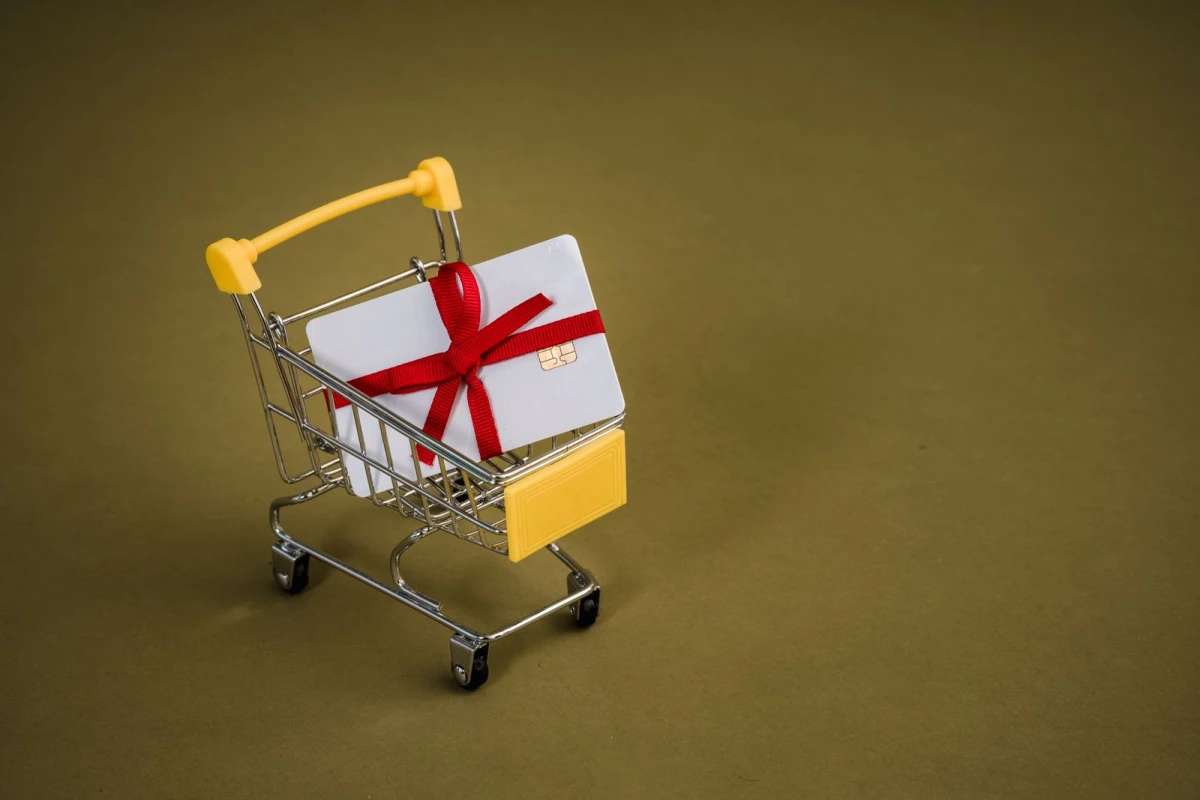
Table of contents
A customer walks up to your counter in December and buys a $100 gift card for her brother. The money lands in your account today. Her brother might spend it in February, in August, or never. That last outcome has a name, gift card breakage, and it is one of the few kinds of revenue a small business earns with no product or labor attached.
Big chains treat it as a real line item. Starbucks booked $222 million of breakage in its latest fiscal year, according to its annual report. But breakage is also where small shops get the accounting wrong, run into state unclaimed property rules, or count money as profit that legally still belongs to a customer. This guide walks through how breakage works, what it adds up to for a shop your size, and the rules that decide how much of it you actually keep.
What Gift Card Breakage Actually Is
Breakage is the share of gift card value that customers never redeem. A card bought for $50 and used for $46 leaves $4 of breakage. A card lost in a drawer leaves the full $50.
The key point for your books: the cash is yours on day one, but the revenue is not. When you sell a card, you owe the holder goods or services. Accountants record that promise as a liability, often called deferred revenue. You only move money into sales when the card is spent, or when you can reasonably show some of it never will be.
That gap between cash and revenue is the whole story. It is a free short-term loan from your customers, and some small slice of it turns into income with no cost of goods attached.
Why big retailers love it
Starbucks spells the mechanism out in its annual report filed with the Securities and Exchange Commission in November. Loads onto its cards are recorded as deferred revenue, most cards are redeemed within a year, and the share it expects never to be redeemed is recognized "over time in proportion to stored value card redemptions." The company recognized $198.2 million of breakage in company-run stores and $24.0 million in licensed stores.
How Much Breakage Is Worth to a Small Business
Here is the honest answer: less than most owners expect. Starbucks loaded about $15.1 billion onto cards and earned rewards during the year, and its breakage was about 1.5% of that figure. Its cards never expire and carry no fees, which pushes breakage down because customers have no deadline to lose.
Your rate depends on your own history. A restaurant whose cards are bought as last-minute gifts by people who live elsewhere may see higher breakage. A coffee shop whose regulars reload a card every week will see almost none.
A worked example with real numbers
Say your café sells $20,000 of gift cards between Thanksgiving and New Year's. Your records from past years show customers redeem about 94% of card value, so you expect 6% breakage, or $1,200.
- December: $20,000 of cash arrives. You record a $20,000 liability. Revenue from gift cards is zero.
- January to March: customers redeem $9,400 of cards. That is half of the $18,800 you expect to be redeemed, so you also recognize half of the expected breakage, $600. Gift card revenue for the quarter is $10,000.
- Rest of the year: the remaining $9,400 trickles in, and the last $600 of breakage follows it in the same proportion.
So the $1,200 shows up gradually, never as a December windfall. You can check the ratio for your own numbers with the percentage calculator: divide the value never redeemed by the value sold, using at least two or three years of card data.
The bigger benefit is the timing. That $20,000 arrives in your slowest cash months before you deliver anything, which is a real boost to liquidity. The food cost for those redemptions comes later, when the cards are spent.
The Federal Rules That Limit Breakage
You cannot engineer breakage with short expiry dates or monthly fees. Federal law closed that door in 2010, and the rules sit in Regulation E, enforced by the Consumer Financial Protection Bureau.
- Five-year floor on expiry. Funds on a store gift card cannot expire sooner than five years after the card was sold or last loaded.
- Fees only after a year of no use. A dormancy or inactivity fee is allowed only if the card has had no activity in the past 12 months.
- One fee per month at most. You cannot stack missed months into a single charge.
- Disclosure on the card. The card itself must state the fee amount, how often it can be charged, and the expiration date of the funds or that they do not expire.
Most chains have dropped expiry dates and fees entirely. The federal limits are strict enough that the small gain is rarely worth the complaint risk and the printing changes.
State Laws Can Take the Breakage Back
This is where small businesses get caught. States can be stricter than federal law, and many are.
Longer expiry and cash-back rules
New York's Department of State says gift cards bought on or after December 10, 2022, must stay valid for at least nine years, and the state bans inactivity fees on them. California went further on small balances: since April 1, its law requires businesses to hand over cash on request for any card balance under $15, up from $10 before, according to client alerts from the law firms Morgan Lewis and Ballard Spahr. A California customer with $12 left on your card can walk out with $12 in cash, which erases that slice of breakage.
Unclaimed property laws
Every state runs an unclaimed property program, and some states require retailers to send part of their unspent gift card money to the state; the AP counted at least 19 in 2023. In those states, part of what looks like breakage is really a debt owed to the state treasury. Starbucks says it factors those remittances into its own breakage estimate.
The rules differ on which cards count, how long a card must sit idle, and whether cards sold through a separate gift card company are covered. Before you book a single dollar of breakage, ask your accountant which states your cards are sold in and what each one requires.
Should Your Small Business Sell Gift Cards This Season?
For most shops, yes, but for cash flow and new customers rather than breakage. The National Retail Federation's November survey found 39% of holiday shoppers plan to give gift cards, the lowest share in the survey's more than 20-year history. Restaurant cards lead at 26%, followed by department store and bank-issued cards at 23% each.
Fewer buyers means each sale counts more. A gift card also brings in someone who has never visited, which is the same first-visit opportunity covered in our guide to turning Small Business Saturday visitors into regulars.
A five-step setup that keeps you out of trouble
- Use a system that tracks each card. Paper certificates make breakage impossible to measure and fraud easy.
- Record every sale as a liability. Never ring gift card sales into daily revenue.
- Skip expiry dates and fees. Federal and state limits make them more trouble than they earn.
- Wait for data before booking breakage. Without two or three years of redemption history, keep the full balance as a liability.
- Check your states. Confirm cash-back thresholds and unclaimed property rules where you sell.
One more caution on discount promotions. A "buy $100, get $20 free" bonus card is a marketing cost, and it should be priced like one. Our breakdown of how many extra sales a holiday discount needs applies to bonus cards too.
Frequently Asked Questions
What is gift card breakage in accounting?
It is the portion of gift card value a business expects never to be redeemed. Under current accounting standards it is recognized as revenue gradually, in step with the cards that do get redeemed, rather than all at once when a card is sold.
Can a small business keep money from unused gift cards?
Sometimes. It depends on your state. Many states require unspent balances to be reported and sent to the state's unclaimed property program after a set period, and some require cash refunds for small leftover balances.
Do gift cards expire after 5 years?
Federal law says store gift card funds cannot expire for at least five years from the date the card was sold or last loaded. Several states, including New York, require longer periods, and many retailers set no expiry at all.
Can a business charge an inactivity fee on a gift card?
Only after 12 months with no activity on the card, only one fee per month, and only if the fee is clearly printed on the card. Some states ban these fees entirely.
Sell the Card for the Visit, Not the Leftover Balance
Gift card breakage is real money, but it is small, slow and partly owned by the state. Starbucks earns about 1.5 cents on each dollar of card activity, and it has more data than any café. The bigger prizes are the December cash and the customer who walks in with someone else's gift.
Set up the liability correctly, keep fees off your cards, and check your state's rules before calling any balance profit. Then let breakage be the small bonus it is.
Disclaimer: This article is for informational purposes only and does not constitute financial advice. Always consult with a qualified financial advisor before making investment decisions. Past performance is not indicative of future results.
Written by
Marcus Vance
Business & Money
Writes on business and personal finance for Quick Trend Insights, translating markets, rates, and company strategy into what it costs or saves a household.
Related Articles
View all
Small Business Health Insurance: QSEHRA vs Group Plan
Small business health insurance costs keep rising. Compare a group plan with a QSEHRA allowance using real premium figures, IRS limits and an 8-worker example.

IPO Lockup Period: What Employees Can Sell and When
The IPO lockup period now comes in stages, and the RSU tax bill can land first. See how release windows work and what employees owe before they can sell.
WARN Act Notice: What a Layoff Without Warning Owes You
The WARN Act notice rule gives you 60 days of warning or 60 days of pay in many layoffs. See who qualifies, how back pay is counted and what California adds.