
WLFI Crash: How a Loan Loop Sank a Trump-Backed Token
The WLFI crash wiped out half the token's value in a day. See how a self-backed loan, auto-deleveraging and a stablecoin wobble turned one selloff into a rout.
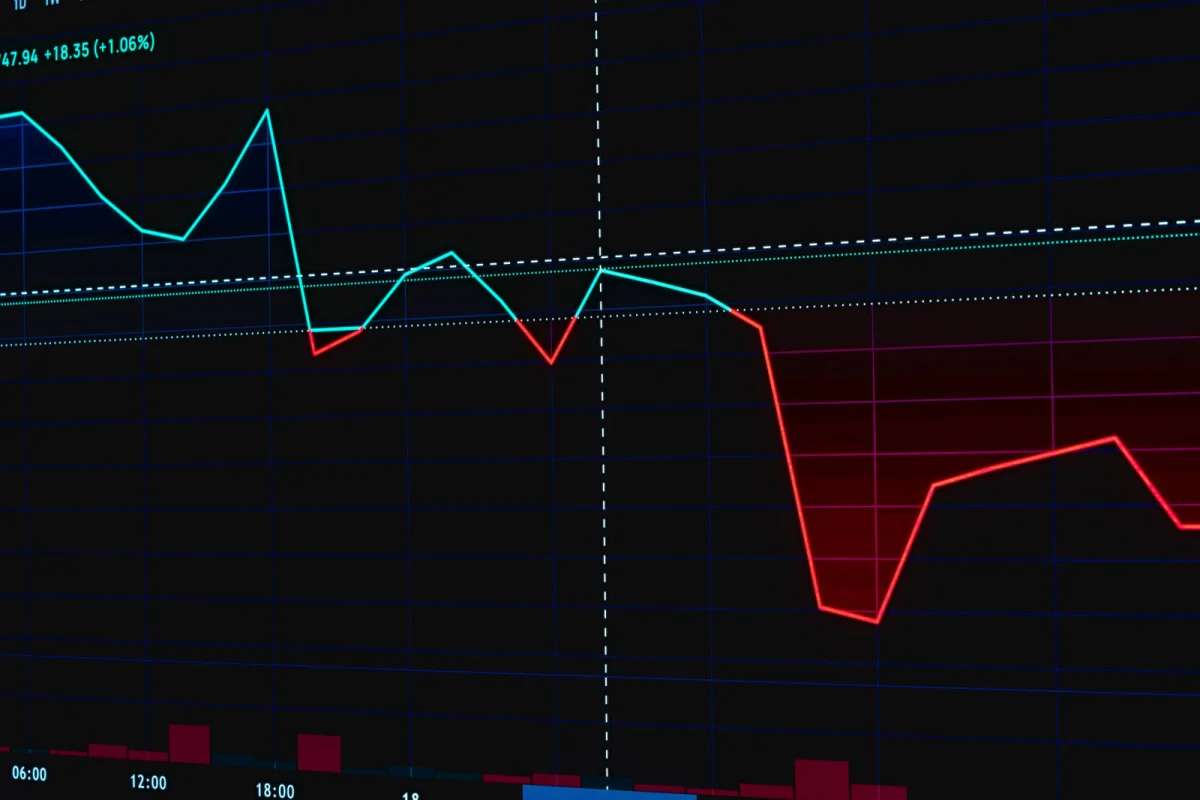
Table of contents
It was just before midnight in New York on Friday, November 27. If you held World Liberty Financial's token, you went to bed with it near $0.035. By the time you checked your phone, it had dropped nearly 40% in about 15 minutes, and by Saturday afternoon the WLFI crash had erased about half its value in a day.
Headlines blamed a feud, an exchange and a loan. All three played a part. The more useful story is the plumbing: a project that borrowed against its own token, a stablecoin from the same issuer, and a futures market that can close your position even when you are winning. Once you see how those pieces connect, you can spot the same setup in other tokens before it breaks.
What Triggered the WLFI Crash
The sharpest move came on Binance. Between about 11:30 pm and 11:45 pm Eastern time, WLFI dropped from roughly $0.0345 to $0.0211, The Block reported from exchange data. The record low of $0.0158 followed shortly before 1 am.
Nobody has publicly established who sold. World Liberty said on X that "not a single WLFI token was sold" as part of its own actions. Binance said its team was "actively reviewing the market activity and execution data." Tron founder Justin Sun, who is in litigation with the project over a freeze on his tokens, alleged that the episode was "insider circular lending to cash out," The Block reported. Sun offered no evidence, World Liberty rejects his claims and has countersued him for defamation, and no regulator or court has made any finding on the allegation.
So the trigger is unknown. The amplifiers are not, and they are what turned a sell order into a 52% day.
The Loan That Borrowed Against Itself
In April, World Liberty pledged about 5 billion WLFI as collateral on Dolomite, a decentralised lending platform, to borrow about $75 million in USD1 and USDC. Both The Block and Stocktwits reported the loan from on-chain data.
Borrowing against your own token creates a loop. When WLFI falls, the collateral shrinks. When the collateral shrinks, the loan nears liquidation. If the loan is liquidated, the protocol sells WLFI to repay it, which pushes the price down further. The asset securing the loan is also the asset most likely to be dumped if the loan fails.
The liquidation math, step by step
The Block reported that by Friday afternoon the position held 3 billion WLFI against about $42.2 million of stablecoin debt, and that Dolomite requires collateral worth about 1.5 times the loan.
Collateral required: $42.2 million × 1.5 = $63.3 million.
Price at which 3 billion tokens are worth that: $63.3 million ÷ 3 billion = about $0.0211.
Collateral value at $0.0345: 3 billion × $0.0345 = about $103.5 million.
Cushion before the trigger: a fall of about 39%.
The overnight drop on Binance stopped at about $0.0211. That does not prove anyone aimed at the line. It does show how little room a 39% cushion gives a token that can move that far in 15 minutes.
How the project defended the loan
World Liberty moved fast. A wallet linked to the project sold about $20 million of ether, The Block reported. According to The Block, on-chain analysts estimated a loss of $19.3 million on that ether. It repaid a $10.7 million USDC balance, added more WLFI as collateral and closed one of three lending positions. The project says that moved its liquidation price to about $0.00631. Both The Block and Stocktwits reported that figure, attributed to World Liberty.
How Forced ADL Closures Hit the Winners
The second amplifier was the futures market. Binance lists WLFI perpetual futures, contracts with no expiry that let traders use borrowed money. More than $15 million of margined WLFI positions were liquidated over 24 hours, mostly bets on a rise, according to CoinGlass data cited by both outlets.
When a liquidated trader's losses exceed their margin, an exchange covers the gap from an insurance fund. If the fund cannot cover it, the exchange turns to ADL, its automatic position-reduction system. It closes the most profitable positions on the other side to balance the books.
Here is what that looks like for you as a trader. Say you shorted $5,000 of WLFI at $0.0345, expecting a fall. The price hits $0.0211 and your position is up about $1,940 on paper. Then ADL closes it automatically. You keep a profit, but you did not choose the exit, and if you were hedging a spot holding, your hedge just disappeared in the middle of the crash.
The Block reported that Binance used ADL to close winning short positions after liquidation losses exceeded its margin and insurance funds. World Liberty said it "had no involvement" in how those positions were closed.
When the Stablecoin Wobbled Too
USD1, World Liberty's dollar stablecoin, is supposed to hold at $1. Around 2 am Eastern on Saturday it fell to $0.94 against Tether's USDT on Binance, before recovering to about $0.997 within a couple of hours, The Block reported. Stocktwits reported the same low.
A 6% gap on a stablecoin is large. It also shows how risk spreads when one issuer stands behind both the volatile token and the stablecoin used to borrow against it. Holders who doubt one product tend to test the other. According to The Block, Jump Crypto withdrew 43.26 million USD1 from exchanges and redeemed it at $1, which is the arbitrage that pulls a stablecoin back to its peg when redemption works.
Red Flags You Can Check Before Buying a Token
You cannot predict the trigger. You can check whether a token carries the amplifiers. These checks take minutes and use public data.
Does the issuer borrow against its own token? On-chain lending positions are visible. If the project's treasury has pledged its own token, a price drop can force selling.
How large is the futures market compared with spot trading? Heavy borrowing on a thinly traded token turns small orders into cascades. Weak liquidity means fewer buyers at each price level.
Who controls the supply? According to The Block, WLFI had a market value of about $543 million and sat about 95% below its all-time high of $0.33. A token with a concentrated holder base can gap on one seller.
Is there a live legal dispute? Litigation with a large holder adds headline risk that can hit at any hour.
Does the same issuer run the stablecoin you would use? Shared issuers mean shared stress.
None of these is unique to WLFI. They apply to any cryptocurrency where a small group controls both the token and the credit built on it. The broader slide in large coins has its own drivers, covered in why bitcoin fell harder than stocks.
Frequently Asked Questions
Why did WLFI crash?
The trigger was a burst of selling on Binance late on November 27 whose source has not been established. The fall was amplified by World Liberty's loan backed by its own tokens, more than $15 million of futures liquidations and forced ADL closures on Binance.
Did World Liberty Financial sell WLFI tokens?
World Liberty says it did not, stating that "not a single WLFI token was sold." It did sell about $20 million of ether to shore up its loan on Dolomite. Justin Sun alleged insider dealing but provided no evidence, World Liberty disputes it, and no finding has been made.
What is ADL in crypto futures trading?
ADL, short for automatic position reduction, is an exchange's last line of defence when liquidated losses exceed margin and the insurance fund. The exchange closes profitable positions on the opposite side to cover the shortfall, so even winning traders can be forced out.
Is USD1 still pegged to the dollar?
USD1 briefly traded at $0.94 against USDT on Binance on November 28 and recovered to about $0.997 to $0.998 later that day, according to The Block and Stocktwits. Redemptions at $1 helped pull it back.
The Lesson Is in the Wiring
The WLFI crash will be argued about in court and on social media for months. You do not need to settle who sold first to learn from it.
A token whose issuer borrows against it, whose futures market dwarfs its spot trading and whose stablecoin comes from the same shop is wired to fall fast. Check the wiring before you buy, and size any position as if a 40% drop in 15 minutes is a normal Friday night.
Disclaimer: This article is for informational purposes only and does not constitute financial advice. Always consult with a qualified financial advisor before making investment decisions. Past performance is not indicative of future results.
Written by
Marcus Vance
Business & Money
Writes on business and personal finance for Quick Trend Insights, translating markets, rates, and company strategy into what it costs or saves a household.
Related Articles
View all
Window Dressing: Why Funds Dump Losers in December
Window dressing lets fund managers swap losers for winners before year-end reports. See what the research says it costs you and how to spot it in your fund.
IPO GMP: Why SEBI Wants Grey Market Premiums Gone
IPO GMP numbers are unofficial and unregulated, says SEBI. See how grey market deals work, why GMP misses listings and what to check before you apply.

Gift Nifty Explained: How It Signals the Market Open
Gift Nifty now opens at 5:15 am IST. Learn how to read its pre-market signal, why a 100-point premium can be pure carry and where it misleads Nifty traders.