
Freelancer Estimated Taxes: Catching Up by January 15
Freelancer estimated taxes, explained with real numbers: the safe harbor rule, what three missed quarters cost at 7%, and four ways to catch up by January 15.
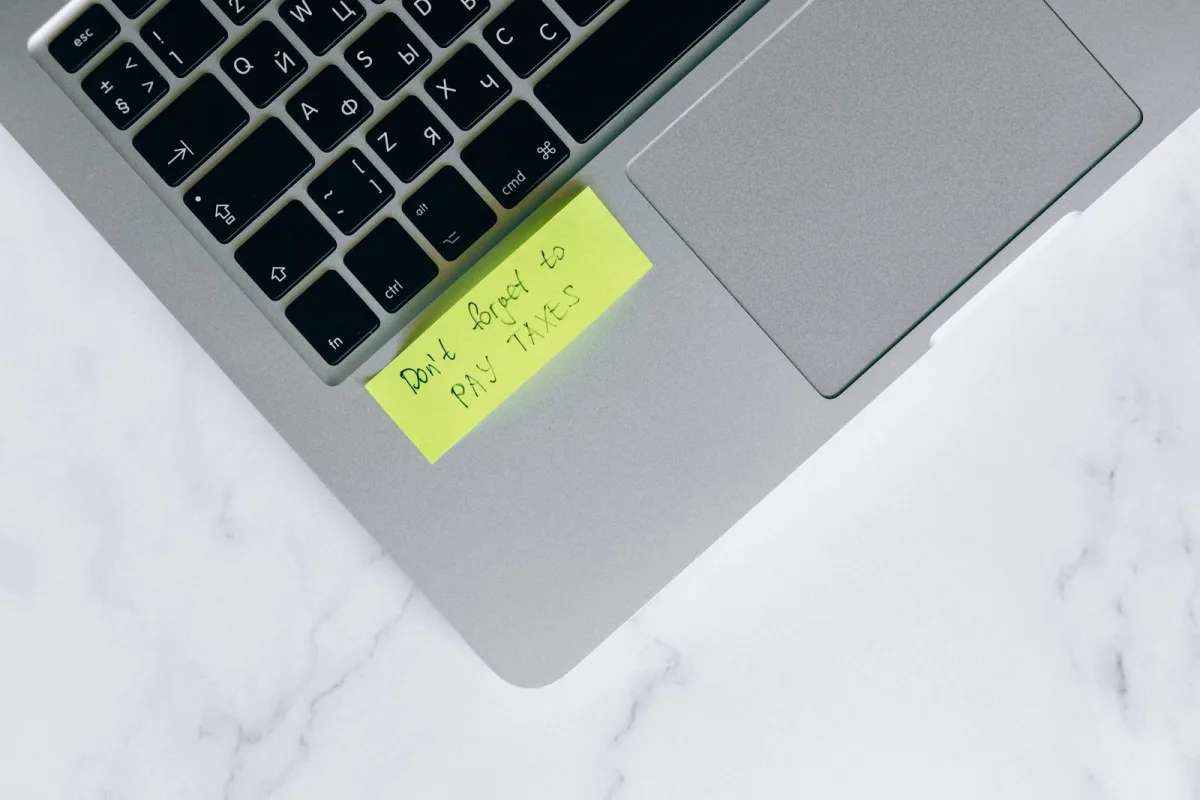
Table of contents
Your first full year of freelancing went better than you expected. Clients paid, the work kept coming, and you set nothing aside for the IRS. Now a friend asks whether you made your quarterly payments, and you realize the answer is no for all three.
You are far from the only one. Freelancer estimated taxes are the bill nobody mentions until the penalty notice arrives. The good news is that the penalty is smaller and more predictable than most people fear, and the January 15 payment gives you one clean chance to limit it. Here is how to work out what you owe, what skipping quarters really costs, and how to catch up.
Freelancer Estimated Taxes: Why You Owe Them
An employee's paycheck has tax taken out every payday. A freelancer's invoice does not. The IRS still expects tax to come in as you earn, so it splits the year into four payment periods.
For income earned this calendar year, the IRS Form 1040-ES lists the due dates as April 15, June 15, September 15 and January 15. You generally have to pay if you expect to owe at least $1,000 after withholding and credits.
Freelancers also owe self-employment tax, the Social Security and Medicare that an employer would normally split with you. Per the form's worksheet, it is 15.3% of 92.35% of your net profit, with the Social Security part applying to the first $184,500 of earnings this year. You get to deduct half of it.
The Safe Harbor Rule: How to Avoid the Penalty Entirely
This is the rule that matters most and gets explained least. You avoid the penalty if your payments cover the smaller of:
- 90% of this year's tax, or
- 100% of last year's total tax, as shown on last year's return.
If your adjusted gross income last year was more than $150,000 ($75,000 if married filing separately), the second figure becomes 110%. Established freelancers often cross that line, so check last year's return before you calculate.
Last year's number is the useful one for a growing freelancer. It is fixed and known. If you earned $45,000 as an employee last year and owed $4,000 in total tax, paying $4,000 across the four dates protects you from the penalty even if you make $90,000 this year. You still owe the rest in April, but without a penalty attached.
A Worked Example: $80,000 of Freelance Profit
Take a single freelancer with $80,000 of net profit this year, no other income and the standard deduction. Using the tax rates in this year's Form 1040-ES:
- Self-employment tax: $80,000 x 92.35% = $73,880. Then $73,880 x 15.3% = about $11,300.
- Adjusted gross income: subtract half of that tax, about $5,650, for AGI of roughly $74,350.
- Standard deduction: $16,100 for single filers, leaving about $58,250.
- Qualified business income deduction: up to 20%, here capped at 20% of the $58,250, or about $11,650. Taxable income is about $46,600.
- Income tax: 10% on the first $12,400 plus 12% on the rest, about $5,340.
Total federal tax: about $16,650, roughly 21% of profit. Two-thirds of it is self-employment tax, which surprises most new freelancers.
Now suppose last year's total tax was $12,000. The safe harbor needs only $12,000 paid on time, in four $3,000 installments. That is the target, not the $16,650.
What Missing Quarters Actually Costs
The underpayment penalty is not a flat fine. The IRS charges it like interest, using its quarterly underpayment rate, which is 7% for the October to December quarter. It runs daily on each missed installment, from its due date until you pay.
Say you missed all three $3,000 installments so far and pay $12,000 on January 15:
- April payment, 275 days late: about $158
- June payment, 214 days late: about $123
- September payment, 122 days late: about $70
- January payment, on time: $0
Total penalty: about $350, assuming the 7% rate holds. The IRS resets the rate each quarter, so the exact figure can shift slightly. Paying earlier than January 15 shrinks every line.
Do not borrow at 22% to avoid 7%
That math has a practical lesson. If you do not have the cash, putting the payment on a credit card at more than 20% interest costs more than the IRS penalty. Pay what you can, then file on time in April. The IRS offers payment plans for balances you cannot clear at once.
Four Ways to Catch Up Before January 15
1. Pay the safe harbor amount now
Pay the full remaining safe harbor balance through IRS Direct Pay or your IRS online account as soon as you can. Every day earlier trims the penalty on the missed quarters.
2. File early and skip the January payment
The 1040-ES instructions say you do not have to make the January 15 payment if you file your return by February 1 and pay the entire balance with it. That does not erase penalties on earlier quarters, but it removes the fourth one.
3. Use withholding if you also have a job
If you or your spouse has a paycheck, raising W-4 withholding for the last paychecks of the year can help. Under IRS rules, withholding is generally treated as paid evenly through the year, unlike an estimated payment, which counts only from the day it is made. A large December withholding can therefore cover earlier quarters.
4. Use the annualized method if your income came late
If most of your income arrived in the fall, the annualized income installment method on Form 2210 can lower or erase penalties on the earlier quarters. It matches each required payment to the income you actually earned in that period. It takes more paperwork, but tax software handles it.
Set Up Next Year So This Never Happens Again
The fix is a habit, not a calculation.
- Move 25% to 30% of every payment into a separate savings account the day it lands. In our example, the full bill was 21% of profit, so 25% leaves room for state tax.
- Set the four due dates in your calendar now: April 15, June 15, September 15 and January 15.
- Base payments on this year's total tax once you file in April. That gives you next year's safe harbor figure.
- Price it into your rates. Our freelance hourly rate calculator builds self-employment tax into the rate you quote.
- Chase late invoices before quarter ends, since cash you have not collected cannot pay the IRS. Our guide on getting freelance invoices paid faster covers the follow-up.
If clients send you 1099 forms, keep them with your records. The reporting threshold changed this year, which our breakdown of the new $2,000 1099-NEC threshold explains. You owe tax on all freelance income whether or not a form arrives.
Frequently Asked Questions
When is the fourth quarter estimated tax payment due?
January 15 for income earned in the current calendar year. You can skip it if you file your return by February 1 and pay the full balance with it.
What is the penalty for missing estimated tax payments?
It works like interest at the IRS underpayment rate, currently 7% a year, charged daily on each missed installment from its due date until paid. On a $3,000 payment that is about 58 cents a day.
How do I avoid the estimated tax penalty as a freelancer?
Pay at least the smaller of 90% of this year's tax or 100% of last year's tax, in four installments on time. Use 110% of last year's tax if your AGI last year was over $150,000. Owing less than $1,000 at filing also avoids it.
Can I pay all my estimated taxes at once in January?
You can, and it stops further penalties from building. But it does not erase the penalty already owed on earlier missed quarters, unless the annualized method shows your income came mostly late in the year.
The January Payment Is Your Reset Button
Freelancer estimated taxes feel scary because nobody explains the numbers. Once you see them, the risk is manageable. The penalty is interest, not a fine, and the safe harbor gives you a fixed target based on a return you already filed.
Find last year's total tax, subtract what you have paid, and send the difference before January 15. Then set aside a quarter of every invoice so next year's payments are just a transfer.
Disclaimer: This article is for informational purposes only and does not constitute financial advice. Always consult with a qualified financial advisor before making investment decisions. Past performance is not indicative of future results.
Written by
Marcus Vance
Business & Money
Writes on business and personal finance for Quick Trend Insights, translating markets, rates, and company strategy into what it costs or saves a household.
Related Articles
View all
Layoff Severance in India: What the Law Actually Owes You
Layoff severance in India under the new labour codes: notice pay, retrenchment pay, the re-skilling fund, gratuity, and why many managers are not covered.
BNPL Fees for Merchants: When Pay Later Pays Off
BNPL fees for merchants run about double card fees. See the cost on a $120 order, the break-even sales lift, and how to test pay later before the holiday rush.

Small Business Return Policy: What Each Return Costs
Your small business return policy decides what holiday returns cost. See the real cost of one return, what 100 orders lose, and five policy fixes that help.