
What Is an EREV? How Range-Extended EVs Work
What is an EREV? See how range-extended EVs use a gas generator instead of driving the wheels, how they differ from plug-in hybrids, and when one saves money.

Table of contents
You want an electric truck or SUV, but you tow a camper twice a year and your in-laws live 400 miles away with no fast charger in sight. A pure EV makes that trip stressful. A gas truck makes your daily commute expensive. Carmakers now think they have a third answer, and you will hear the acronym a lot over the next year: EREV.
So what is an EREV, exactly? It is an extended-range electric vehicle: a car that always drives on electric motors but carries a small gas engine whose only job is to recharge the battery. Toyota's China joint venture scheduled its first one for a November 27 reveal, and Ram, Scout, Hyundai and Genesis all have versions planned. Here is how the design works, where it beats a plug-in hybrid, and the math that tells you whether one fits your driving.
What Is an EREV and How Does It Work?
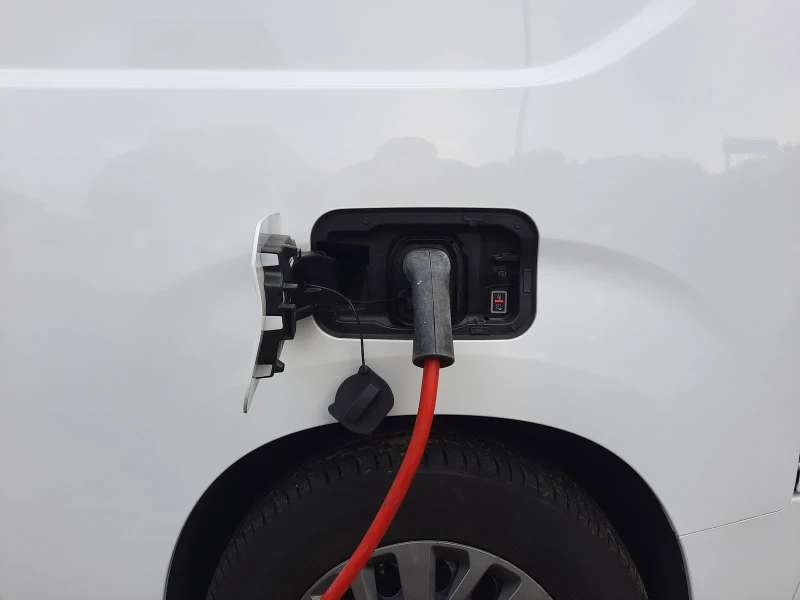
Every EREV has the same four main parts: a large battery, one or more electric motors, a charging port and a small combustion engine connected to a generator. The engine never turns the wheels. It spins the generator, the generator makes electricity, and that electricity either feeds the motors directly or tops up the battery.
In daily use you plug in at home and drive on battery power, exactly like an EV. When the battery runs low, the engine starts and keeps the battery at a working level. You keep driving on electric motors, with the same instant torque and smooth acceleration, but now you are effectively burning gas to make electricity.
Engineers call this a series hybrid. Because the engine is disconnected from the wheels, it can run at a steady speed in its most efficient range instead of revving up and down with traffic. That is the theory. In practice, every conversion step (fuel to motion to electricity to motion) loses some energy, which matters on long highway runs.
EREV vs Plug-In Hybrid vs EV
The hardware in an EREV and a plug-in hybrid looks almost identical on paper. The difference is what drives the wheels and how big the battery is.
- Plug-in hybrid (PHEV): the engine and motor can both drive the wheels. Batteries are smaller, giving roughly 35 to 50 miles of electric range on newer models, according to GreenCars. Push hard on the accelerator and the engine often joins in, even with charge left.
- EREV: only the motors drive the wheels. Batteries are much larger, with makers targeting 100 miles or more on electricity. The engine stays off until the battery needs help.
- Battery EV: no engine at all. Modern EVs typically offer 250 to 300 miles, and long trips depend entirely on the charging network.
The practical upshot: a PHEV is a gas car that can drive electrically, and an EREV is an EV that can make its own electricity. That distinction shapes how each one feels to drive and where each one saves money.
Why Carmakers Are Bringing EREVs Back
This is not a new idea. The Chevrolet Volt and the BMW i3 with its optional range extender both used versions of it more than a decade ago. What changed is the type of vehicle buyers want electrified.
Big trucks and SUVs are hard to make fully electric. Towing a heavy trailer can cut range in half or more, as GreenCars notes, and a big enough battery to compensate adds cost and weight. A range extender lets the maker fit a smaller, cheaper battery and still promise long trips.
China proved the market. Range-extended models sell in large numbers there, and Toyota is following. Its China joint venture set a November 27 reveal for its first EREV at the Guangzhou Motor Show, Motor1 reported. Toyota reportedly targets about 200,000 EREVs in 2027, according to Nikkei Asia.
The models to watch
- Ram 1500 Ramcharger: Ram says a 92 kWh battery gives about 145 miles of electric range, with a 3.6-liter V6 and a 27-gallon tank stretching total range to roughly 690 miles. It is rated to tow up to 14,000 pounds, Electrek reported.
- Scout Traveler and Terra: Volkswagen's revived Scout brand offers a range-extender option it calls Harvester alongside its pure EVs. Scout now says customer deliveries start in 2028, Electrek and Edmunds reported. Its chief executive has said 87% of more than 160,000 refundable reservations are for the gas-generator version, according to Electrek.
- Hyundai and Genesis: both have announced range-extended SUVs. Genesis says its first one, due in early 2027, will exceed 640 miles of total range, a combined battery-plus-gas figure rather than electric-only range.
Worked Example: Does an EREV Save You Money?
The answer depends almost entirely on how much of your driving happens on battery power. Take a full-size pickup driven 12,000 miles a year, and use these assumptions:
- Gasoline at $3.20 a gallon
- Home electricity at 16 cents per kWh
- The EREV uses about 2 miles per kWh on battery and gets 20 mpg on the generator (an assumed figure, not an official rating)
- A comparable gas pickup also averages 20 mpg
Scenario 1: You plug in every night
Most of your trips are short, so 10,000 miles run on electricity and 2,000 on the generator during road trips.
- Electricity: 10,000 ÷ 2 = 5,000 kWh × $0.16 = $800
- Gas: 2,000 ÷ 20 = 100 gallons × $3.20 = $320
- Total energy cost: $1,120 a year
Scenario 2: The gas pickup
- 12,000 ÷ 20 = 600 gallons × $3.20 = $1,920 a year
The plugged-in EREV saves about $800 a year in energy. Over eight years that is $6,400, which is the budget you have to cover any price premium over a gas truck.
Scenario 3: You never plug in
Now all 12,000 miles run on the generator at 20 mpg, so you buy the same 600 gallons as the gas truck. You also haul around a heavy battery you never use. An EREV that never charges is just an expensive gas truck. If you cannot charge at home or work, a regular hybrid is usually the better buy, and our hybrid versus gas payback guide runs that comparison.
Who Should Buy an EREV
Use these rules of thumb before you shop:
- You can charge at home or work. Without that, most of the savings disappear.
- Your daily driving fits inside the electric range. The AAA driving survey cited by GreenCars puts the average American at about 31 miles a day, well inside a 100-mile EREV battery.
- You regularly take trips beyond EV range, or you tow, or you live where fast chargers are sparse. That is the scenario where the engine earns its keep.
- You accept two powertrains to maintain. An EREV still needs oil changes and engine servicing, even if the engine runs only occasionally.
Winter matters too. Cold weather shrinks battery range, so the generator will run more often in January than in June. Our guide to EV range in cold weather shows how big that drop can be.
Frequently Asked Questions
What is the difference between an EREV and a PHEV?
In an EREV the gas engine only charges the battery and never drives the wheels. In a plug-in hybrid the engine can drive the wheels directly. EREVs also carry bigger batteries, so they typically go two to three times farther on electricity alone.
Do EREVs need gas?
Only when the battery runs low. If your daily driving stays within the electric range and you charge every night, the engine may rarely start. On long trips it runs to keep the battery supplied, and you refuel at a normal gas station.
Are EREVs better than hybrids?
For drivers who can plug in and mostly drive short distances, yes, because most miles run on cheaper electricity. For drivers who cannot charge or who mostly cover long highway distances, a conventional hybrid is often more efficient and cheaper to buy.
Which EREVs are coming to the US?
Ram's Ramcharger pickup is the best known, and Scout, Hyundai and Genesis have announced range-extended SUVs. Toyota's first EREV is a China-market model, and the company has not said whether it will come to the US.
The Bottom Line on EREVs
An EREV is an electric vehicle with a backup generator. It drives like an EV, plugs in like an EV and only burns gas when the battery needs help. That makes it a strong fit for truck and SUV buyers who tow or travel far but still do most of their driving close to home.
The deciding factor is charging. Plug in nightly and an EREV can cut your energy bill by hundreds of dollars a year. Skip the plug and you are paying extra for a battery you never use, so be honest about your parking situation before you buy.
Disclaimer: This article is for informational purposes only and does not constitute financial advice. Always consult with a qualified financial advisor before making investment decisions. Past performance is not indicative of future results.
Written by
Marcus Vance
Business & Money
Writes on business and personal finance for Quick Trend Insights, translating markets, rates, and company strategy into what it costs or saves a household.
Related Articles
View all
Vehicle-to-Home Backup: Can Your EV Power Your House?
Vehicle-to-home backup lets your EV power your house in an outage. See what hardware you need, what it costs now, and how many days a car battery really lasts.
Federal EV Fee: What $130 a Year Means for Drivers
A federal EV fee of $130 a year is on the table. See how it compares with the gas tax a normal car pays, who loses most, and whether an EV still saves money.

Refinancing a Car Loan: When a Lower Payment Costs More
Refinancing a car loan can cut your payment, but 87% of borrowers do it by stretching the term. See the math on when a lower payment costs you more overall.