
Hybrid vs Gas Car: How Long Until the Hybrid Pays Off?
Hybrid vs gas car: at $3.80 gas, a CR-V hybrid's $2,480 premium pays back in about 6.5 years. Run the payback math for your miles, commute and car loan.
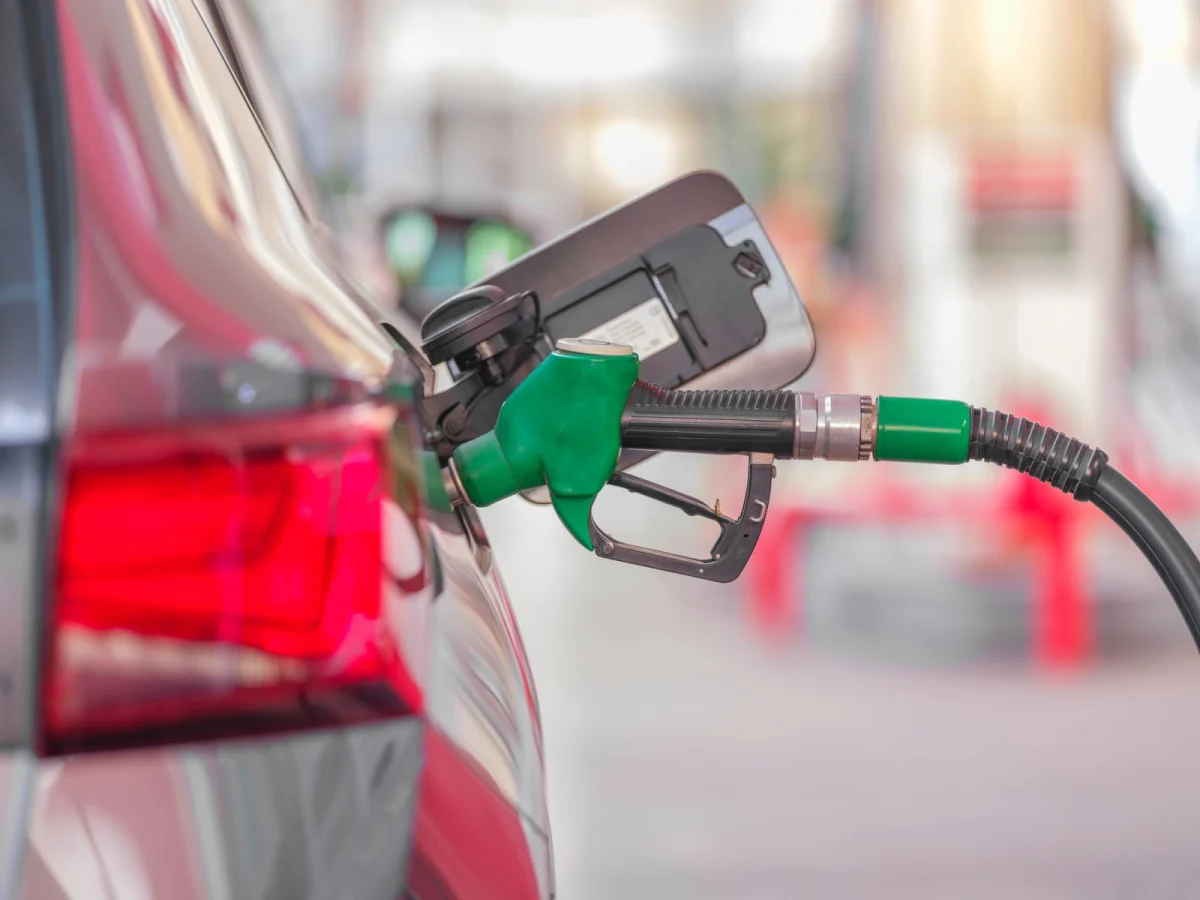
Table of contents
You are at the dealership with two window stickers in your hand. Same Honda CR-V, same color, same front-wheel drive. One is the gas EX at $33,150. The other is the Sport Hybrid at $35,630. The salesperson says the hybrid "pays for itself," and you want to know when.
That is the real hybrid vs gas car question. It is not about which one is greener or which one feels nicer. It is about how many years of fuel savings it takes to earn back a $2,480 premium, and whether you will still own the car by then.
The answer depends on three numbers you already know: how far you drive, where you drive, and what you pay for gas. Here is the math with real prices and ratings, so you can run it before you sign.
Why the Hybrid vs Gas Car Question Got Louder This Fall
Gas got expensive again this year. The national average hit $4.50 a gallon in the week of May 11, according to weekly data from the US Energy Information Administration. It has fallen since, to $3.805 in the week of November 16. That is still about 74 cents more than the $3.062 drivers paid in the same week a year earlier.
Shoppers have responded. Cox Automotive estimates that nearly 25% of all new vehicles sold in the third quarter were electrified in some way, counting regular hybrids, plug-in hybrids and full EVs. Fully electric models were only about 6.4% of that, so most of the electrified share is hybrids.
Automakers are following the buyers. On November 12, Honda announced that the next CR-V, America's best-selling SUV through October, will be sold only as a hybrid when it arrives next year. Honda says hybrids already make up more than half of CR-V sales and about 30% of all Honda brand sales.
So for many buyers, the choice between gas and hybrid on the same model is about to disappear. If you are shopping now, while both versions still sit on the lot, run the math below first.
The Payback Formula in One Line
Every hybrid payback calculation comes down to this:
Payback years = price premium ÷ (gallons saved per year × price per gallon)
Gallons saved is the easy part. Divide your yearly miles by each car's mpg and subtract. A car rated 30 mpg uses 400 gallons over 12,000 miles. A car rated 40 mpg uses 300. The difference, 100 gallons, is what you save.
The savings scale with miles driven and with fuel price, but the premium is fixed the day you buy. Double your mileage and you halve your payback period.
Worked Example: CR-V Gas vs Hybrid at Today's Prices
Here are the numbers. Prices come from Honda's launch pricing for the 2026 CR-V. Fuel economy comes from the federal government's official EPA ratings.
- CR-V EX, front-wheel drive, 1.5-liter turbo: $33,150 MSRP, 30 mpg combined (28 city, 33 highway)
- CR-V Sport Hybrid, front-wheel drive: $35,630 MSRP, 40 mpg combined (43 city, 36 highway)
- Premium: $2,480
Now run the formula at $3.805 a gallon for three typical mileage levels:
- 12,000 miles a year: saves 100 gallons, or $380. Payback in about 6.5 years.
- 15,000 miles a year: saves 125 gallons, or $476. Payback in about 5.2 years.
- 20,000 miles a year: saves about 167 gallons, or $634. Payback in about 3.9 years.
If you keep cars for eight or ten years, every one of those scenarios ends in profit. If you trade in every three years, only the heavy driver gets close to breaking even, and that is before resale value enters the picture.
How Gas Prices Move the Answer
Fuel price is the number you cannot control. Using the same 12,000-mile driver and the same 100 gallons saved:
- At $3.06, last November's price, savings fall to $306 and payback stretches to about 8.1 years.
- At $3.805, today's price, payback is about 6.5 years.
- At $4.50, this May's peak, savings rise to $450 and payback drops to about 5.5 years.
A hybrid works like a hedge. It does not save much when gas is cheap, but it softens the spikes. If this year's swing from under $3 to $4.50 made you nervous, that insurance has value beyond the average.
City Miles Decide Most of It
The combined rating hides the most important detail. Hybrids recover energy when you brake and can run on electric power at low speed. That helps most in stop-and-go traffic and barely matters at a steady 70 mph.
Look at the CR-V's split. In the city, the hybrid's 43 mpg beats the gas model's 28 by 15 mpg. On the highway, it is 36 against 33, a gap of just 3.
Run the 12,000-mile example both ways. A driver who does almost all city miles saves about 150 gallons, or $569 a year, and pays back the premium in about 4.4 years. A driver who does almost all highway miles saves about 30 gallons, or $115 a year. That payback takes more than 21 years, which is longer than most people keep any car.
If your commute is mostly interstate, the hybrid is not a money decision for you.
When the Premium Shrinks to Almost Nothing
The $2,480 gap is not fixed across the lineup. Trim ladders often overlap, and sometimes the hybrid sits right next to a well-equipped gas trim.
On the 2026 CR-V, the gas EX-L with all-wheel drive listed at $36,900. The Sport Hybrid with all-wheel drive listed at $37,130. That is a $230 difference.
The equipment is not identical, since the EX-L adds leather. But if you were already leaning toward a higher gas trim, the fuel math changes completely. The AWD versions are rated 29 mpg (gas) and 37 mpg (hybrid). At 12,000 miles and $3.805 gas, that gap saves about $340 a year, so $230 pays back in under a year.
Before you compare, line up trims by price, not just by name. The cheapest hybrid often competes with the mid-level gas car, not the base one.
What Financing Does to the Payback
Most people do not pay cash. If the hybrid premium goes into your loan, you pay interest on it, and that interest belongs in the formula.
Take the $2,480 premium on a 60-month loan at 7%. It adds about $49 to your monthly payment and about $466 in total interest. Your real premium is closer to $2,946. At 12,000 miles and today's gas price, payback moves from 6.5 years to about 7.7 years.
You can check your own rate and term with our car loan EMI calculator. Enter the loan amount with and without the premium, and the difference in monthly payment is your true monthly cost of going hybrid. If you are unsure what the monthly figure includes, our glossary explains how an EMI splits between interest and principal.
Longer loans make this worse. If you are tempted to stretch the term to keep the payment down, read what an 84-month car loan really costs before you add a premium to it.
What the Sticker Math Leaves Out
Fuel is the biggest variable, but not the only one. A few other factors push the answer one way or the other.
Cold Weather Cuts Hybrid Mileage
AAA tested three hybrids and three EVs in a lab this spring. At 20°F with the cabin heated to 72°F, the hybrids lost 22.8% of their fuel economy compared with mild weather. AAA put the extra cost at $28.44 per 1,000 miles at March fuel prices. At 95°F with the air conditioning running, the loss was 12%.
Gas-only cars also burn more fuel in the cold, and AAA's study did not measure them, so this does not prove the gap narrows. It does mean the EPA number on the sticker is a mild-weather number. If you live where winters are long, assume your real savings land below the estimates above.
The Battery Question
The hybrid battery is the one big part a gas car does not have. Ask the dealer for the battery warranty terms in writing, including the years and miles covered. A long warranty removes most of the risk for a first owner who keeps the car through the payback period.
The Rest of the Budget
Fuel is one line in a longer budget. For the full picture, see our breakdown of the real monthly cost of owning a car.
Who Should Skip the Hybrid
The hybrid is not the right call for everyone. You are probably better off with the gas version if:
- You drive under 8,000 miles a year. At 30 vs 40 mpg, you save about 67 gallons, roughly $254 a year at today's price. A $2,480 premium takes almost 10 years to recover.
- Your miles are mostly highway. As the CR-V figures show, the highway gap is small.
- You trade in every two or three years. You leave before the savings arrive, unless resale value makes up the difference.
- The premium is large on your chosen model. Premiums vary widely by brand and trim, so run the formula on the exact cars you are comparing.
On the other hand, if you drive in traffic, put on 15,000 miles a year or more, and keep cars for a long time, the hybrid is very likely to win. That's the easy part of this decision. The harder part is being honest about your own driving.
Frequently Asked Questions
Is a hybrid worth it if I don't drive much?
Usually not on fuel savings alone. At 8,000 miles a year, a 10 mpg improvement over a 30 mpg car saves about 67 gallons, roughly $254 a year at $3.805 gas. A premium like the CR-V's $2,480 would take close to a decade to recover. A hybrid can still make sense if the premium is small or you value lower emissions and quieter driving.
How long does it take a hybrid to pay for itself?
Divide the price premium by your yearly fuel savings. For a CR-V Sport Hybrid against the gas EX, that works out to about 6.5 years at 12,000 miles a year and $3.805 gas, about 5.2 years at 15,000 miles, and about 3.9 years at 20,000 miles.
Do hybrids get worse gas mileage in winter?
Yes. In AAA's lab testing, hybrids lost 22.8% of their fuel economy at 20°F with the heat running, compared with mild temperatures. Gas cars also lose efficiency in the cold, so budget for lower winter mileage either way.
The Bottom Line on Hybrid vs Gas
The hybrid does pay for itself for most drivers, just not as fast as the showroom pitch suggests. At today's gas price, a typical 12,000-mile driver needs about six and a half years to earn back a $2,480 premium, and longer if the premium is financed.
Your best move is to run your own numbers. Take your real yearly mileage, your city and highway split, and the premium on the exact trims you are comparing. If the payback lands inside the years you plan to keep the car, buy the hybrid. If it does not, the gas model is the cheaper car for you, and there is nothing wrong with that.
Written by
Marcus Vance
Business & Money
Writes on business and personal finance for Quick Trend Insights, translating markets, rates, and company strategy into what it costs or saves a household.
Related Articles
View all
Automatic Emergency Braking Fails a Key Intersection Test
Automatic emergency braking stops most rear-end crashes, but AAA found 3 of 4 new cars failed a common intersection test. Here is what to do about it now.
Used EV Battery Health: What to Check Before You Buy
Used EV battery health varies widely between identical cars. Learn how fast packs wear, what warranties cover, and the checks to run before you buy a used EV.

EV Range in Cold Weather: What You Really Lose
EV range in cold weather drops 22% to 39%, per Recurrent and AAA data. See what winter adds to your charging bill and six habits that win back the lost miles.