
World Chess Championship: How Gukesh vs Sindarov Works
World Chess Championship explained: how Gukesh vs Sindarov works, from 14 games and time controls to tiebreaks and how the USD 2.5 million prize fund is split.
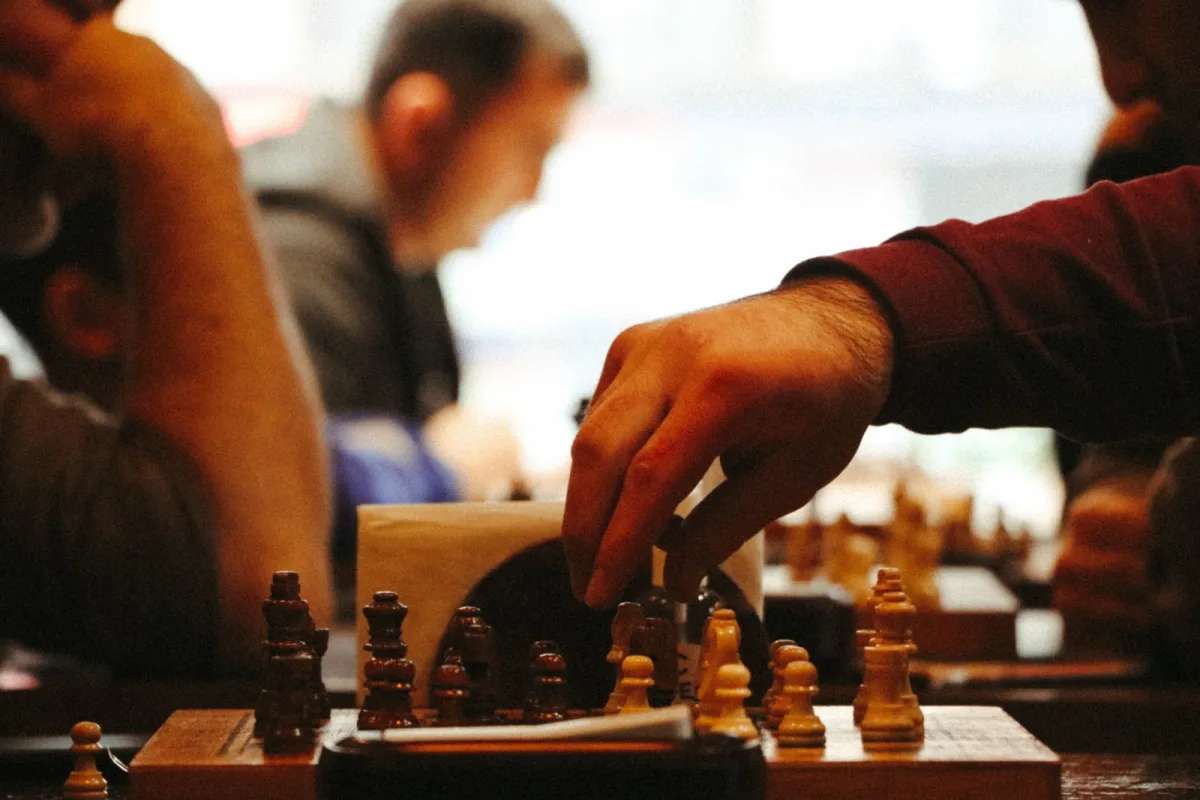
Table of contents
Picture yourself up late in Chennai or Tashkent, watching two 20-year-olds stare at a board for five hours without a single piece moving for twenty minutes. Then one move flips the evaluation bar, and USD 200,000 in prize money quietly changes hands. That is what the World Chess Championship between Gukesh Dommaraju and Javokhir Sindarov will feel like over the next three weeks.
The match opened with a ceremony in Geneva on November 22, and the first game is on November 24. If you only know that Gukesh is the champion and Sindarov is the challenger, the rules can look strange. Why 14 games? Why can't players agree a quick draw? And why does a 7.5 to 6.5 win pay almost the same as a loss? This guide answers all of it, using the regulations FIDE has published.
Who Is Playing, and How Sindarov Earned His Seat
Gukesh holds the title he won in Singapore. In December 2024, aged 18, he beat Ding Liren 7.5 to 6.5, taking the deciding point in the 14th and final game. That made him the youngest world champion in history. FIDE notes he became a grandmaster at 12 and won individual Olympiad gold in both 2022 and 2024.
Sindarov took the hard road to Geneva. He first won the FIDE World Cup in Goa in late November 2025, beating China's Wei Yi in a two-game tiebreak, which made him the youngest World Cup champion. That result put him into the Candidates Tournament, the eight-player event that picks the challenger.
A record Candidates run
The Candidates was held in Cyprus in April. Sindarov finished on 10 points from 14 games, with six wins, eight draws and no losses. ChessBase called it the highest score of the modern Candidates era, and Chess.com's final table shows he collected 170,000 euros and gained about 30 rating points.
He led almost from the start. After six rounds he had 5.5 out of 6 and sat 1.5 points clear of Fabiano Caruana. He then closed out the event with a quick final-round draw against Wei Yi, the same player he had beaten in the World Cup final.
The numbers favour the challenger
This is the youngest title match in history, since both players are 20. On paper, Sindarov arrives as the favourite:
- Rating: FIDE lists Sindarov at a career-high 2782 and fourth in the world. Gukesh is at 2710, ranked 26th.
- Head to head: In classical games Sindarov leads 2.5 to 0.5. His two wins came in 2018 and 2022, and their most recent game, at Wijk aan Zee earlier this year, was drawn.
- History: Sindarov is the first player from Uzbekistan to reach a classical World Championship match.
Ratings do not decide matches, though. Gukesh's 2024 match was level going into the final game, and a single game settled it.
World Chess Championship Format: 14 Games to 7.5 Points
The match is a race, not a fixed schedule. FIDE's regulations set a maximum of 14 classical games. A win is worth 1 point, a draw 0.5, and the first player to 7.5 points wins the title immediately. Any remaining games are cancelled.
Why 7.5? Because 14 games hold 14 points in total. Reaching 7.5 means your opponent can no longer catch you, even if they win every game left. So if one player scores 7.5 after 11 games, the last three are never played.
The no-early-draw rule
FIDE bans draw offers before Black's 40th move. Before then, a game can only end in a draw through the chief arbiter or deputy chief arbiter, and only for a threefold repetition or stalemate. The rule exists to stop players from shaking hands after 15 moves to save energy, a habit that critics said drained title matches of drama.
Repetition is still a loophole. If both players are happy to repeat moves, the arbiter will confirm the draw. What the rule removes is the casual offer across the board when the position is still full of play.
Time Controls: Why Each Game Can Run Five Hours
Each player starts with 120 minutes for the first 40 moves. Once move 40 is made, each clock gets another 30 minutes for the rest of the game. From move 41, every move adds 30 seconds back to the player's clock.
Here is what that means in practice. Without the increment, each player has 150 minutes, so the two clocks together hold 300 minutes, or five hours. A 60-move game adds 20 increments per player after move 40, which is another 10 minutes each. That is why a long endgame can push past six hours with breaks.
Time pressure near move 40 is where matches turn. A player who spends 40 minutes on move 18 may have only seconds left for moves 35 to 40, and there is no increment to save them until move 41. Watch the clocks in that window as closely as the board.
If you are following from India, Geneva runs four and a half hours behind Indian Standard Time in winter. Our time zone converter turns the official start time into your local time in a few seconds.
Tiebreaks: What Happens After a 7 to 7 Score
If the classical games end level, the title is settled on December 12, in a ladder of faster games. FIDE's published format runs like this:
- Four rapid games at 15 minutes each, plus 10 seconds per move.
- If still level, two games at 10 minutes plus 5 seconds.
- If still level, two blitz games at 3 minutes plus 2 seconds.
- If still tied, single 3 plus 2 blitz games, with colours reversed after each draw, until someone wins a game.
That last step is sudden death. There is no armageddon game with unequal clocks in this format, so the match cannot end in a draw. Every step is shorter than the last, which shifts the edge toward the player with faster calculation and steadier nerves.
Tiebreak rules work the same way in other sports: they reward a different skill than the main contest. If you want to see how other leagues handle level scores, our guide to how NFL tiebreakers decide playoff spots shows a very different approach.
Prize Fund: How the USD 2.5 Million Is Split
The total prize fund is USD 2.5 million, net of any local taxes. The split rewards wins, not the title alone. Each player receives USD 200,000 for every game won, including a win by forfeit. Whatever is left is divided equally.
There is one exception, written in to keep the maths from breaking. If the final score is 7.5 to 6.5 with 13 decisive games, or 8 to 6 with all 14 decisive, the winner takes USD 1.3 million and the loser USD 1.2 million. The same 1.3 to 1.2 split applies if the match goes to tiebreaks.
Worked example: three ways the money could land
Scenario 1, a clear win. Say the champion wins 4 games, loses 2 and draws 7, for 7.5 to 5.5 after 13 games. Six decisive games pay out 6 times USD 200,000, or USD 1.2 million. The remaining USD 1.3 million splits into USD 650,000 each.
- Winner: 4 x 200,000 + 650,000 = USD 1.45 million
- Loser: 2 x 200,000 + 650,000 = USD 1.05 million
Scenario 2, a rout. One player wins 7 games and draws 1, finishing 7.5 to 0.5 after eight games. Seven wins pay USD 1.4 million. The remaining USD 1.1 million splits into USD 550,000 each, so the winner takes USD 1.95 million and the loser USD 550,000.
Scenario 3, a bloodbath. If the match ends 8 to 6 with all 14 games decisive, the standard formula would need 14 times USD 200,000. That is USD 2.8 million, more than the fund holds. The fixed USD 1.3 million to USD 1.2 million split exists for exactly this case.
The design is clear: every decisive game moves USD 200,000 from the shared pot to one player. A cautious match full of draws pays both players almost the same. To convert those figures into rupees or som at today's rate, use our currency converter. For a comparison with how tennis pays per win, see what every win is worth at the ATP Finals.
What to Watch as the Match Unfolds
The first three games set the tone. An early loss is not fatal over 14 games, but it changes how both players use their White games. Sindarov has gone unbeaten through an entire Candidates, and a quick lead for him would force Gukesh to take risks with Black.
Keep an eye on three things:
- Opening surprises with Black. Over 14 games each player gets seven Blacks, and holding them comfortably is half the battle.
- Clock use before move 40. Deep thinking early leaves a player short of time at the control.
- The score after game 10. A two-point lead with four games left forces the trailing player to win at least two of them just to reach a tiebreak.
FIDE is streaming every game on its YouTube channel, with commentary from grandmasters Peter Leko and Peter Svidler.
Frequently Asked Questions
When does the Gukesh vs Sindarov World Chess Championship start?
The opening ceremony was on November 22 in Cologny, near Geneva, and game 1 is on November 24. The last scheduled classical game is December 11, with tiebreaks on December 12 if needed.
How many games are in the Gukesh vs Sindarov match?
Up to 14 classical games. The first player to 7.5 points wins, so the match can end before all 14 are played.
What is the prize money for the World Chess Championship?
The fund is USD 2.5 million. Each player earns USD 200,000 per game won and the remainder is shared equally, except in very close or tiebreak finishes, where the split is USD 1.3 million to USD 1.2 million.
What happens if Gukesh and Sindarov are tied after 14 games?
They play four rapid games at 15 minutes plus 10 seconds. If still level, they move to 10 plus 5, then 3 plus 2 blitz, then sudden-death blitz games until one player wins.
How did Sindarov qualify for the World Championship?
He won the World Cup in Goa to reach the Candidates, then won the Candidates in Cyprus in April with an unbeaten 10 out of 14.
The Bottom Line on Gukesh vs Sindarov
This World Chess Championship is short on mystery in its rules and long on tension in its maths. Fourteen games, 7.5 points to win, no early draw offers and a sudden-death finish mean the match will produce a champion by December 12 at the latest. The prize design adds a quiet incentive: every win is worth USD 200,000, so neither player gains much by playing safe.
Gukesh has already proven he can win a title match that goes the distance. Sindarov arrives with the higher rating, a winning head-to-head record and the best Candidates score in modern history. Pick your side, set an alarm for the start time, and watch the clocks around move 40.
Written by
Eli Turner
Culture & Play
Covers entertainment, gaming, and sport for Quick Trend Insights, tracking how streaming economics and platform decisions reach the audience.
Related Articles
View all
Premier League Squad Cost Ratio: How the 85% Rule Works
The Premier League squad cost ratio caps squad spending at 85% of revenue. See what counts, where the red line sits, and how points deductions are worked out.
NBA Second Apron: Why Contenders Break Up Their Rosters
The NBA second apron sits at $221.7 million this season. See what it blocks in trades and free agency, how the draft pick freeze works, and a worked example.
NFL Tiebreakers Explained: How Ties Decide Playoff Spots
NFL tiebreakers explained step by step: head-to-head, conference record, strength of victory and the coin toss, with real math on how 10-7 teams get split.