
Automatic Emergency Braking Fails a Key Intersection Test
Automatic emergency braking stops most rear-end crashes, but AAA found 3 of 4 new cars failed a common intersection test. Here is what to do about it now.
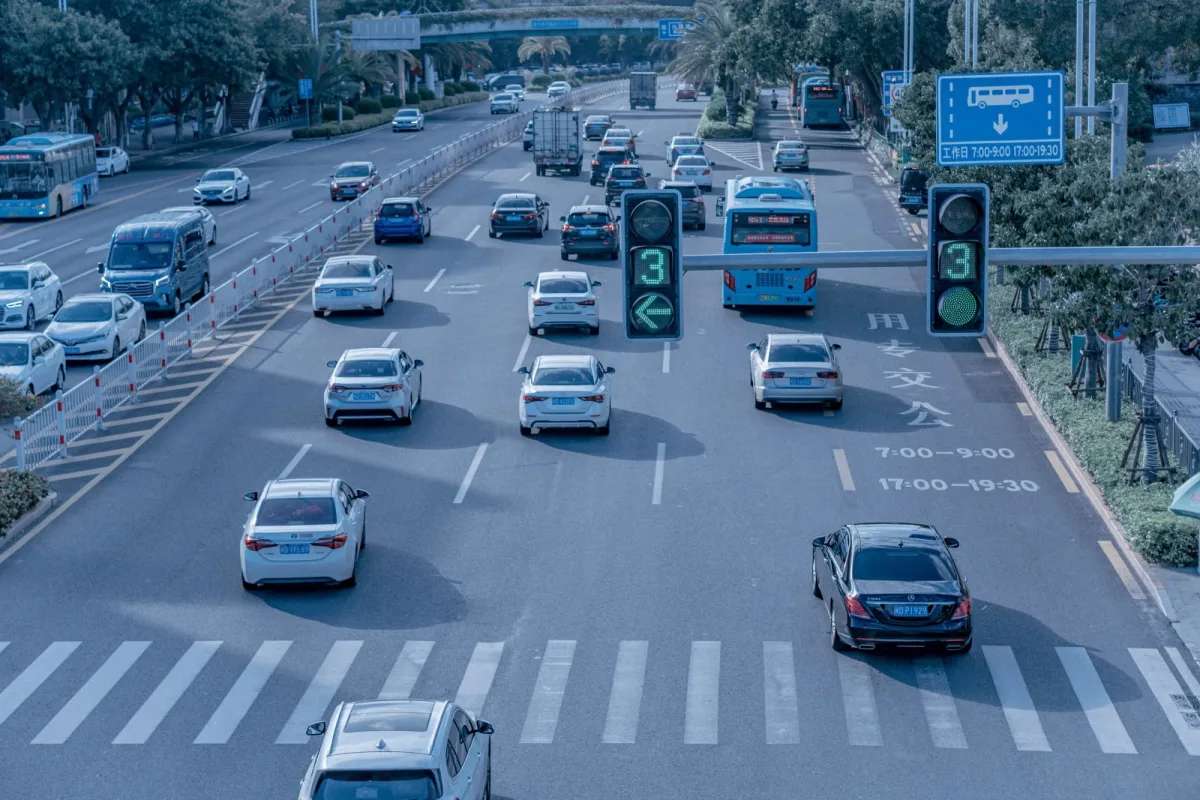
Table of contents
Your light is green and you are rolling through at 30 mph. A driver on the side street, waiting to turn right, decides there is room and pulls out into your lane. You are looking ahead, maybe glancing at the mirror. Your new car has automatic emergency braking. Will it stop you?
If AAA's latest test is any guide, probably not. In November, AAA ran four 2026 vehicles through exactly that scenario. Three of the four failed to prevent the crash, even though all four were sold with intersection braking as standard equipment.
That does not mean the technology is useless. It works very well in the crashes it was designed for. The problem is that most drivers do not know where that line sits. This guide explains what the test found, why intersections are hard for these systems, and what you should do differently behind the wheel.
What AAA's Automatic Emergency Braking Test Found
AAA worked with the Automobile Club of Southern California's Automotive Research Center to test four 2026 model-year vehicles. Each came with intersection automatic emergency braking as standard. The team ran 74 closed-course runs in daylight, using robotic soft targets that look like cars to the sensors but do no damage.
AAA did not name the four models in its release. So the findings describe the state of the technology, not one bad brand.
The Test Every Car Passed
The first scenario mirrors a test that Euro NCAP, the European safety rating program, has used since 2020. Your car turns left across oncoming traffic at about 9 mph, signal on, while another vehicle approaches at about 19 mph.
All four vehicles avoided a collision. This is the classic left-turn crash, and automakers have had years to tune for it because it appears in a published test.
The Test Three of Four Failed
The second scenario flipped the roles. Your car drives straight at 30 mph. Another vehicle, coming from a side road, turns right into your path at 5 mph.
Three of the four systems did not prevent the collision. AAA also stopped testing any configuration early if a car gave no warning and no braking in its first three runs, to avoid damaging equipment.
"AEB is making progress in the limited intersection scenarios it is tested to handle," said Greg Brannon, AAA's director of automotive engineering and research. "Unfortunately, performance outside those scenarios is spotty."
That is still progress. In 2022, AAA tested four vehicles with standard braking systems that did not claim intersection ability. In two common intersection scenarios, none of them gave a single alert or braked in any run.
Why Intersections Are Hard for These Systems
Automatic emergency braking was built first for one job: stopping you from hitting the car ahead. That crash is simple to detect. The other vehicle is in front of you, in your lane, and getting closer at a steady rate.
Intersections break every one of those assumptions. The other car starts outside your lane. It may be moving across your view rather than toward you. It may be turning, so its path curves. A system has a fraction of a second to decide whether that car will enter your lane or simply stop at its line.
Here's the uncomfortable part. Software tends to get good at what it is tested on. Automakers tune their braking algorithms against known protocols, and for intersections the known protocols are thin. AAA notes that US test procedures for vehicle-to-vehicle braking have focused on rear-end crashes. NHTSA wrote a draft intersection test procedure in 2019 for research use, but no final standard has been put in place.
There is also a false-alarm problem. A system that braked hard every time a car crept toward a stop line would slam on your brakes several times a day. Engineers have to hold back until a crash looks very likely, and at an intersection that moment can arrive too late to stop.
Where Automatic Emergency Braking Does Work
None of this should make you distrust the system in front-to-rear situations. The evidence there is strong.
- Rear-end crashes: The Insurance Institute for Highway Safety found that forward collision warning combined with automatic braking cuts rear-end crashes in half. Warning alone cuts them by 27%.
- Pedestrians: IIHS research found that systems designed to detect pedestrians reduce pedestrian crashes by 27%.
- Darkness is a weak spot: IIHS says pedestrian detection can struggle at night. It added nighttime pedestrian tests in 2022, and newer systems have improved.
The technology is also nearly universal now. IIHS reports that 20 automakers, covering 99% of US light vehicle sales, pledged to make it standard. By the 2023 deadline, all 20 confirmed that at least 95% of their vehicles up to 8,500 pounds had it. The pledge extends to vehicles up to 10,000 pounds by the 2026 model year.
So if you drive a recent car, you almost certainly have automatic emergency braking. What you may not have is a system that covers the crash types that kill people at intersections.
The Intersection Crashes That Matter Most
AAA calls intersections "some of the most dangerous places on the road," and the numbers back that up. IIHS reports that 1,119 people were killed in red light running crashes in 2024, and more than 141,000 were injured. Those are only the crashes where someone ran a signal. They leave out failure-to-yield turns like the one AAA tested.
Think about which way the danger comes from in those crashes. A red light runner usually enters from the side at full speed. A turning driver cuts across or into your lane. Both are the crossing and merging paths that today's systems handle least reliably.
Holiday traffic raises the stakes. If you are weighing a long road trip this week, our look at whether to drive or fly for Thanksgiving covers the cost side. Busy roads, unfamiliar towns and tired drivers all mean more intersections where someone misjudges a gap.
Driving Habits That Cover the Gap
The fix for now is you. AAA's advice is to treat intersection braking as an extra layer of protection, not a replacement for attention. In practice, that means a few specific habits.
- Cover the brake. When a car is waiting to turn into or across your path, lift your right foot off the gas and hold it just above the brake pedal. AAA recommends this because it cuts your reaction time when the other driver goes.
- Watch the wheels, not the signal. A turn signal tells you what a driver plans. The front wheels tell you what the car is doing. If they start rolling, assume the car is coming.
- Pause on a fresh green. Look left and right before you go. A late red light runner is exactly the side-on threat these systems are weakest against.
- Scan side streets as you approach. Any car nosed up to a stop line is a possible turn-into-path crash. Ease off early, especially at 30 mph and above.
- Learn your car's settings. Many vehicles let you change warning timing or switch features off. Check the owner's manual so you know whether your car has an intersection function and whether it is turned on.
What Half a Second Buys You
Here is why covering the brake matters. At 30 mph, your car travels 44 feet every second. Moving your foot from the gas to the brake takes a moment before the brakes do anything.
Say covering the brake trims that moment by just half a second. At 30 mph, that is 22 feet of road you no longer cover at full speed, more than the length of a typical midsize SUV. At 45 mph, the same half second is 33 feet. In a turn-into-path crash, that distance can be the difference between a hard stop and a hit.
What to Ask Before You Buy Your Next Car
Window stickers and brochures list "automatic emergency braking" as if it were a single feature. It is not. Different systems cover different crash types, speeds and lighting conditions.
When you shop, ask the dealer three plain questions. Does this car have intersection or turn assist braking, and is it standard? Does it detect pedestrians and cyclists at night? Which crash scenarios has the automaker tested it against? If the salesperson cannot answer, the owner's manual usually can.
Keep the repair side in mind too. Cameras and radar units often sit in the windshield and bumper, and replacing or recalibrating them adds to the cost of even a minor fender bender. That is one reason premiums can climb across the board, which we cover in why your car insurance went up without a claim.
Frequently Asked Questions
Does automatic emergency braking work at intersections?
Sometimes. In AAA's November test of four 2026 vehicles with intersection braking, all four avoided a crash in a standard left-turn scenario. But three of the four failed to prevent a crash when another car turned right into their path at 5 mph while the test car drove straight at 30 mph.
Do all new cars have automatic emergency braking?
Nearly all do. IIHS reports that 20 automakers covering 99% of US sales pledged to make it standard, and all of them confirmed that at least 95% of their lighter vehicles had it by the 2023 deadline. Intersection functions are less common and vary by model.
How much does automatic emergency braking reduce crashes?
IIHS research found that forward collision warning plus automatic braking cuts rear-end crashes in half, and that systems which detect pedestrians reduce pedestrian crashes by 27%. Its benefits at intersections are less proven.
Can I turn off automatic emergency braking?
Many cars let you adjust warning timing or switch some functions off through the settings menu. How it works varies by model, so check your owner's manual. Leaving the system on is the safer choice for most drivers.
Trust It for Rear-End Crashes, Not Side Streets
Automatic emergency braking is one of the best safety features ever put in a car. It halves rear-end crashes and catches many pedestrian collisions. But AAA's results show it is still a specialist, strong in the tested scenarios and unreliable in the ones it has not been tuned for.
Until US test standards cover more intersection crashes, the side street is your job. Cover the brake when a car might pull out, look both ways on a fresh green, and treat the beep from your dashboard as a backup, never as the plan.
Written by
Marcus Vance
Business & Money
Writes on business and personal finance for Quick Trend Insights, translating markets, rates, and company strategy into what it costs or saves a household.
Related Articles
View all
Hybrid vs Gas Car: How Long Until the Hybrid Pays Off?
Hybrid vs gas car: at $3.80 gas, a CR-V hybrid's $2,480 premium pays back in about 6.5 years. Run the payback math for your miles, commute and car loan.
Used EV Battery Health: What to Check Before You Buy
Used EV battery health varies widely between identical cars. Learn how fast packs wear, what warranties cover, and the checks to run before you buy a used EV.
EV Range in Cold Weather: What You Really Lose
EV range in cold weather drops 22% to 39%, per Recurrent and AAA data. See what winter adds to your charging bill and six habits that win back the lost miles.