
New Home Sales Beat Resales: The Rate Buydown Math
New home sales jumped in October while resales hit a 16-year low. See how builder rate buydowns work, what they cost and when a price cut is the better deal.
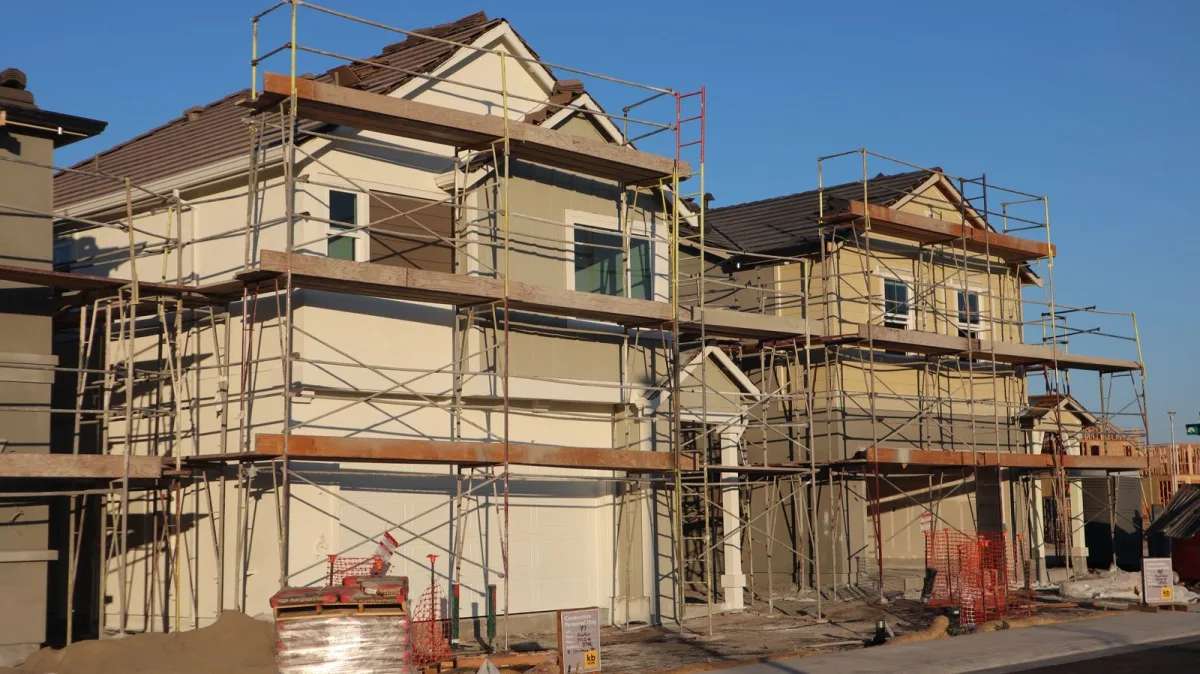
Table of contents
You tour a resale house listed at $420,000 and a brand-new one down the road at $400,000. The new one also comes with a builder offer: a mortgage rate two points below the market for the first year. On paper the new home looks cheaper twice over. Whether it actually is depends on math most buyers never run.
That choice explains the strangest split in housing right now. New home sales rose to an annual pace of 701,000 in October, according to the Census Bureau, while sales of existing homes fell to 3.75 million, the slowest since 2010, according to the National Association of Realtors. Same mortgage rates, opposite results.
This guide explains why builders are winning, how a rate buydown really works, and when a straight price cut would leave you better off.
Why New Home Sales Are Rising While Resales Stall
Start with the people selling. Most owners of existing homes are not in a hurry. Many locked in mortgages when rates were far lower, so selling means giving up a cheap loan for a pricier one. That lock-in keeps listings thin and sales slow, even as inventory slowly builds to 1.59 million homes, or 5.1 months of supply, per NAR.
Builders face the opposite problem. They have finished houses and carrying costs, and every unsold month costs money. The Census Bureau counted 470,000 new homes for sale at the end of October, an 8.0-month supply at the current pace. A builder with that much stock will do almost anything to close.
And they are. The National Association of Home Builders' November survey found 46% of builders cut prices, the highest share since the pandemic, with an average cut of 6%. Some 68% offered sales incentives. Builder confidence fell to 25, its lowest reading since April 2012. NAHB chief economist Robert Dietz blamed "mortgage rates above 7%, softer consumer confidence and an uncertain economic outlook."
New homes now cost less than used ones
The surprise is in the prices. The median new home sold for $391,300 in October, down 3.2% from a year earlier, according to the Census Bureau. The median existing home sold for $416,700, up 0.4%, per NAR.
For many buyers, new construction is now the cheaper option. Builders are absorbing costs with price cuts and incentives, while resale prices keep inching up because so few owners will sell.
A note on the noisy data
The Census figure comes with a big margin of error. October's 14.2% monthly jump carries a confidence range of plus or minus 22.6%, so the bureau cannot even say for sure that sales rose from September. Look at the trend over several months, not one release. The year-over-year gain and the gap with resales are the more reliable signals.
How a Builder Rate Buydown Works
A rate buydown means someone pays money upfront to lower your mortgage interest rate. When a builder does it, the cost comes out of the builder's margin instead of a price cut. Builders like it because the list price stays high, which protects the value of every other house in the neighborhood.
A quarterly new-construction report from a major US home listings site, reported by RealEstateNews and National Mortgage Professional, shows the effect. In the third quarter, new-home buyers averaged a 6.19% rate on 30-year fixed loans, against 6.68% for buyers of existing homes. Counting adjustable loans and other programs, the gap was wider: 5.01% versus 6.15%, an edge of about 1.14 percentage points.
There are two main types, and they behave very differently:
Permanent buydown: the builder pays discount points to cut the rate for the life of the loan. Each point costs 1% of the loan amount, and how much it lowers the rate varies by lender.
Temporary buydown: the builder funds an account that subsidizes your payment for one to three years. A "2-1" buydown cuts the rate by 2 points in year one and 1 point in year two. From year three, you pay the full rate.
The worked example: a 2-1 buydown
Take a $400,000 new home with 10% down, so a $360,000 loan at a 7% note rate. That is close to today's market, with Freddie Mac's 30-year average at 7.21% as of November 25.
Full payment at 7%: about $2,395 a month in principal and interest.
Year one at 5%: about $1,933, saving $462 a month.
Year two at 6%: about $2,158, saving $237 a month.
Year three onward: back to $2,395.
The builder's cost is the total subsidy: $462 times 12 plus $237 times 12, or about $8,400. You save that same $8,400, and then it is gone. Your loan balance, your note rate and your long-term cost do not change.
When a Price Cut Beats a Buydown
Now ask the builder for that same $8,400 as a price cut instead. The house drops to about $391,600. With 10% down, your loan falls to about $352,400.
Monthly payment at 7%: about $2,345, or roughly $50 less than before.
Savings over 30 years: about $50 a month for 360 months, around $18,000 in nominal terms.
Bonus: a smaller loan, a lower purchase price for property taxes in many areas, and less money at risk if prices dip.
So which wins? If you expect to keep the loan for many years, the price cut usually comes out ahead. If you expect to refinance soon because rates fall, the temporary buydown front-loads your savings into the years you will actually have that loan.
The permanent buydown middle ground
A permanent buydown can beat both, but it costs the builder much more. Cutting a $360,000 loan from 7% to 6% permanently drops the payment by about $237 a month for 30 years. That is worth far more than $8,400, which is why builders reserve it for slow-selling inventory or buyers using their in-house lender.
You can test any of these scenarios with our loan EMI calculator, which shows the monthly payment at any rate and term.
Questions to Ask Before You Take the Deal
Builder incentives are real money, but the fine print matters. Ask these before you sign:
Is the buydown temporary or permanent? Get the rate for every year of the loan in writing.
Must I use the builder's lender? Many offers require it. Compare that lender's fees and note rate against an outside quote.
Would you give me the same dollars as a price cut? Put both options side by side.
Can I qualify at the full rate? Lenders often require it, and you need to afford year three, not just year one.
What happens to unused subsidy if I refinance or sell early? Some contracts apply it to your balance; others do not.
Every quote turns on the interest rate you lock, so get each offer as a full loan estimate. Our breakdown of what 7% mortgage rates cost you shows the payment math at several loan sizes.
What It Means for the Housing Economy
The split matters beyond your own purchase. Home sales drive spending on furniture, appliances, moving and renovation, so a frozen resale market drags on the wider economy. New construction also adds supply, which is the one force that can ease prices over time.
The risk is that builders are buying sales with margin. With confidence at a 14-year low and price cuts at a post-pandemic high, they cannot keep subsidizing rates forever. If mortgage rates stay above 7%, expect fewer housing starts next year, which would tighten supply again. The next Census new-home report is due December 23, and NAR reports November resales on December 9.
Related reading: Housing Inventory Is Back and Buyers Have Leverage.
Run your own numbers: The mortgage calculator shows your full monthly payment, including property tax, insurance and mortgage insurance, with a year-by-year schedule.
Frequently Asked Questions
Why are new home sales up when existing home sales are down?
Builders are cutting prices and buying down mortgage rates to move finished inventory, while many existing owners refuse to sell and give up low-rate mortgages. That leaves new homes as the more affordable choice for many buyers.
Is a 2-1 buydown worth it?
It helps if you need lower payments in the first two years or expect to refinance soon. If you plan to keep the loan long term, the same dollars as a price cut usually save more over the life of the loan.
Are new homes cheaper than existing homes right now?
By median price, yes. The median new home sold for $391,300 in October, against $416,700 for existing homes. Size, location and finishes differ, so compare price per square foot and total monthly cost.
Do I have to use the builder's lender to get the incentive?
Often, yes. Many builder rate offers require their affiliated lender. Get an outside loan estimate as well, and compare fees and the full note rate, not just the teaser rate.
Run the Numbers, Not the Headline
New home sales are rising because builders are paying to make loans cheaper, and resales are stuck because owners will not give up the loans they already have. For you as a buyer, that creates real bargaining power at new developments.
Ask for the incentive in two forms, a buydown and a price cut, and compare the total cost over the years you expect to keep the loan. The lower payment in year one is the sales pitch. The payment in year three is the bill.
Disclaimer: This article is for informational purposes only and does not constitute financial advice. Always consult with a qualified financial advisor before making investment decisions. Past performance is not indicative of future results.
Written by
Marcus Vance
Business & Money
Writes on business and personal finance for Quick Trend Insights, translating markets, rates, and company strategy into what it costs or saves a household.
Related Articles
View all
Monetary Policy Transmission: Why RBI Hikes Take Months
Monetary policy transmission explained with RBI data: why loans reprice within a quarter, deposits wait for maturity, and inflation lags a year or more.
Gas Standing Charges Scrapped: Who Pays More
Gas standing charges are set to move into unit rates. Using Ofgem's new usage figures, see the break-even point and why heavy users could pay £24 to £51 more.
Fed Dot Plot: How to Read the Rate Forecast
The Fed dot plot returns December 9. Learn to read it with September's real dots, see how one official can move the median, and why its forecasts often miss.