Why Your Grocery Bill Beats the Inflation Rate
Inflation slowed but your grocery bill did not fall. Here is the gap between the rate and the level, and why food now costs about 32% more than it did.
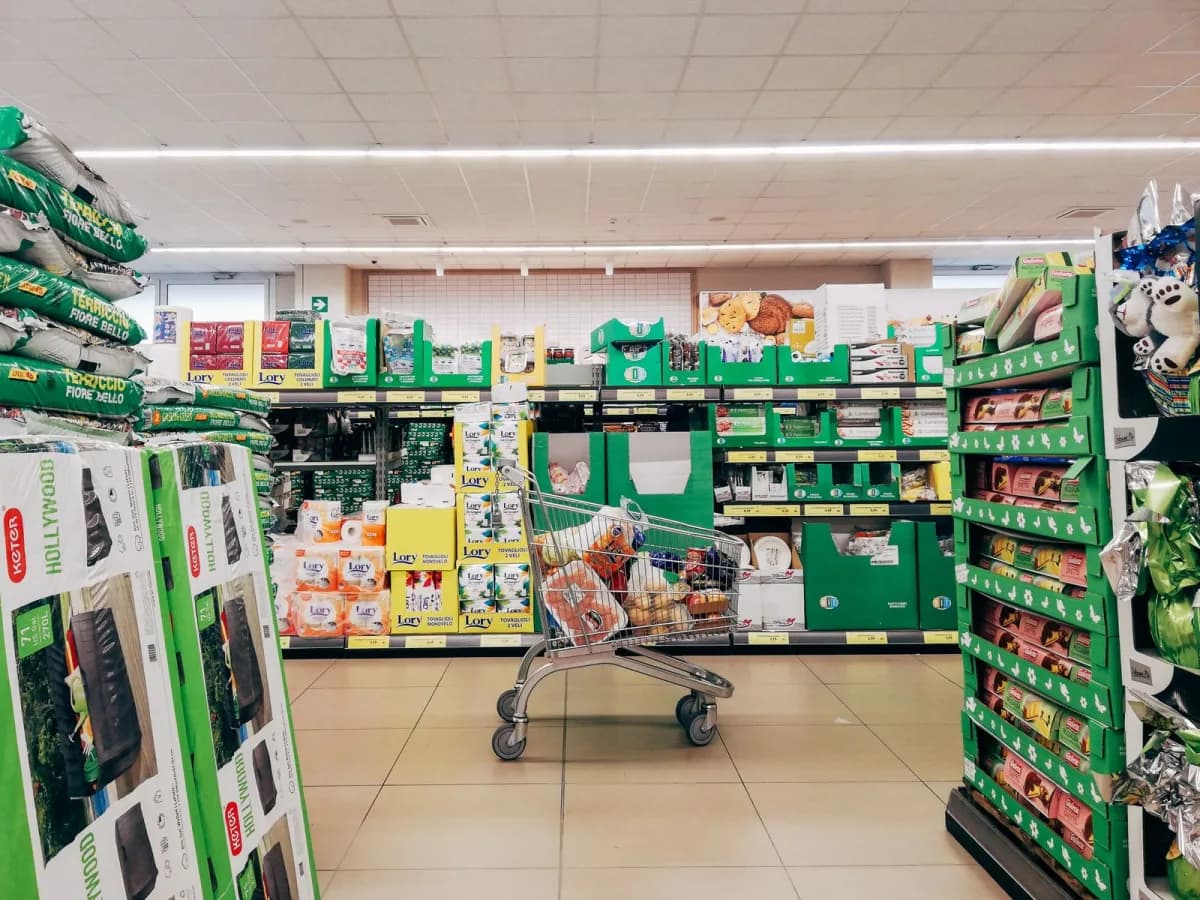
Table of contents
The news says inflation is cooling. Your weekly shop says otherwise, and the gap between those two statements is the most misunderstood thing in household finance.
Both are accurate. Grocery prices are currently rising at about 2.9% a year, which is close to normal. They are also about 32% higher than they were at the start of the decade, and that part is not coming back.
Understanding why a falling inflation rate does not lower your grocery bill changes what you do about it, because it moves the problem from waiting for relief to adjusting to a new baseline.
Key Takeaways
- A falling inflation rate means prices are rising more slowly, not that they are coming down
- Groceries are climbing around 2.9% a year, but the cumulative increase since the start of the decade is roughly 32%
- 76% of Americans now name cost of living as their biggest economic concern, up from 58% a year earlier
- Shelter inflation has eased to about 3.2%, slipping below the overall index
- Prices falling outright is deflation, which is rare and generally signals a damaged economy
The rate and the level are different things
This is the whole article in one idea, so it is worth being precise.
The inflation rate measures how fast prices are climbing. The price level is where they have climbed to. When the rate falls from 9% to 2.9%, prices are still going up. They are just going up more slowly.
A useful way to picture it: inflation falling is a car easing off the accelerator, not reversing. The car keeps moving forward, just gently. To actually return to old prices you would need to put it in reverse, and that is deflation.
Most coverage reports the rate, because the rate is what changes month to month and therefore counts as news. Your budget experiences the level. Both parties are describing the same economy and talking past each other entirely. Our explainer on what inflation measures sets out why the index is built this way.
Why nobody is hoping for falling prices
It sounds like the obvious solution. It is not one anybody in economic policy wants.
Sustained falling prices, deflation, encourages people to delay purchases because things will be cheaper later. Delayed spending reduces revenue, which reduces employment, which reduces spending further. Wages tend to fall with prices, but debts do not, so mortgages and loans become harder to service in real terms.
The realistic good outcome is not cheaper groceries. It is slow price growth alongside pay that grows faster, so the gap closes from the income side. That is precisely what has not been happening, given real average hourly earnings fell over the past year while prices rose 3.4%.
What 32% looks like in a real trolley
Percentages are abstract. A weekly shop is not.
Take a household spending $180 a week on groceries at the start of the decade.
- A 32% cumulative increase puts the same basket at about $238 a week
- That is $58 more every week, or roughly $3,000 a year
- At the current 2.9% rate, next year it becomes about $245, another $364 on top
Notice which number hurts. The 2.9% adds $7 a week. The 32% already added $58. The current rate is a minor annoyance sitting on top of a large permanent step.
That is why cooling inflation brings so little relief to a household. You are not comparing this year to last year, the way the statistics do. You are comparing it to whenever you last felt comfortable, which is probably several years and one large step ago. If you want the same maths on your own spending, our inflation calculator will run it across any period.
Why the grocery bill dominates how people feel
The polling has moved sharply. 76% of Americans identify cost of living as their biggest economic concern, up from 58% a year earlier, according to CNN and SSRS survey work covered by the Center for American Progress.
An eighteen point jump in a year, during a period when the inflation rate was falling, looks contradictory until you separate rate from level. People are not responding to the rate. They are responding to the accumulated distance between what things cost and what they remember them costing.
Groceries do this more powerfully than any other category because of how often you see the number. You buy food weekly, sometimes more, and each visit updates your sense of what money is worth. Shelter is a larger share of most budgets and has actually eased to around 3.2%, but rent is one number once a month. A trolley is a running commentary.
Where the money actually goes
Before cutting anything, it is worth knowing the shape of a typical budget, because effort tends to land on the wrong line.
Housing dominates almost everywhere. Rent for an apartment ranges from roughly $1,849 a month in a lower-cost market such as Austin to about $3,749 in San Francisco, with typical annual escalation between 2% and 5%. Groceries and transport follow.
Which produces an awkward conclusion. The category you feel most often is not the category costing you most. Switching supermarket brands might save $20 a week. Renegotiating a lease, changing neighbourhood, or refinancing moves hundreds a month. The grocery bill is the visible symptom, and housing is usually the actual lever.
What actually moves a household budget
Three things, in rough order of how much they return for the effort involved.
Attack the recurring costs first. Anything that renews without a decision from you compounds silently, and most people carry far more of it than they believe. The finding that households underestimate their subscriptions by about two and a half times is the clearest example.
Second, work on the big lines even though they are harder. An hour spent on housing, insurance renewal or a loan rate is worth many hours of coupon hunting. These are annual or biannual jobs with three-figure monthly consequences.
Third, treat groceries as a system rather than a willpower exercise. Planning meals against what is already in the cupboard, shopping once rather than three times, and buying staples in the cheapest available unit size beat trying to be disciplined in the aisle. The single biggest grocery saving in most households is throwing less away.
Frequently Asked Questions
Why do prices stay high when inflation goes down?
Because falling inflation means prices are rising more slowly, not falling. The increases that already happened stay in the price. Only deflation would reverse them, and sustained deflation is rare and usually a sign of serious economic trouble.
Will grocery prices ever go back to what they were?
Almost certainly not as a whole. Individual items fluctuate with harvests and fuel costs, so specific products do get cheaper. The overall level rarely retreats. The realistic path back to comfort is income rising faster than prices, rather than prices returning to an old level.
How much have groceries actually gone up?
The cumulative increase since the start of the decade is around 32%, while the current annual rate is about 2.9%. That combination is why the yearly figure sounds manageable and the shop still feels expensive.
Is it cheaper to shop less often?
Usually yes. Each trip carries impulse purchases, and more frequent shopping means more of them. One planned weekly shop built around a meal plan typically beats three smaller trips, mostly by reducing both impulse buying and food waste.
Adjust to the level, not the rate
The inflation rate is going to keep being reported, and it will keep failing to describe your week. It was never measuring the thing you experience.
What your budget responds to is the level, and the level made a large permanent step that a slowing rate does not undo. Once you stop waiting for prices to come back, the question changes from when does this get better to which lines am I going to restructure. That second question is the one with an answer.

Written by
Quick Trend Insights Editorial Team
Our editors track the latest in technology, business, finance, and culture, turning fast-moving news into clear, reliable insight you can act on.