
Meta and Nvidia Forge a Massive AI Infrastructure Alliance
Meta partners with Nvidia to deploy millions of AI chips across hyperscale data centers in a deal worth hundreds of billions. Here is what it means.
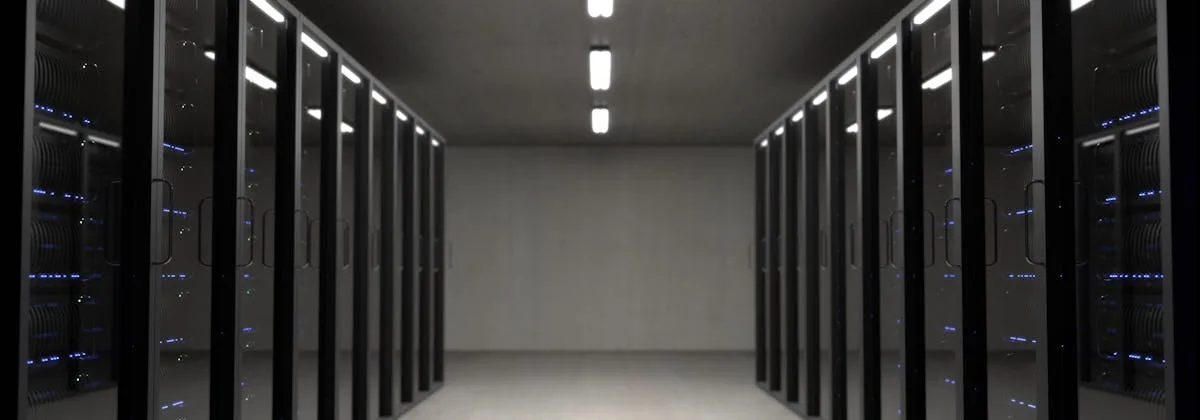
Table of contents
What happens when the company that connects three billion people teams up with the company that builds the brains behind modern AI? You get one of the largest technology partnerships ever announced, and a clear signal about where the future of computing is headed.
Meta and Nvidia have just unveiled a sweeping, multi-year infrastructure alliance that will see millions of AI chips deployed across a new generation of hyperscale data centers. The deal spans GPUs, CPUs, networking hardware, and even privacy-focused computing: all designed to power everything from your Instagram feed to WhatsApp encryption.
Whether you are an investor, a developer, or simply curious about the forces shaping the digital economy, this partnership deserves your attention. Here is everything you need to know.
Key Takeaways
- Meta will deploy millions of Nvidia Blackwell and next-gen Rubin GPUs across its data centers
- The deal includes Nvidia Grace and Vera CPUs: Meta is the first to use standalone Grace chips at scale
- Meta plans to spend up to $135 billion on AI infrastructure this year alone, with $600 billion committed through 2028
- The partnership covers networking, privacy computing for WhatsApp, and unified architecture design
The Scale of the Deal
This is not a routine chip purchase. Meta is building an end-to-end AI infrastructure stack around Nvidia hardware, covering every layer from processors to networking switches.
On the GPU side, Meta will deploy millions of Nvidia Blackwell chips, the current flagship, alongside next-generation Rubin GPUs and GB300-based systems. These processors handle the heavy computation behind AI model training and real-time inference for billions of users.
But here is where it gets interesting. Meta is also the first company to deploy Nvidia Grace CPUs as standalone chips at data-center scale. Until now, Grace processors shipped paired with GPUs. Meta is decoupling them, using Arm-based Grace chips independently to improve performance per watt across its facilities. And looking ahead, Meta plans large-scale deployment of Nvidia Vera CPUs starting next year.
Why Meta Needs This Much Compute
Three billion people use Meta platforms every day. Behind every personalized feed, every Reels recommendation, and every AI-generated sticker is a massive inference workload running in real time.
Meta is not just running AI models. It is running what Nvidia CEO Jensen Huang called "the world's largest personalization systems." Training frontier AI models like Llama requires enormous GPU clusters, but serving those models to billions of users simultaneously demands even more infrastructure.
Add to that Meta's growing investment in AI assistants, generative content tools, and augmented reality, and the need for a unified, scalable compute platform becomes clear. This deal provides exactly that.
The Data Center Buildout
Hardware is only part of the story. Meta is simultaneously building out a massive physical infrastructure to house all of these chips.
The company has plans for 30 data centers, 26 of which will be located in the United States. Two flagship facilities are already under construction:
- Prometheus, a 1-gigawatt site in New Albany, Ohio
- Hyperion, a staggering 5-gigawatt facility in Richland Parish, Louisiana
To put those numbers in perspective, a single gigawatt can power roughly 750,000 homes. The Hyperion facility alone will consume more electricity than many small countries. This is infrastructure at a scale that redefines what a data center looks like.
Networking and Architecture
Raw chip power means nothing without the plumbing to connect it all. Meta is integrating Nvidia Spectrum-X Ethernet switches with its own Facebook Open Switching System platform, creating a high-throughput networking layer optimized for AI workloads.
The goal is a unified architecture, a single, coherent stack where GPUs, CPUs, and networking gear all work together seamlessly. This reduces operational friction, simplifies maintenance, and allows Meta to scale clusters up or down based on demand.
So what does this mean for you? If you have ever noticed your social media feed getting eerily accurate at predicting what you want to see, this is the infrastructure that makes it possible, and it is about to get significantly more powerful.
Privacy Computing for WhatsApp
One of the most notable elements of this partnership is the adoption of Nvidia Confidential Computing for WhatsApp. This technology enables AI processing on encrypted data without exposing the underlying information, a critical requirement for a messaging platform used by over two billion people.
Meta calls this "private processing," and it represents a significant step toward running AI features inside encrypted environments without compromising user privacy. Think smarter message suggestions, better spam filtering, and AI-powered features: all without Meta or anyone else reading your messages.
The Financial Picture
The numbers behind this deal are staggering. Meta has committed to spending up to $135 billion on AI in the current year alone. Across the next several years, the company has pledged $600 billion in total U.S. infrastructure investment through 2028.
For context, Google recently announced $185 billion in planned capital expenditure, and Microsoft is securing gigawatts of clean energy to support its own AI expansion. The hyperscale AI arms race is well underway, and the companies leading it are spending at levels that rival the GDP of small nations.
Nvidia, of course, sits at the center of all of this. As the primary supplier of AI accelerators to Meta, Google, Microsoft, and Amazon, every new data center announcement translates directly into sustained chip demand. Analysts describe this as a multi-year spending supercycle with no signs of slowing down.
What This Means for the AI Industry
This partnership signals several important trends:
- Vertical integration is accelerating. Major tech companies are no longer just buying chips. They are co-designing entire compute stacks with Nvidia, from silicon to software.
- Inference is the new battleground. While training gets the headlines, running AI models at scale for billions of users is where the real infrastructure challenge lies.
- Energy is becoming the limiting factor. Building 5-gigawatt data centers means securing massive amounts of power, pushing companies into long-term energy contracts and even nuclear power discussions.
- Privacy and AI are converging. Confidential computing for WhatsApp shows that AI expansion does not have to come at the cost of user privacy.
Frequently Asked Questions
How much is Meta spending on AI infrastructure?
Meta plans to invest up to $135 billion on AI this year, with a total U.S. infrastructure commitment of $600 billion through 2028. This covers data centers, chips, networking, and related facilities.
What Nvidia chips is Meta using?
Meta is deploying Nvidia Blackwell GPUs, next-generation Rubin GPUs, standalone Grace CPUs (Arm-based), and plans to adopt Vera CPUs next year. Networking uses Nvidia Spectrum-X Ethernet switches.
What is the Hyperion data center?
Hyperion is Meta's 5-gigawatt data center under construction in Richland Parish, Louisiana. It is one of the largest data center projects ever announced, consuming more power than many small countries.
How does this affect WhatsApp privacy?
Meta is adopting Nvidia Confidential Computing for WhatsApp, enabling AI features to run on encrypted data without exposing message content. This allows smarter AI features while maintaining end-to-end privacy.
Why does this matter for everyday users?
This infrastructure powers the AI behind personalized feeds, content recommendations, AI assistants, and privacy features across Meta platforms including Facebook, Instagram, and WhatsApp.
The Bottom Line
The Meta-Nvidia alliance is more than a chip deal. It is a blueprint for how AI infrastructure will be built at planetary scale. With millions of processors, 5-gigawatt data centers, and hundreds of billions in investment, these two companies are constructing the computational backbone of the next decade.
For the broader tech industry, this partnership raises the bar. Competing at the frontier of AI now requires not just better algorithms, but better hardware, better architecture, and more power than ever before.
The AI arms race is no longer coming. It is here, and it is being measured in gigawatts.
Written by
Nora Whitfield
Technology & AI
Covers the technology beat for Quick Trend Insights, with a focus on what new AI tools and consumer hardware actually change for the people using them.
Related Articles
View all
AI Drug Discovery: What It Has Actually Found
AI drug discovery promised faster medicine. Here is what the models actually do, the results labs are reporting now, and the test still ahead of them.

GPT-6 Astra: What Actually Changed
OpenAI shipped GPT-6 Astra and called it the start of AGI. Strip the framing away and one capability really matters: the model now operates your computer.
AI Agents Are Breaching Companies On Their Own
AI agent security incidents now hit 65% of organizations. See how autonomous agents cause real breaches, and what to demand before you grant one access.