
Earthquake Aftershocks: The Real Odds of a Bigger Quake
Earthquake aftershocks after the Manhattan Beach 5.0: how to read the USGS forecast, the real odds of a bigger quake, and why the risk falls each quiet day.
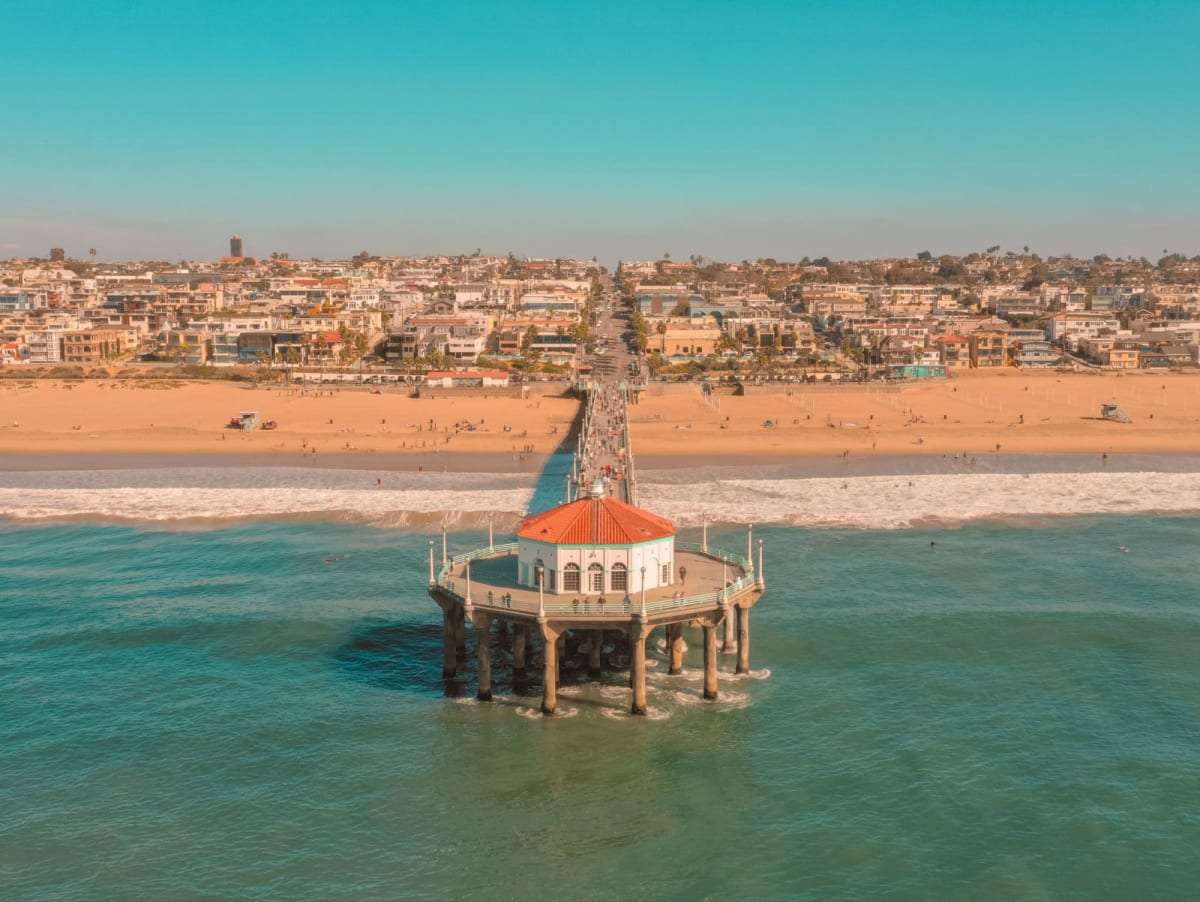
Table of contents
It is Saturday morning and your coffee mug starts to rattle. Then the whole kitchen jolts. Two hours later, just as your heart rate settles, a second hard shake rolls through. By evening your phone has buzzed with a dozen more small ones, and one question is stuck in your head: is something bigger coming?
That is the question millions of people in Southern California asked after a magnitude 5.0 earthquake struck off Manhattan Beach on the morning of November 28. Earthquake aftershocks followed all day, including a magnitude 4.5. The good news is that seismologists do not have to guess. The US Geological Survey publishes a running forecast with real percentages, and once you know how to read it, the fear gets a lot more manageable.
What Happened Off Manhattan Beach
The USGS located the mainshock about 5 kilometers southwest of Manhattan Beach, at 9:30 a.m. local time, at a depth of about 13 kilometers. The ShakeAlert early warning system activated, so some people got a phone alert seconds before the shaking arrived. More than 28,000 people filed reports through the agency's "Did You Feel It?" survey within a day.
Damage was limited. The USGS impact model, called PAGER, rated the event green, which means a low likelihood of damage or casualties. That rating is about the region as a whole, so a cracked wall or a toppled shelf near the coast is still possible.
The sequence did not stop at one shake. A magnitude 4.5 aftershock hit just after 11:40 a.m., and a string of magnitude 3.5 to 4.0 events followed through the afternoon and night. By early Sunday the USGS catalog listed 115 aftershocks of magnitude 1 or larger in the area, 10 of them magnitude 3 or larger.
Why Earthquake Aftershocks Happen at All
A fault does not slip cleanly like a door sliding on a rail. When one patch of rock breaks, it moves stress onto the rock around it. Some of those neighboring patches were already close to failing, and the extra push sends them over the edge.
That is what an aftershock is: the crust settling into its new stress pattern. Bigger mainshocks rearrange more rock, so they produce more aftershocks over a wider area and for longer.
The decay rule seismologists rely on
Aftershocks thin out in a predictable way. The USGS describes the rate as roughly inversely proportional to the time since the mainshock. In plain terms, double the time and you roughly halve the rate.
The agency's own example: about 10 times as many aftershocks on the first day as on the tenth. This pattern is named Omori's law, after the Japanese seismologist Fusakichi Omori. It is the backbone of every aftershock forecast the USGS issues.
How long the tail can run
Rates drop fast, but they rarely hit zero on schedule. The USGS says aftershocks can continue for weeks, months or years. Caltech seismologists add that the length depends on two things: how big the mainshock was and how quiet the region was beforehand. A quiet area stays above its normal background rate for longer, because the aftershocks stand out against so little.
How to Read the USGS Aftershock Forecast
For any magnitude 4 or larger quake in the lower 48 states, the USGS posts an aftershock forecast. It waits at least 20 minutes after the mainshock, then updates the numbers as the sequence plays out. The model behind it, called Reasenberg and Jones, blends statistics from past California sequences with what this particular sequence is actually doing.
Here is what the forecast for the Manhattan Beach quake said in its Sunday morning update, for the following week:
- Magnitude 3 or larger: about a 98% chance, with 1 to 9 such quakes expected.
- Magnitude 4 or larger: about a 36% chance.
- Magnitude 5 or larger: about a 4% chance.
- Magnitude 6 or larger: about 0.4%, or 1 in 225.
Notice the pattern. Each step up in magnitude cuts the odds by roughly a factor of 10. That is the Gutenberg and Richter relationship, the other rule baked into the model. The forecast uses a value for it of 1.0, which means that for every magnitude 5 you expect about ten magnitude 4s and a hundred magnitude 3s.
Worked Example: Turning Percentages Into Plain Odds
Percentages feel abstract when the floor is moving. Converting them into "1 in X" odds helps, and you can do it with any percentage calculator or by dividing 100 by the percentage.
Step 1: the week ahead. A 4.3% chance of magnitude 5 or larger works out to about 1 in 23. Put the other way, there is roughly a 96% chance the November 28 shock stays the largest of the sequence through the first week.
Step 2: the month ahead. The forecast gives about 7% for magnitude 5 or larger over a month. That is higher than the weekly figure only because the window is four times longer. The extra three weeks add less than 3 percentage points, because most of the risk sits in the first few days.
Step 3: the year ahead. Over a full year, the chance rises to about 15%. Still, that means an 85% chance of no magnitude 5 in the area tied to this sequence over the next twelve months.
Rule of thumb: the odds of a bigger quake are highest in the first hours and days, then shrink quickly. If nothing large happens in the first week, the remaining risk is a fraction of what it was on day one.
Can an Aftershock Be Bigger Than the Main Quake?
Yes, and this is the part that keeps people up at night. If a later quake turns out larger, scientists simply relabel the first one a foreshock. There is no way to tell the difference while it is happening. The USGS says plainly that a quake can only be identified as a foreshock after a larger one occurs.
How often does that happen? The USGS puts the global figure at about 5%: the chance that any given earthquake is followed by a larger one nearby within a week. California research landed in the same place. Statistical studies summarized by the USGS found that about 5% of moderate California earthquakes were followed by a larger event within 10 kilometers and five days. A 1985 Southern California study found the chance for magnitude 5 and up was 6.5%, give or take 2.5 points.
So the 4% weekly figure for Manhattan Beach is not unusual. It sits right in line with the long-run average. The sequence is behaving like a typical one, which is useful information in itself.
What This Does Not Mean for the "Big One"
A moderate quake near Los Angeles always revives talk of the San Andreas fault. Keep the two ideas separate. The aftershock forecast covers this sequence, inside a 10 kilometer circle around the epicenter. It says nothing about a major rupture on the San Andreas, which runs well inland of the coast.
Long-term hazard for the Los Angeles region comes from different USGS models that look at decades, not days. Those odds did not change in any meaningful way because of one magnitude 5. And the USGS stresses that no scientist, at the agency or anywhere else, has ever predicted a major earthquake. Forecasts give probabilities, not dates.
Why scientists can't just say "you're safe"
A 96% chance that nothing larger happens is reassuring, but it is not 100%. Seismologists report the full range because the small chance is real. Rare outcomes do happen across thousands of sequences, which is exactly what the 5% figure captures.
What to Do During the Aftershock Window
The useful response to a 1 in 23 chance is preparation, not panic. A few steps cost little and cover most of the risk:
- Drop, Cover and Hold On when you feel shaking. The USGS repeated this in its first public summary of the quake. Do not run outside while the ground is moving.
- Secure heavy objects that already shifted. A bookcase that walked an inch on Saturday can fall on Tuesday.
- Check for hidden damage: cracked chimneys, gas smells and water stains on ceilings. A weakened structure is more likely to fail in an aftershock than a sound one.
- Plan for a power cut. Phones, medical devices and a fridge all need power. Our guide to sizing a portable power station for outages walks through the watt-hour math.
- Keep phone alerts switched on. ShakeAlert uses a detection algorithm that spots the first fast waves from a quake and pushes a warning before the slower, damaging waves arrive.
Related reading: Wind Advisory vs High Wind Warning: What Each Means.
Frequently Asked Questions
How long do aftershocks last after a 5.0 earthquake?
Most of the felt activity comes in the first few days, and the rate keeps falling after that. The USGS says aftershocks can continue for weeks, months or even years, with the tail lasting longer in regions that were quiet before the mainshock.
Can an aftershock be bigger than the original earthquake?
Yes. When that happens, the first quake is renamed a foreshock. The USGS estimates about a 5% chance worldwide that any earthquake is followed by a larger one nearby within a week.
What are the chances of a bigger earthquake after the Manhattan Beach quake?
The USGS forecast gave about a 4% chance of magnitude 5 or larger in the following week, about 7% over a month and about 15% over a year. The odds drop as time passes without a large event.
Does a magnitude 5 earthquake mean the Big One is coming?
Not on its own. Aftershock forecasts cover only the local sequence. The long-term odds of a major San Andreas quake come from separate models and were not meaningfully changed by one moderate event.
How many aftershocks follow a magnitude 5 earthquake?
It varies by sequence. After the Manhattan Beach quake, the USGS catalog recorded more than 100 aftershocks of magnitude 1 or larger within 18 hours, but only one reached magnitude 4.
What to Watch This Week
Check the USGS event page for the November 28 quake once a day. The forecast updates on a schedule, and the numbers should shrink as quiet hours pile up. If the agency raises them, that tells you the sequence is busier than expected.
Most of all, remember the shape of the curve. The riskiest hours have already passed. Every quiet day makes a larger shock less likely, and the best use of the waiting time is ten minutes spent strapping down a bookcase.
Written by
Nora Whitfield
Technology & Science
Covers technology and science for Quick Trend Insights, with a focus on what new AI tools, consumer hardware and space missions actually change for the people following them.
Related Articles
View all
Wind Advisory vs High Wind Warning: What Each Means
A wind advisory means gusts of 46 to 57 mph are expected. See where it ends and a High Wind Warning begins, why 58 mph hits so much harder, and how to prepare.
Tropical Glaciers: Why Puncak Jaya's Ice Is Almost Gone
Tropical glaciers on Puncak Jaya have lost over 99% of their ice since 1850. Why equator ice melts so fast, how El Niño speeds it up, and when it could vanish.
Terra Satellite: What Ends When NASA Switches It Off
The Terra satellite stops collecting science on December 1 after 27 years. What its five instruments measured, why its orbit drifted, and what data is lost.