Digital Nomad Visas: Which Countries Make It Easy
Dozens of countries now offer digital nomad visas, here's which ones are actually easy to qualify for, plus the tax details most applicants miss.

Table of contents
You've pictured it: laptop open on a café terrace in Lisbon, rent that costs half of what you pay at home, and a work schedule nobody back at the office can micromanage. Then you start researching how to actually make it legal, and the whole thing turns into a maze of visa categories, income thresholds, and forum posts that contradict each other.
One wrong move (the wrong visa type, a missing document, an ignored tax rule), and you're either rejected or stuck owing money to two countries at once. That's the part most "just move abroad" articles skip.
Here's the good news: you don't need to guess. Dozens of countries have built dedicated digital nomad visa programs in recent years, and a handful of them have genuinely manageable requirements. This guide breaks down what these visas actually give you, which programs are realistically easiest to qualify for right now, the tax traps that catch people off guard, and how to pick a country that fits your actual situation rather than just your Instagram feed.
If this is your first time planning extended time abroad rather than a short trip, our guide on planning your first solo trip is worth reading alongside this one. A lot of the logistics overlap.
Key Takeaways
- A digital nomad visa is a distinct legal category from a tourist or work visa. It explicitly permits remote work for foreign employers or clients while you live locally.
- Portugal, Spain, Croatia, and Georgia currently have some of the most accessible programs, with income requirements roughly in the €1,800 to €3,700 per month range.
- Spending more than roughly 183 days in a country can trigger local tax residency, even when the visa itself doesn't require that much time.
- Most rejections come down to weak income documentation or health insurance that doesn't meet a country's specific coverage minimums, not the country simply being "hard."
What a Digital Nomad Visa Actually Gives You
A tourist visa, or visa-free entry, lets you visit, spend money, and leave. It was never designed for you to keep working your job from a rented apartment for months at a time. Technically, doing paid work while on tourist status sits somewhere between a gray area and an outright violation, even if nobody checks at the border.
A digital nomad visa closes that gap. It's a specific legal status that says, explicitly, "yes, you can live here for an extended period while working remotely for an employer or clients based outside this country." That's different from a standard work visa too, which usually requires a local employer to sponsor you and ties your legal status to that one job.
A digital nomad visa skips the sponsorship requirement because you're not competing for a local job. Your paycheck comes from somewhere else entirely. In exchange, most programs require proof that your income arrives from foreign sources, valid health insurance, and a clean background check.
The practical upside is real: legal residency, sometimes renewable for years, the ability to open a local bank account and sign an actual lease, and in some countries a pathway toward longer-term residency if you decide to stay. The trade-off is paperwork, proof of income, sometimes apostilled documents, and in several countries a visit to a local immigration office after you land.
The Easiest Countries to Qualify For Right Now
Requirements shift fairly often, so treat every figure below as a general guide rather than a fixed rule. Always verify current numbers on the country's official immigration site before you apply.
Portugal (D8 visa): Portugal's D8 digital nomad visa asks for monthly income of roughly €3,700 for a single applicant, a figure tied to the national minimum wage that adjusts periodically, plus proof of accommodation and valid health insurance. It's popular partly because it offers a route toward long-term residency, and Portugal's immigration process, while sometimes slow, is well documented in English.
Spain (digital nomad visa): Spain's program asks for roughly €2,850 per month in income, mostly from clients or employers based outside Spain. Self-employed applicants can have some Spanish clients, as long as that income stays a minority share of the total. It also explicitly welcomes freelancers, not just salaried remote employees, which broadens who can realistically apply.
Croatia: Croatia's digital nomad permit stands out because income earned under it is currently exempt from Croatian income tax, and the required monthly income sits in the roughly €3,600 range, or an equivalent amount in savings. The permit currently runs up to about 18 months, though you generally need a break before applying again rather than renewing back-to-back.
Georgia: Georgia remains one of the lowest-friction options on this list. Citizens of many countries can simply enter and stay for up to a year without any visa at all, and the country's dedicated remote-worker program adds a formal option with income requirements roughly around €1,800 per month and processing times often under two weeks.
Taxes: The Part Everyone Forgets to Check
Getting approved for the visa is only step one. The question almost nobody asks early enough is: does living here this long make me a tax resident? Many countries use some version of the "183-day rule": spend more than roughly half the year in a country, and you can be treated as a tax resident there, sometimes on your worldwide income rather than just what you earn locally.
The catch is that the rule isn't as clean as it sounds. Some countries count days by calendar year, others by any rolling 12-month window, and several layer on a second test, like where your "center of vital interests" sits, that can make you a tax resident even if you stay under the day count. That's exactly how two countries can each independently decide you're their resident for tax purposes, which is how double-taxation problems start.
Some programs help by explicitly exempting visa holders from local income tax, Croatia being the clearest example, while others, like Spain's reduced-rate tax regime for qualifying newcomers, offer a flat lower rate for a limited number of years. Eligibility for these breaks is specific, though, and often excludes the self-employed, so don't assume a tax perk applies to you just because you read about it somewhere. This is general education, not personalized tax advice. Talk to a cross-border tax professional before committing to a country for a full year.
Common Application Mistakes That Get People Rejected
Most rejections aren't about a country being strict for the sake of it. They're about avoidable paperwork errors. Knowing the usual suspects ahead of time saves weeks of back-and-forth with a consulate.
- Weak income proof: A screenshot of a bank balance isn't the same as consistent, verifiable monthly income. Most programs want several months of statements or invoices, and inconsistent or one-off deposits raise flags.
- Health insurance that misses the minimum: Many applicants show up with basic travel insurance that doesn't cover the required minimum amount, doesn't last the full visa period, or doesn't explicitly name the destination country.
- Missing or unapostilled documents: Background checks and sometimes proof-of-address paperwork often need to be apostilled or officially translated, a step people skip until their application bounces back.
- Applying under the wrong category: Some programs have different document requirements for salaried remote employees versus freelancers, and submitting the wrong category's paperwork causes unnecessary delays.
The fix for all of it is the same: read the official checklist from the consulate or immigration site directly, not just a summary article, and start gathering documents two to three months before you plan to apply.
How to Choose the Right Country for Your Situation
The "easiest" visa on paper isn't automatically the right one for you. Start with cost of living relative to your income. A Portugal-sized income requirement means little if rent in Lisbon has climbed close to your budget ceiling, while a lower-cost city elsewhere might stretch that same income much further.
Next, weigh community and infrastructure. Some cities have dense, established remote-worker scenes with coworking spaces and regular meetups, while others offer legal residency but a much quieter, more isolated experience. Neither is wrong, but know which one you're actually signing up for.
Visa duration and renewal path matter more than people expect going in. A one-year visa that can't be renewed means rebuilding your whole setup again in twelve months, while a program with a longer-term residency path suits people planning to settle in rather than make one round trip.
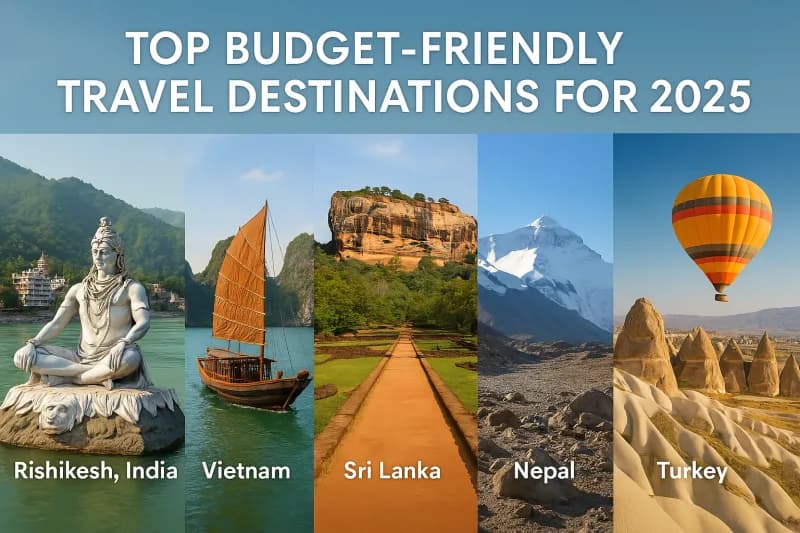
Finally, match the destination to your budget and travel style. If you're weighing a handful of affordable options against these visa requirements, our roundup of budget-friendly travel destinations is a useful cross-reference for where your money actually goes further.
Frequently Asked Questions
Do I need a job offer to get a digital nomad visa?
No. Digital nomad visas are built for people who already work remotely for an employer or clients based outside the country they're applying to, so you don't need a local job offer. In most cases, having one would actually disqualify you from this visa category.
Can freelancers and self-employed people apply, or only full-time employees?
It depends on the country. Spain and Portugal both accept freelancers and self-employed applicants alongside remote employees, though the required proof of income, invoices and client contracts versus employment letters and pay slips, differs between the two groups.
How long can I actually stay on a digital nomad visa?
It varies widely by country, from around a year up to multi-year renewable permits, and some programs offer a path toward longer-term residency after that. Always check the specific renewal terms directly before planning your life around a particular timeline.
Will I still owe taxes in my home country while living abroad on a digital nomad visa?
Possibly. A digital nomad visa changes your legal status in the host country, but it doesn't automatically end your tax obligations back home. Citizens of countries that tax based on citizenship rather than residency, the United States being the clearest example, generally still need to file at home regardless of where they live.
Digital nomad visas have moved from a novelty a few early-adopter countries experimented with to a mainstream option nearly half the world's destinations now offer in some form. That's genuinely good news for anyone tired of choosing between a stable income and living somewhere new, but "widely available" doesn't mean "one-size-fits-all."
The programs that work best are the ones you pick deliberately: a country whose income threshold you comfortably clear, whose tax rules you've actually read, and whose lifestyle matches what you're looking for rather than what's trending. Do that homework before you apply, verify every number directly on the official government site, and the paperwork stops being the scary part. It becomes the last box to check before you're actually there.

Written by
Quick Trend Insights Editorial Team
Our editors track the latest in technology, business, finance, and culture, turning fast-moving news into clear, reliable insight you can act on.