
Killer Robots: Why UN Talks Fell Short of a Treaty
Killer robots talks at the UN ended without binding rules. Here is how the CCW works, who blocks a treaty, and what meaningful human control would require.
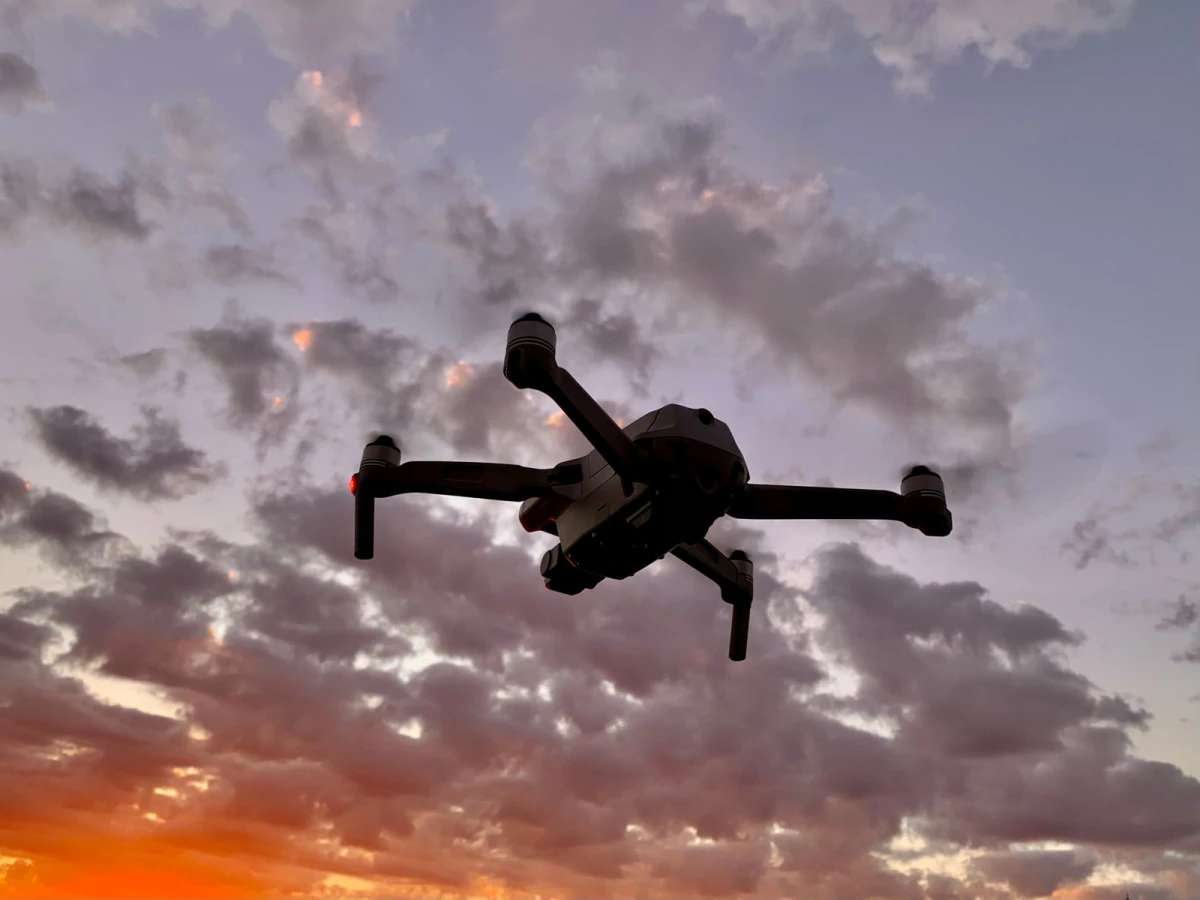
Table of contents
Imagine a small drone circling above a road. Nobody is steering it. It carries a list of shapes and heat signatures it is allowed to attack, and when something below matches, it dives. No person approves that particular strike. That is the weapon diplomats mean when they talk about killer robots, and this week in Geneva they again failed to agree binding rules for it.
As the conference closed, states at the UN's Convention on Certain Conventional Weapons agreed only to "elaborate" a possible accord by 2028. They made no commitment that it will be legally binding. If you have wondered why a weapon most governments say they want to limit is still unregulated, the answer sits in how these talks work, who is blocking them, and one contested phrase: meaningful human control.
What Happened at the Killer Robots Talks in Geneva
The meeting was the Seventh Review Conference of the Convention on Certain Conventional Weapons, usually shortened to CCW. It ran at the Palais des Nations from November 16 to 20, according to UN Geneva. Review conferences come round only once every five years, which is why campaigners called this one the last best chance for a deal.
Going in, seven countries proposed opening formal negotiations on a rulebook. The Associated Press named them as Austria, Belgium, Brazil, Ireland, Mexico, New Zealand and Panama. Their plan would have aimed to stop or limit machines from killing without human control or accountability. It fell short.
The final deal in plain terms
- What states agreed: to keep working and "elaborate" a possible instrument by 2028.
- What they did not agree: that the result will be a binding treaty.
- What it replaces: UN Secretary-General António Guterres had wanted negotiations launched by the end of 2026, AP reported.
Reactions split cleanly along expected lines. Izumi Nakamitsu, the UN's top disarmament official, called the outcome a "significant achievement." Beatrice Fihn of Lex International said it was "pushing the can down the road." Max Tegmark of the Future of Life Institute noted that states had now agreed to keep talking about the issue "for the 14th year."
How the CCW Works, and Why One Country Can Say No
The CCW is a framework treaty. Its parties add protocols, each of which bans or restricts one category of weapon. NPR noted that this system produced a ban on blinding laser weapons in 1995, a rare case where every party agreed.
Everything turns on consensus. Decisions are not taken by vote. Any single member can block a mandate, and any text that survives tends to reflect what the most reluctant state will accept.
Worked example: the consensus maths
The CCW has 128 member states, according to AP. Suppose 127 of them back a mandate to negotiate a binding treaty and one objects. The mandate fails. Under a majority vote, the same proposal would pass with more than 99% support.
Now compare the UN General Assembly, which votes by majority. On December 1, 2025, it adopted a resolution on lethal autonomous weapons by 164 votes to 6, with 7 abstentions, according to the UN's official meeting record. That is about 93% of the states that voted. Yet two of the six no votes, Russia and the United States, are CCW members that can each stop the Geneva process on their own.
This is the gap campaigners keep pointing to. A clear global majority exists. The forum where the rules are supposed to be written does not count majorities.
Which Countries Support a Treaty and Which Block It
The positions have been fairly stable for several years. Here is how they lined up going into this round, based on NPR's reporting and the UN vote record.
Pushing for binding rules
- At least 50 countries want a strict timetable toward binding rules, NPR reported, including Ireland, Italy, Brazil, Mexico, France and Germany.
- The UN Secretary-General has said letting fully autonomous weapons decide to kill would be "crossing a moral red line."
- The International Committee of the Red Cross and the Pope have also called for legally binding rules.
Opposing a treaty
- The United States argues existing international humanitarian law already covers these weapons. NPR reported that Washington proposed a five-year timetable to draft non-binding guidelines instead.
- Russia was singled out by advocacy groups as the main source of obstruction this week, according to AP.
- Israel signalled opposition to binding rules, and voted against the 2025 General Assembly resolution alongside Belarus, Burundi, North Korea, Russia and the United States.
Sitting in between
Seven states abstained in December 2025: Argentina, China, Iran, Nicaragua, Poland, Saudi Arabia and Türkiye, the UN record shows. China's abstention stands out. As a CCW member it holds the same veto as everyone else, so its position will shape what any final text can contain.
What a Binding Treaty Would Actually Require
The work is not starting from zero. In September, the CCW's Group of Governmental Experts adopted its final report by consensus, after three years of drafting. Supporters, including the ICRC, say that report is a strong enough base to begin negotiating a treaty now.
Most proposals follow a two-tier model. Tier one bans certain autonomous weapons outright. Tier two allows the rest but sets limits on how they are designed and used.
The ICRC's version of the two tiers
The ICRC set out its position in May 2021, and its August working paper to the expert group backs the same two-tier model. It recommends new legally binding rules that would:
- Ban unpredictable systems, whose effects cannot be adequately understood, predicted or explained.
- Ban anti-personnel systems, meaning those designed or used to apply force against people.
- Restrict everything else: limit targets to objects that are military by nature, cap how long, where and how widely a system can operate, limit use to places where civilians are absent, and require human supervision that allows timely intervention and shutdown.
A treaty would also need definitions every party accepts, a way to check compliance, and rules on how states test new weapons before fielding them. Each of those is a separate negotiation. That is why supporters wanted talks opened now rather than in 2028.
What "Meaningful Human Control" Means
The phrase sounds simple. It is the hardest part of the whole debate, because it has to cover what a human must know and decide before a machine applies force.
In practice, most proposals break it into three questions:
- Does a person understand what the system will do? If its behaviour cannot be predicted, no operator can truly approve it. This is why the ICRC wants unpredictable systems banned.
- Is the system boxed in? Limits on target type, time and area mean a human's judgement at launch still holds by the time the weapon fires.
- Can a person step in? Supervision only counts if someone can intervene and switch the system off in time.
A hypothetical to make it concrete
Take two loitering munitions. The first is cleared to search a 5 square kilometre area for 20 minutes, may only attack armoured vehicles, and streams video to an operator who can abort. The second may roam 200 square kilometres for six hours and attack anything matching a human heat profile.
Under the ICRC's approach, the first could be lawful with limits. The second would be banned twice over: it targets people and its effects over that time and space cannot be predicted. Georgia Haines, a Red Cross legal adviser, told NPR that such machines "are not able to understand in the same way that a human is the contextual signals" that separate a fighter from a wounded or surrendering soldier.
The question of who answers for a machine's mistake is not unique to weapons. Our piece on who is responsible when an AI agent makes a mistake covers the civilian version of the same problem.
Why the Delay Matters Now
The technology is moving faster than the diplomacy. NPR reported that AI-assisted weapons have already been used to strike targets in Ukraine and Gaza, though those systems are still remotely controlled by humans. Some experts quoted by NPR warn that fully autonomous selection of targets may be only months away.
Cost is the other driver. Human rights groups say the technology is getting cheaper and easier to use, which raises the risk it spreads to armed groups or to police in repressive states. The same shift toward software that acts on its own is visible in civilian AI, as our explainer on agentic AI and autonomous systems shows.
There is a precedent for routing around a blocked forum. When CCW talks on landmines stalled, frustrated states negotiated the Ottawa Convention outside that process, NPR noted. The same route is open on autonomous weapons, through the General Assembly or a standalone conference, if supporters decide the CCW cannot deliver.
Frequently Asked Questions
Are killer robots banned under international law?
No. There is no treaty specific to lethal autonomous weapons. Existing laws of war still apply to how any weapon is used, which is why the United States says a new treaty is unnecessary.
What did the UN agree on killer robots in November?
States at the CCW review conference agreed to elaborate a possible instrument on lethal autonomous weapons by 2028, without committing to make it legally binding.
Which countries oppose a killer robots treaty?
The United States, Russia and Israel signalled opposition to binding rules, and all three voted against the December 2025 UN General Assembly resolution on autonomous weapons.
What is meaningful human control over autonomous weapons?
It means a person understands what a weapon will do, limits where, when and against what it can strike, and can intervene or shut it down in time.
What Comes Next for Autonomous Weapons Rules
The Geneva outcome keeps the process alive and the most powerful militaries comfortable. Talks continue, a 2028 target exists, and the consensus rule still gives any one of 128 states a veto. Whether the result is a treaty or a set of voluntary guidelines remains open.
Watch two signals. The first is whether treaty supporters take the issue to the General Assembly, where majorities count. The second is how quickly the gap closes between remotely piloted drones and ones that choose targets alone. If the second arrives before the first, the rules will be written after the weapons are already in use, and every later limit will have to be negotiated against systems already in service. For the wider debate on how governments are trying to regulate powerful AI, see how frontier AI safety laws are gaining teeth.
Written by
Nora Whitfield
Technology & Science
Covers technology and science for Quick Trend Insights, with a focus on what new AI tools, consumer hardware and space missions actually change for the people following them.
Related Articles
View all
Prompt Injection: Can AI Learn to Ignore Hidden Orders?
Prompt injection tricks AI agents with hidden orders. IBM's new models cut attack success to as low as 0.02%. See how it works and what still protects you.

AI Math Proofs: What Google's Lean Results Prove
AI math proofs just hit 1.8 million machine-checked lines. See what Google's Lean results really prove, what they don't, and where humans still matter.

AI Content Labels: What the EU Watermark Rule Requires
AI content labels are now required in the EU. See what the December 2 watermark deadline means, how hidden marks work, and what the new AI icon tells you.