
Barrier-Free Toll: How Gateless Toll Billing Works
Barrier-free toll plazas bill your FASTag at highway speed. See how e-notices double after 72 hours, the announced plate penalty, and how to avoid every charge.
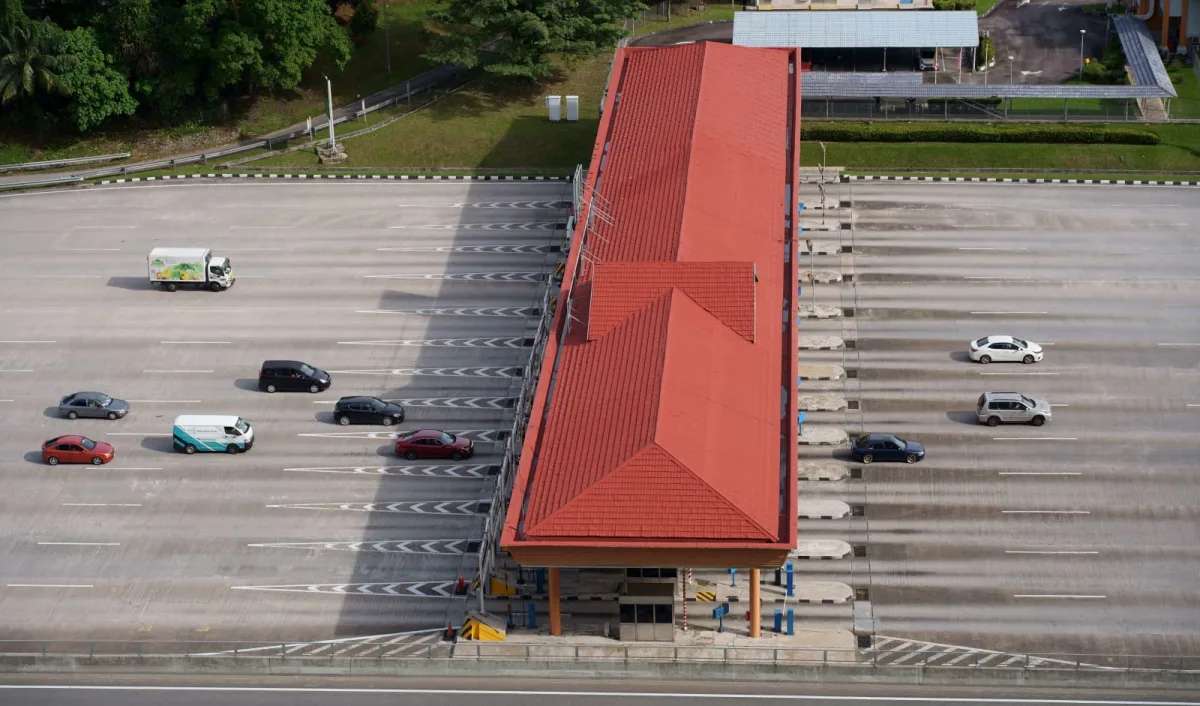
Table of contents
You drive under a steel gantry on the highway at 70 kph. There is no boom barrier, no booth and no queue, so it feels like the toll was free. It was not. A camera read your number plate, a reader pinged your FASTag, and if the payment failed, a notice is already on its way to your phone with a 72-hour clock attached.
India's barrier-free toll plazas, known as Multi-Lane Free Flow (MLFF), are spreading fast. On November 27 the Ministry of Road Transport and Highways announced a much tougher penalty for drivers who deliberately hide their plates: six times the normal fee. Reports differ on whether that rule is final or still a proposal, so treat it as announced, not yet settled. Here is how the billing works, what triggers a penalty, and how to make sure you never pay more than the base toll.
How a Barrier-Free Toll Plaza Charges You
A normal toll plaza stops you so it can check you. An MLFF plaza checks you while you move. Gantries over the road carry FASTag readers and Automatic Number Plate Recognition (ANPR) cameras, and the system matches the tag to the plate and deducts the fee automatically.
The first one went live on May 1 at the Choryasi plaza on the Surat to Bharuch stretch of NH48 in Gujarat, Autocar India reported. Others followed at Mundka in Delhi and at four plazas in Haryana and Rajasthan. In late November, the Press Information Bureau announced MLFF at the Chennasamudram plaza in Tamil Nadu's Ranipet district.
The early numbers
A Crisil Intelligence report, as reported by Autocar Professional in August, gives the clearest picture so far. Autocar Professional is the only outlet we found carrying these figures, so read them as Crisil's estimates. Six plazas processed more than 1.1 crore transactions between May and August 1 and collected over ₹147 crore. About 94% of that came straight from FASTag deductions.
Where Barrier-Free Toll Penalties Come From
The same Crisil report, again via Autocar Professional, found that roughly 10% of vehicles triggered a payment failure, which led to about 10.5 lakh e-notices by July. That is the gap the new rules are built to close. A failure is not always cheating. It can be a low balance, a tag stuck in the wrong place, a blacklisted tag or a dirty plate.
The rules treat honest failures and deliberate evasion very differently. The first two price levels below are already in NHAI's published rules. The third was announced on November 27, and you should check the final notification before treating it as settled.
- Normal toll. Your FASTag pays at the gantry, or you clear the e-notice within 72 hours.
- Double toll (notified). You pay the e-notice after 72 hours. NHAI's March press release sets the unpaid fee at twice the applicable toll.
- Six times the toll (announced, check the final rules). Under the ministry's November 27 announcement, if you deliberately mask, tamper with or conceal a plate, front, rear or both, or skip the FASTag, to evade the fee, you pay the toll plus a penalty of five times the toll.
According to the announcement as reported by the Daily Excelsior and Deccan Chronicle, the six-times rule would apply at every MLFF plaza, including ones added later. Most coverage describes it as announced, but at least one report calls it proposed, and we could not find the final notification text. The ministry says it will identify offenders through a technology-driven process but has not described it.
A Worked Example: One Trip, Three Bills
Say the car toll on your MLFF stretch is ₹150. That figure is an assumption for the arithmetic; real tolls vary by plaza and vehicle class.
- FASTag works, or you pay the notice within 72 hours: ₹150.
- You ignore the notice for four days: ₹300.
- You taped over the rear plate and removed the tag: ₹150 plus a ₹750 penalty, so ₹900, if the announced penalty applies as described.
Now scale it. A commuter who crosses that plaza twice a day, five days a week, makes about 40 crossings a month, or ₹6,000 in normal tolls. If a dead FASTag goes unnoticed for a week and every notice lapses past 72 hours, those 10 crossings cost ₹3,000 instead of ₹1,500. A low balance becomes a ₹1,500 mistake in a single week.
If you drive these roads often, the FASTag annual pass changes the maths. NHAI raised it to ₹3,075 from April 1, valid for a year or 200 trips, whichever comes first, at about 1,150 national highway plazas. That works out to roughly ₹15 a trip if you use all 200. The Crisil report cited by Autocar Professional found that about 52% of private vehicles at MLFF plazas already used it.
What the 72-Hour Window Means for You
The e-notice is the part most drivers will actually meet. It is generated when a vehicle crosses an MLFF point and the FASTag payment fails or the tag is not read. NHAI's press release lays out the timeline.
- Within 72 hours: pay the normal toll with no penalty.
- Disputes: if you think the notice is wrong, file a representation on the official portal within the same 72 hours. The authority must decide within five days, or the claim lapses.
- After 72 hours: the amount doubles.
Autocar India, the only outlet we found reporting this detail, said that dues left unresolved for 15 days are linked to the Vahan vehicle database, which can restrict other services for that vehicle. That is where a small toll turns into a real problem.
Why Unpaid Tolls Can Block Your Car Sale
The Central Motor Vehicles Rules were amended in January to define an unpaid user fee and tie it to vehicle services, according to Autocar India, the only outlet we found reporting the change in detail. Confirm with your regional transport office before a sale. Pending toll dues can stop the issue of a no-objection certificate, which you need to transfer ownership or re-register the car in another state. They can also block a fitness certificate and, for commercial operators, a national permit.
Think about what that means at resale. A buyer is ready, the price is agreed, and the transfer stalls because of a ₹300 notice from a trip you forgot. If you are planning to sell, clear every notice first. Our guide to the resale math of buying in December or January covers the other side of that deal.
Old Plazas Still Punish the No-FASTag Driver
Most of India's toll plazas still have barriers, and they have their own surcharge. Since November 15 last year, a vehicle without a valid FASTag pays twice the toll in cash or 1.25 times through UPI, under the National Highways Fee (Third Amendment) Rules. A ₹100 toll therefore costs ₹200 in cash or ₹125 on UPI.
When you plan a long drive, add tolls to your fuel or charging bill. The EV vs petrol cost calculator gives you the running cost per kilometre, and tolls sit on top of that number.
A Five-Minute FASTag Checkup
Nearly every penalty above starts with a tag or plate problem you could have caught at home. Run through this list before your next highway trip.
- Check the balance and set an auto top-up through your bank or UPI app.
- Confirm the tag is active and linked to the right registration number. NHAI has told issuing banks to verify the vehicle number on every tag.
- Fix the placement. The tag belongs on the inside of the front windscreen, not in the glovebox.
- Clean both plates and keep a valid high-security registration plate. Mud, tinted covers and bike racks can block the camera.
- Turn on SMS alerts so an e-notice reaches you inside the 72-hour window.
Related reading: Motor Insurance Rules: What the Four-Layer Policy Covers.
Frequently Asked Questions
What happens if FASTag is not detected at an MLFF toll?
The system issues an e-notice. You can pay the normal toll within 72 hours, or file a dispute in that window. After 72 hours, the amount due doubles.
What is the penalty for covering a number plate at a toll plaza?
The ministry announced on November 27 that deliberately masking or tampering with a plate, or skipping the FASTag, at MLFF plazas would cost the toll plus a penalty of five times the toll, six times in total. Reports differ on whether the rule is final, so check the notified rules.
How much is the FASTag annual pass now?
₹3,075 from April 1, valid for one year or 200 trips, whichever ends first, for eligible non-commercial vehicles at about 1,150 national highway plazas.
Can unpaid tolls stop me from selling my car?
Yes, according to Autocar India's report on the amended Central Motor Vehicles Rules. Pending toll dues can block the no-objection certificate needed to transfer ownership or re-register a car in another state.
Barrier-Free Does Not Mean Bill-Free
MLFF removes the queue, not the toll. For honest drivers, the system costs nothing extra as long as the tag works and notices get paid inside three days. The expensive outcomes all come from neglect or deliberate evasion, and the announced penalty for the second, once confirmed, would be steep enough to wipe out years of savings from cheating.
NHAI has invited bids for 104 more MLFF plazas, which would bring the total to 121. Within a year or two, gantries could be a normal part of your drive. Keep the tag topped up, keep the plates clean, and read every toll SMS the day it arrives.
Written by
Marcus Vance
Business, Money & Work
Writes on business, careers, and personal finance for Quick Trend Insights, translating markets, rates, hiring trends, and company strategy into what it costs, saves, or pays a household.
Related Articles
View all
Why EV Charging Slows After 80% and How to Save Time
Why EV charging slows after 80%: the battery chemistry behind the taper, a worked example of the minutes it costs, and how to plan faster road trip stops.

Motor Insurance Rules: What the Four-Layer Policy Covers
New motor insurance rules from December 15 split your car policy into four layers. See who is covered, the family gap, and what to tick on the new form.
Gap Insurance: When You Need It and Where to Buy It
Gap insurance pays what you owe after a total loss. See a worked example, when you need it, why dealer gap costs more, and the payout cap that can catch you.