
Stock Market on Black Friday: How Half-Day Trading Works
The stock market on Black Friday closes at 1 p.m. on less than half the usual volume. See 19 years of data on how the half-day moves and how to trade it safely.
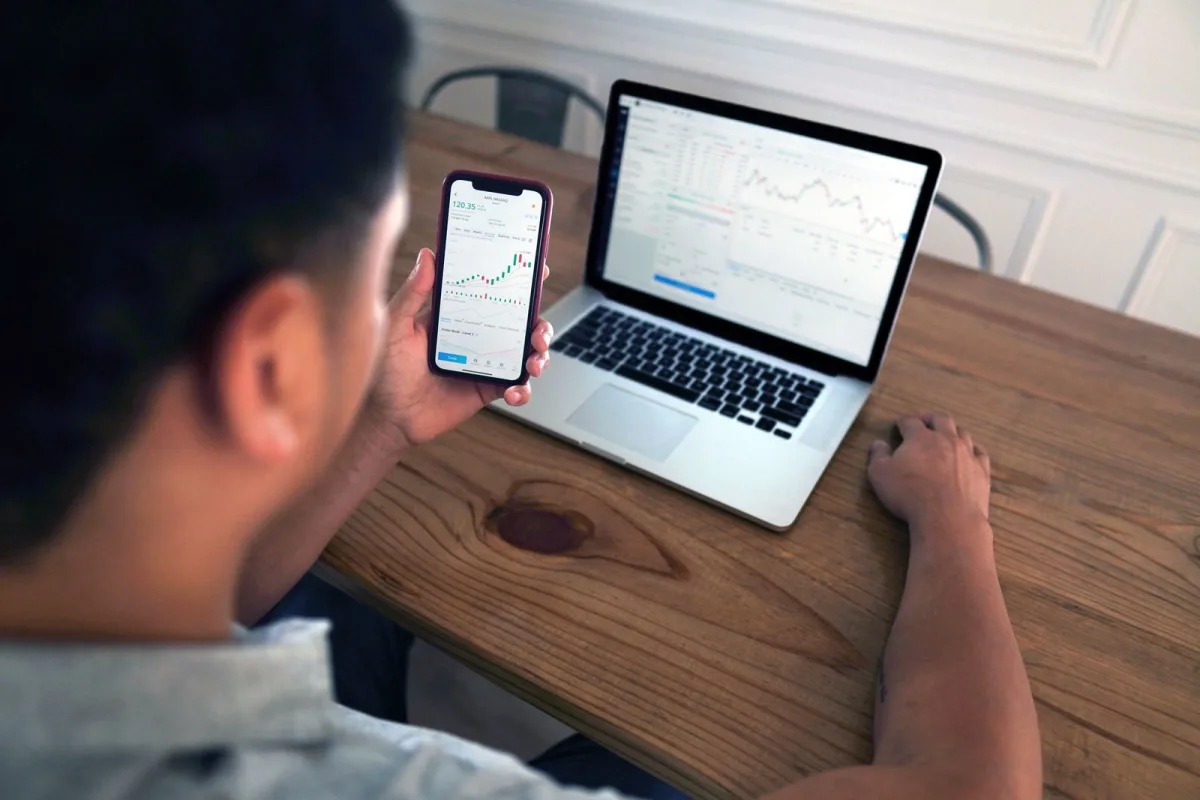
Table of contents
You finally have a free morning on the day after Thanksgiving, so you open your brokerage app to rebalance. The quotes look normal. But the stock market on Black Friday is not a normal market. It closes at 1 p.m. Eastern, volume usually runs at less than half its normal level, and a single headline can move prices further than it would on a busy Tuesday.
Most guides stop at the hours. This one goes further. We pulled 19 years of S&P 500 data to measure how thin Black Friday trading really is. You will also see how prices usually behave, and what happened the two times the half-day went wrong.
Stock Market on Black Friday: The Hours
Here is the schedule for the shortened session, per the NYSE and SIFMA, the bond industry group:
- Thursday, November 26 (Thanksgiving): stock and bond markets closed.
- Friday, November 27: NYSE and Nasdaq stocks close at 1 p.m. Eastern. Eligible options close at 1:15 p.m.
- Bonds: SIFMA recommends a 2 p.m. Eastern close. That is a recommendation, not an exchange rule, but dealers follow it.
- Christmas Eve, December 24: the NYSE closes early at 1 p.m. again, and SIFMA recommends 2 p.m. for bonds on December 24 and December 31.
If you trade from outside the US, convert carefully. A 1 p.m. Eastern close is 6 p.m. in London and 11:30 p.m. in India. Our time zone converter does the math for any city.
How Thin Is Black Friday Trading, Really?
To measure it, we compared each Black Friday since 2007 against the 20 sessions before it, using daily S&P 500 data from Yahoo Finance. The results were consistent.
- Volume: the median Black Friday traded about 42% of a normal day's shares. In the last ten years the figure was about 43%.
- Per hour: the session lasts 3.5 hours instead of 6.5. Even adjusting for that, trading per hour ran roughly 20% lighter than usual.
- Range: the median gap between the day's high and low was about 55% of a normal day's range.
- The day before: the Wednesday before Thanksgiving is thin too. In the last ten years, SPY, the largest S&P 500 fund, traded a median of about 72% of its normal volume that day.
So the usual picture is a quiet, narrow market. Many traders and portfolio managers take the day off, so fewer orders reach the exchanges.
Why Thin Markets Can Still Move Fast
Quiet is not the same as safe. What matters is liquidity: how many buyers and sellers are waiting at prices close to the last trade.
On a normal day, a large sell order eats through layers of waiting bids without moving the price much. On a thin day, there are fewer layers to absorb it. Market makers, the firms that stand ready to buy and sell, also widen the gap between their bid and ask prices when they cannot hedge easily. A trade that costs you a cent on a Tuesday can cost several cents more per share on Black Friday.
Two more pressures pile on:
- The weekend gap. Once the bell rings at 1 p.m., you cannot adjust a stock position until Monday morning. Any news over the weekend lands on Monday's open all at once.
- Month-end timing. Black Friday often falls near the last trading days of November, when funds adjust holdings for month-end reports. This year, November ends on Monday the 30th.
When the Half-Day Went Wrong
Most Black Fridays are dull. The exceptions show what thin markets do with real news.
2021: the Omicron shock
On November 26, 2021, news of the new Omicron Covid variant triggered a global sell-off, Reuters reported. The Dow closed down 905 points, about 2.5%, in a session that ended at 1 p.m. The S&P 500 fell 2.3%.
That day broke every pattern in our data. SPY volume ran about twice its normal level instead of less than half. Traders who were away from their desks came back to a very different market, and those who wanted out had only three and a half hours to do it.
2025: the exchange that went dark
Last year, the holiday tested the system itself. A cooling failure at a CyrusOne data center near Chicago halted trading at CME Group, the world's largest exchange operator, from Thanksgiving night into Black Friday morning. The outage lasted more than 10 hours, Al Jazeera and CNBC reported. Futures on stocks, bonds, currencies, oil and gold froze.
Volumes were already thin for the holiday, and dealers were closing positions for month-end. One analyst told Al Jazeera the timing "could have been a lot worse" because Friday was expected to be a very low-volume day. Thin markets cut both ways: less damage from a halt, but less depth to soak up the catch-up trading once it ends.
Does Black Friday Predict Anything?
You will find headlines claiming the holiday week is reliably bullish. Our data does not support a Black Friday edge. The S&P 500 rose on 10 of the 19 Black Fridays, and the average move was about 0.02% down. In the last ten years it rose six times out of ten.
Even the crash year of 2008 saw a Black Friday gain of about 1%, which told you nothing about what came next. A half-day move on 40% of normal volume is a weak signal. If you want a gauge of fear, the options market is a better place to look. Our explainer on what the VIX really prices shows how.
This year the stakes feel higher than usual. The S&P 500 fell 3.7% on November 20 alone, and the CME FedWatch tool showed traders pricing a near-certain Fed rate hike in December. A thin session in a nervous market is exactly when an odd move is most likely to be noise.
Worked Example: A Market Order in a Thin Market
Suppose you want to sell 200 shares of a mid-size stock trading at $50.00 on Black Friday morning.
- Normal day: the bid is $49.99 and there are plenty of shares wanted near it. A market order fills around $49.99. You receive about $9,998.
- Thin day: the best bid is $49.95 for only 100 shares, and the next bid is $49.88. Your market order fills 100 at $49.95 and 100 at $49.88. You receive $9,983.
That is $15 lost to thin liquidity on one small trade, about 0.15%. The prices here are illustrations, not quotes, but the mechanism is real. A limit order at $49.98 would either fill at your price or not fill at all, and on a day with no urgency, not filling is usually fine.
Three habits help on any half-day session:
- Use limit orders, not market orders.
- Avoid trading in the last 15 minutes before the 1 p.m. close, when the thinnest books meet the last-minute orders.
- Put off large rebalancing until the next full session, unless something has truly changed.
Frequently Asked Questions
Is the stock market open on Black Friday?
Yes, but only for a half day. The NYSE and Nasdaq open at 9:30 a.m. and close at 1 p.m. Eastern on November 27. The bond market follows SIFMA's recommended 2 p.m. close.
Is the stock market open on Thanksgiving?
No. US stock and bond markets are fully closed on Thanksgiving Day, Thursday, November 26. Trading resumes Friday morning on the shortened schedule.
Why is trading volume low on Black Friday?
Many traders and fund managers take the day off, and the session lasts only 3.5 hours. Across 19 Black Fridays, S&P 500 volume had a median of about 42% of a normal day, based on Yahoo Finance data.
Does the stock market usually go up on Black Friday?
Slightly more often than not, but there is no reliable edge. The S&P 500 rose on 10 of 19 Black Fridays from 2007 to 2025, and its average move was roughly flat.
Can I place trades after the 1 p.m. close on Black Friday?
Some exchanges keep late trading sessions open until 5 p.m. on early-close days, according to the NYSE. Liquidity after the close is even thinner, so use limit orders if your broker allows it.
The Bottom Line on Black Friday Trading
The stock market on Black Friday runs on a short clock and a thin crowd. Usually that makes for a quiet, narrow session that says little about the weeks ahead. Occasionally, as in 2021, real news meets an empty room and the move is outsized.
Treat the half-day as a time to check, not to act. If you must trade, use limit orders, stay clear of the final minutes, and save big decisions for Monday, when the full market is back to set the price.
Disclaimer: This article is for informational purposes only and does not constitute financial advice. Always consult with a qualified financial advisor before making investment decisions. Past performance is not indicative of future results.
Written by
Marcus Vance
Business & Money
Writes on business and personal finance for Quick Trend Insights, translating markets, rates, and company strategy into what it costs or saves a household.
Related Articles
View all
Silver Price Crash: Why Silver Falls Harder Than Gold
The silver price crash took silver 68% below its January record while gold fell 38%. Here are the four forces that make silver fall harder, with real numbers.
Anthropic IPO: Why a Record Debut Pulled Stocks Down
The Anthropic IPO raised a record $81 billion, yet stocks fell. Here is how IPO supply, index fund rebalancing and lockups pull on the shares you already own.
Nvidia SEC Probe: What It Means for Your Index Fund
The Nvidia SEC probe dragged down the AI trade. Here is what an accounting investigation does and does not mean, and the real math for index-fund investors.