
Starship Catch: Why Catching the Upper Stage Matters
The Starship catch on Flight 15 brought an upper stage home from orbit for the first time. See why it is so hard, what it costs, and what must happen next.
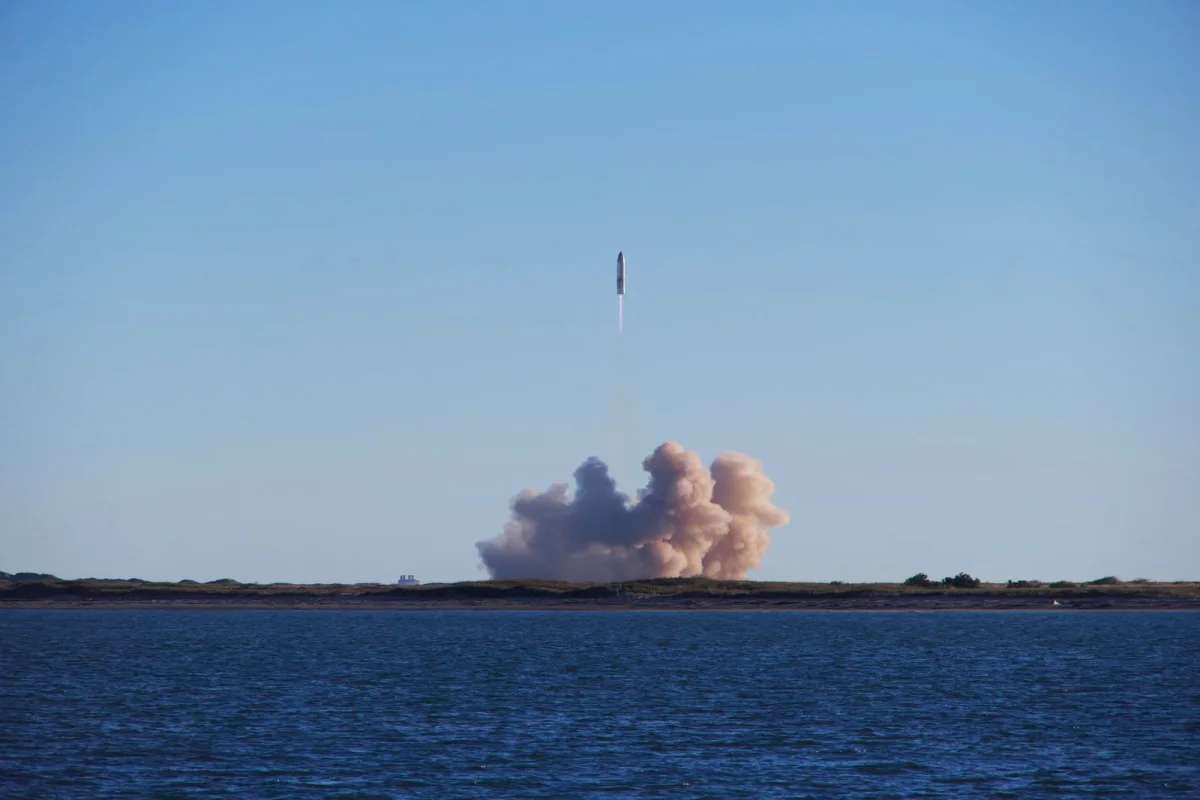
Table of contents
Picture an airline that flies every jet once, then pushes it into the ocean. Tickets would cost a fortune, and nobody would fly for fun. That has been the deal for almost every rocket upper stage in history. On November 14, the Starship catch at SpaceX's Starbase in Texas broke that pattern for the first time.
After 22.5 hours in orbit, a Starship upper stage fell back through the atmosphere, flipped upright, fired its engines, and settled into the arms of its launch tower. The booster that lifted it never made it home. So was this a breakthrough or a half result?
Both, and the reasons explain where launch costs, satellite internet and the next Moon landing go from here. Below you will find what happened on Flight 15, why catching the upper stage is so much harder than catching a booster, and what has to happen before a caught ship flies again.
What Happened During the Starship Catch on Flight 15
Flight 15 lifted off from Starbase at 4:47 p.m. Central time on November 13, according to Aerospace America. The 33 Raptor 3 engines on the Super Heavy booster produced more than 18 million pounds of thrust, according to launch coverage in the space press. About two and a half minutes later the stages split.
The upper stage, Ship 42, reached an orbit roughly 275 km high and released 26 next-generation Starlink satellites. SpaceX's mission outline said that batch adds about a terabit of network capacity, equal to 10 launches of the older satellites. Three of them carried cameras to photograph the ship's heat shield after release.
Then came the hard part. Ship 42 circled Earth 14 times, fired one engine for a 10 second deorbit burn, and came in belly first like a skydiver. Near the ground it swung upright, relit its engines and slowed into the tower's "chopstick" arms at about 3:29 p.m. Central on November 14. "We caught a Starship, and now everything changes," SpaceX's Dan Huot said on the broadcast.
The booster that got away
The plan was a double catch: booster and ship. It did not work out. SpaceX's Kate Tice said early indications pointed to a low fuel mass alarm that ended the booster's return burn early. Gizmodo reported that 32 of 33 engines relit for that burn. The booster turned for the Gulf of Mexico and was destroyed near the water, according to Aerospace America.
Why Catching the Upper Stage Is So Much Harder
SpaceX has caught Super Heavy boosters three times before. Those boosters separate low and slow, a few minutes after launch, and fall back along a short arc. The upper stage does something far more violent. It goes all the way to orbit and has to shed that entire speed on the way down.
That is why ships carry a heat shield and boosters do not. Aerospace America reports the windward side of Starship is covered by about 18,000 hexagonal ceramic tiles. SpaceX has been redesigning them with a clear goal: tiles that survive reentry without being swapped out between flights.
Worked example: the energy a ship has to lose
You can estimate the problem with school physics. An object in a circular orbit 275 km above Earth moves at about 7,745 meters per second. Kinetic energy per kilogram is half the speed squared.
- Orbital speed: 7,745 m/s, from Earth's gravity and a radius of 6,646 km.
- Energy per kilogram: 0.5 x 7,745 x 7,745 = about 30 million joules, or 30 MJ.
- Compared with TNT: TNT releases about 4.2 MJ per kilogram, so every kilogram of ship carries roughly seven times the energy of a kilogram of explosive.
- Compared with your car: at 100 km/h, a car holds about 386 joules per kilogram. The ship holds about 78,000 times more.
Almost all of that energy turns into heat in the air around the ship. The tiles exist to keep it outside the steel. Catch the ship and you can inspect every tile that took that beating, which is exactly the data SpaceX could not get when ships fell into the ocean.
Why Reusing the Ship Changes the Economics
A booster you reuse saves the most expensive part of the rocket. A ship you reuse saves the rest. SpaceX's Falcon 9 already lands its first stage, but its second stage is thrown away on every flight. Starship is designed so that nothing is thrown away.
A simple amortization sketch
SpaceX does not publish what a Starship costs to build, so here is a round number purely for illustration. Say a ship costs $50 million and flies once. That is $50 million of hardware per launch. Fly it 10 times, add $2 million of refurbishment between flights, and the hardware share falls to $5 million plus $2 million, or $7 million per launch. The same logic made reused Falcon 9 boosters the default.
Elon Musk has set a goal of about 10,000 Starship launches a year by 2030, a target he has repeated in public. Whatever you make of that target, numbers like it only add up if most hardware lands, gets checked and flies again within weeks. Two reflown boosters so far needed several months of refurbishment each, Gizmodo reported, so turnaround time is now the number to watch.
What this means for satellite internet
Cheaper launches flow straight into the Starlink network. Each Starship flight now carries satellites with far more capacity than older batches, and every one that lands lowers the cost of the next batch. If you want the consumer side of that story, our explainer on why Starlink bills can now change shows how capacity and pricing connect.
The Moon Landing Depends on Refueling in Orbit
NASA has awarded SpaceX $2.9 billion for Starship lunar lander variants, according to Aerospace America. Here is the twist most coverage skips: a lander-sized Starship cannot reach the Moon on one tank. It has to be refilled in Earth orbit by tanker Starships first.
Public estimates of how many tanker flights one landing needs vary widely, and no official number has been fixed. Every estimate, though, runs to several launches per landing. That only works if tankers come back and fly again quickly. Throw away a ship on every refueling run and the lunar plan becomes far more expensive.
The first Artemis III mission has already been reshaped around this. Aerospace America reports NASA now plans a low Earth orbit demonstration in which Orion docks with test versions of Starship and Blue Origin's Blue Moon lander before any crew heads to the surface. Building in orbit at scale is a related idea, covered in our piece on why a robot building in orbit matters.
What Has to Happen Next
One caught ship is a proof of concept, not a fleet. Musk said Ship 42 could probably be reflown after a few weeks of work, but SpaceX will retire it and put it on display instead, according to reports after the flight. That leaves a short list of open tasks.
- Fix the booster return. SpaceX has to find why the fuel alarm cut the burn short before trying another booster catch.
- Land both stages on one flight. A double catch is the real test of a fully reusable rocket.
- Refly a caught ship. SpaceX President Gwynne Shotwell said on the October earnings call that the company aims to refly the second stage by early next year, Gizmodo reported.
- Move propellant between ships in orbit. This is the step the lunar lander hangs on.
Frequently Asked Questions
Did SpaceX catch the Starship upper stage?
Yes. On Flight 15, Ship 42 returned from orbit on November 14 and was caught by the tower arms at Starbase, Texas, after about 22.5 hours and 14 orbits. It was the first time any orbital upper stage has been caught.
Why did the Super Heavy booster not get caught on Flight 15?
SpaceX said early indications pointed to a low fuel mass alarm that ended the booster's return burn early. The booster was diverted toward the Gulf of Mexico instead of the tower, and the root cause is still under investigation.
Will the caught Starship fly again?
Not this one. Elon Musk said Ship 42 could likely be reflown after a few weeks of refurbishment, but it will be kept for public display. SpaceX aims to refly a caught upper stage early next year.
Why is catching a rocket better than landing on legs?
A tower catch lets the rocket skip heavy landing legs, which leaves more mass for payload. It also puts the vehicle back on the launch site, where it can be inspected and refueled without being shipped back from a landing zone.
The Starship Catch Is Half of a Bigger Test
The Starship catch proved that a ship can survive orbital reentry and land precisely enough to be grabbed by a tower. That was the harder half of full reuse. The easier half, the booster, slipped on this flight, and nothing has yet flown twice from orbit.
Watch three things over the coming months: a double catch, a reflown ship, and the first transfer of propellant between Starships. If all three land, launch prices fall again, and the Moon plan starts to look like a schedule rather than a hope. For the money side of the industry, see our guide to the space economy.
Written by
Nora Whitfield
Technology & Science
Covers technology and science for Quick Trend Insights, with a focus on what new AI tools, consumer hardware and space missions actually change for the people following them.
Related Articles
View all
Geminid Meteor Shower: How Many You'll Really See
The Geminid meteor shower peaks December 13 to 14. See why 120 an hour is a ceiling and use simple math to predict your real count from your own night sky.

Asteroid Deflection: What Hera Found After DART
Hera found a stadium-sized DART crater on Dimorphos. Learn why the impact moved it four times more than expected and what that means for asteroid deflection.
King Tides and the Supermoon: Why Coasts Are Flooding
King tides and a supermoon are flooding US coasts before Thanksgiving. See what causes them, why flooding is rising, and how to prepare at home or on the road.