
King Tides and the Supermoon: Why Coasts Are Flooding
King tides and a supermoon are flooding US coasts before Thanksgiving. See what causes them, why flooding is rising, and how to prepare at home or on the road.
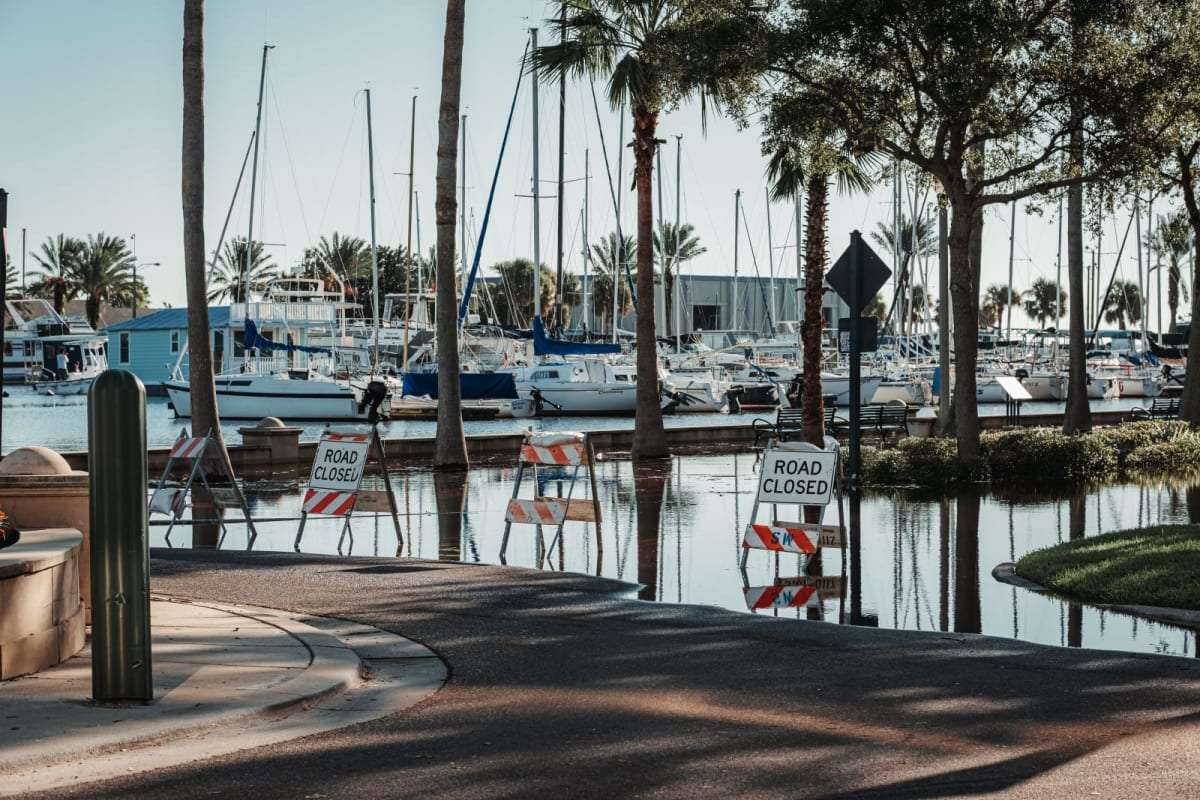
Table of contents
You booked a 9 a.m. flight out of San Francisco the day before Thanksgiving. Then the mayor asked people to stay off the roads, and the forecast started talking about seawater reaching the airport. King tides are back, and this round lines up with a supermoon and a stormy week.
This guide explains what actually makes a king tide, how much the supermoon really adds, and why the same coastal streets keep flooding more often each year. It ends with the checks that matter if you live near the water or have to travel through a coastal city this week.
What Is Happening With King Tides This Week
The full moon arrives on November 24 at 9:53 a.m. Eastern, and it is a supermoon. Space.com puts it about 224,000 miles from Earth, close to the moon's nearest point of the month. Tides peak a day or two after a full moon, so the highest water lands right in Thanksgiving week.
Both coasts are on alert. According to weather.com, NOAA's monthly high tide flooding outlook calls for at least minor tidal flooding on several days this week from Florida to Maine. National Weather Service offices in Los Angeles and Eureka have warned of possible record coastal flooding in California from Tuesday through Thanksgiving Day.
NOAA oceanographer Greg Dusek told weather.com that California's tides should run about half a foot higher than the highest ones in October. Those October tides already set record flood levels in parts of Southern California.
San Francisco and SFO
San Francisco Mayor Daniel Lurie activated the city's emergency operations center after briefings from the Weather Service and NOAA, KCRA and Fox Weather reported. He asked residents to avoid travel that is not essential from Monday afternoon through Wednesday.
The San Francisco Chronicle reported that city officials expect tide levels to top the record set during the destructive January 1983 floods. North of the city, KCRA reported that Marin County told residents not to drive from 9 a.m. to 4 p.m., Tuesday through Thanksgiving, with tides up to 7.5 feet expected there.
What Makes a King Tide
"King tide" is not a scientific term. NOAA uses it as a popular name for exceptionally high tides, and they come from the same gravity that drives every tide.
Three things line up to build one:
- A new or full moon. When the sun, Earth and moon sit in a line, the sun's pull adds to the moon's. That produces a spring tide, which has nothing to do with the season.
- Perigee. The moon's orbit is an oval. Once about every 28 days it reaches its closest point to Earth, called perigee, and its tidal pull is slightly stronger.
- The season. NOAA notes that tides also run higher in certain seasons, and that seasonal shifts in average sea level can push some coasts higher in late fall and winter.
When a new or full moon falls near perigee, NOAA calls the result a perigean spring tide. These happen 6 to 8 times a year. NOAA says high tides during one can be more than a foot higher than during an apogean spring tide, when the moon is farthest away.
How Much a Supermoon Really Adds
A supermoon is just a full moon near perigee. It looks a little bigger and brighter than an average full moon. Its effect on the water is smaller than the headlines suggest.
Compared with a normal spring tide, the extra pull of a supermoon usually adds only a few inches, according to NOAA's tide explainers. The bigger comparison (a foot or more) is against the opposite case, when the moon is at its farthest. A few inches still matters, because flooding is a threshold problem. A seawall either holds the water back or it does not.
A worked example from SFO
The Chronicle reported that the official tide table predicts 8.4 feet of water at SFO this week. A Weather Service meteorologist told the paper he added another 1.5 feet on the first two of those days for the storm: wind, rain and low air pressure all lift the sea.
Run the numbers and you get 8.4 + 1.5 = 9.9 feet. The supermoon's share of the 8.4 is a few inches. The storm's share is 18 inches. That is why the forecaster said it was possible SFO would flood, and why the airport told the Chronicle it was clearing drains, checking pump stations and staging sandbags.
The rule of thumb: the moon sets the stage, but wind and low pressure decide whether the water comes over the wall. NOAA says major coastal flooding typically comes from strong onshore winds and pressure changes, and that a storm during a perigean spring tide can make flooding much worse.
Why King Tide Flooding Keeps Getting Worse
The moon's orbit has not changed. The water level it starts from has.
NOAA's annual outlook predicts a median of 7 to 12 high tide flood days at its water level stations from May 2026 through April 2027. That would be a record. It also works out to about 7 more flood days a year than in 2000, an increase of more than 250%. By 2050, NOAA projects a national average of 55 to 85 high tide flood days a year.
Sea level rise is doing most of that work. The interagency Sea Level Rise Technical Report, led by NOAA, projects 10 to 12 inches of rise along the US coastline over the next 30 years. It says flooding will happen more than 10 times as often as it does today, on average.
The second punch: El Niño
This winter carries an extra push. In May, NOAA warned that a developing El Niño could bring more high tide flooding to many US coasts. Warmer Pacific water raises sea level along the West Coast, and storm tracks shift toward the Mid-Atlantic.
NOAA oceanographer William Sweet described it as two punches. "The first punch is decades of sea level rise, which has waters close to the brim in many coastal communities," he said. A strong El Niño is the second.
What a foot of sea level rise means on your street
Picture a seawall that sits 6 inches above today's highest king tide. Today it holds. Add 10 to 12 inches of sea level and that same tide now tops the wall by 4 to 6 inches, with no storm at all. NOAA makes the same point: minor flooding at perigean spring tides will keep increasing as sea level rises.
What Coastal Residents Should Do Before a King Tide
Minor high tide flooding is usually a low threat to life, by NOAA's definition. It still ruins cars, floods garages and closes roads. A little preparation covers most of the risk.
- Look up your exact tide times. NOAA's Tides and Currents site and its Coastal Inundation Dashboard show predicted and live water levels by station. Flooding peaks around high tide, so you know when to stay put.
- Move your car to higher ground. The Coast Guard warns that saltwater damages vehicles quickly. Parking two blocks inland for a night is cheaper than a corroded wiring harness. Check how your policy treats flood damage, since our guide on why car insurance rises without a claim explains how regional weather losses feed into premiums.
- Lift what sits on the floor. San Francisco's emergency managers advise moving belongings off basement floors and other low areas before the water rises.
- Clear storm drains near your home. Leaves in a gutter can turn a puddle into a flooded street when rain lands on top of a high tide.
- Stay off jetties and rocks. The Coast Guard and weather.com both warn about sneaker waves. Never turn your back on the ocean during king tides.
What Travelers Should Do During King Tides
Thanksgiving is one of the busiest travel weeks of the year, and coastal airports and highways sit at sea level. If you are weighing your options, our breakdown of whether to drive or fly for Thanksgiving covers the cost side.
- Time your trip around high tide. Coastal roads in places like Marin County flood for a few hours around the peak, then drain. Leaving two hours earlier can avoid the closure entirely.
- Never drive into standing water. You cannot see how deep it is or whether the road under it is still there. Go around.
- Check your airline's app the night before. Airlines often issue travel waivers ahead of major storms, which let you change flights without a fee.
- Know what your insurance covers. Weather delays are covered only under some policies, and usually only if you bought the policy before the storm was forecast. Our guide to when holiday travel insurance pays walks through the fine print.
It's worth building an extra hour into any coastal drive this week, even when your route looks dry at breakfast.
Frequently Asked Questions
What causes king tides?
King tides happen when a new or full moon lines up with the moon's closest approach to Earth, so the sun and moon pull together from short range. Seasonal changes in sea level add to it. NOAA says these perigean spring tides occur 6 to 8 times a year.
Does a supermoon cause flooding?
Not on its own. A supermoon usually adds only a few inches to a normal spring tide. Flooding happens when those inches land on top of higher sea levels, a storm surge or heavy rain.
When are the king tides this week?
The full moon is on November 24, and the highest tides usually arrive a day or two later. Check NOAA's tide predictions for your nearest station, because peak times differ by several hours along a single coast.
Why is high tide flooding getting more frequent?
Higher seas. NOAA counts about 7 more high tide flood days a year at its stations than in 2000, and projects 55 to 85 a year by 2050 as sea level rises another 10 to 12 inches.
Is it safe to drive through king tide flooding?
No. You cannot judge the depth, and saltwater damages engines and electronics quickly. Wait for the tide to drop or take another route.
The Moon Is Steady, the Sea Is Not
Every king tide this winter is the same astronomy that has always lifted the water a few times a year. What changed is the starting line. A few inches from a supermoon now matter because the ocean has already risen close to the top of many seawalls.
So check your tide times, move the car before you go to bed, and give yourself slack if you are flying out of a coastal airport this week. Then expect to do it again: forecasters already see more king tides around Christmas and in late January. For more explainers like this one, browse our Science and Space coverage.
Written by
Nora Whitfield
Technology & Science
Covers technology and science for Quick Trend Insights, with a focus on what new AI tools, consumer hardware and space missions actually change for the people following them.
Related Articles
View all
BepiColombo Mercury Orbit: Why It Took 8 Years
The BepiColombo Mercury orbit took eight years and nine flybys to reach. Here is why, what its two orbiters will study, and what is new since MESSENGER.