
Roman Space Telescope: What Its First Images Will Show
The Roman Space Telescope shows its first images on December 7. How its 300-megapixel camera works, how it hunts planets, and what to look for in the frames.
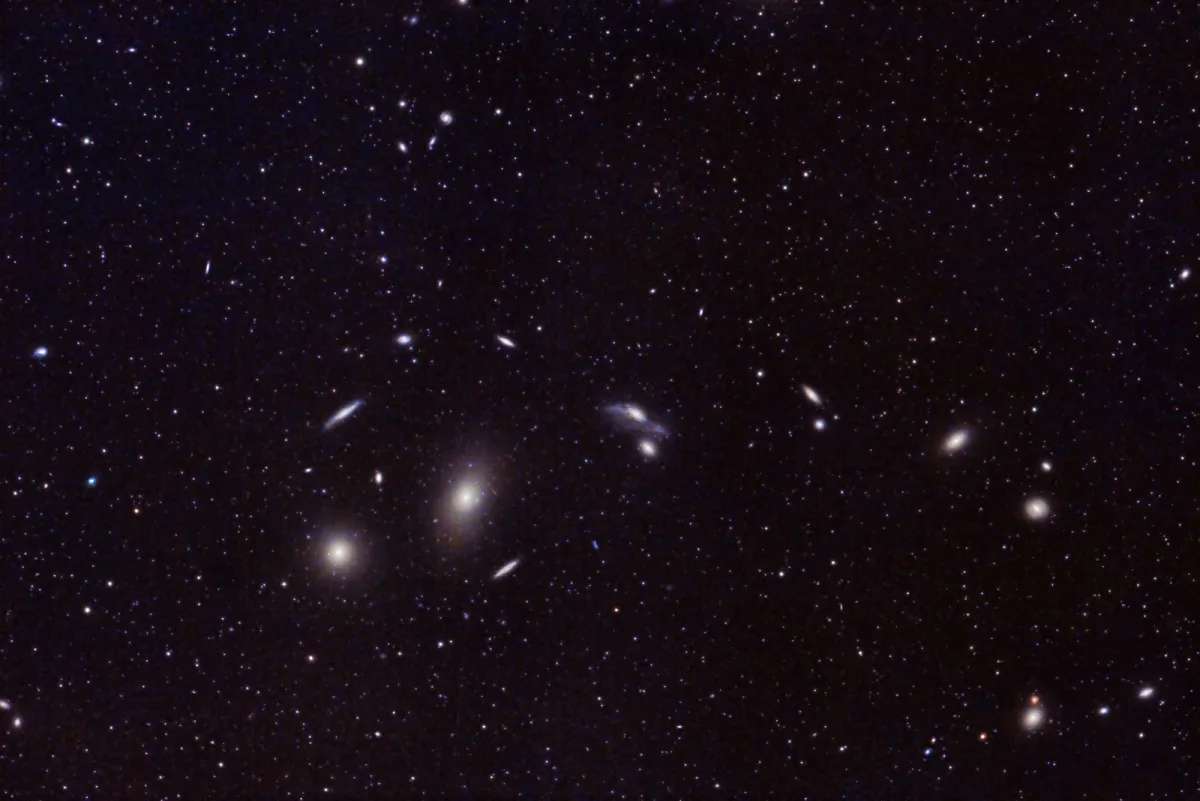
Table of contents
On Monday, December 7, you can open a livestream and watch NASA reveal the first pictures from a telescope that is about to change how astronomers spend their time. It will not look deeper than Webb. It will not be sharper than Hubble. What it will do is take in a patch of sky bigger than the full Moon in a single shot, and do it again and again, fast.
That telescope is the Roman Space Telescope, launched on August 30 and now parked about a million miles from Earth. NASA has not said which targets it picked for the debut. But the camera itself tells you most of what the first frames will show, and why they will look so different from the Hubble images you know. Here is how to read them when they land.
When and How to Watch the Roman Space Telescope Reveal
NASA set the release for Monday, December 7, at 3:30 p.m. Eastern, or 12:30 p.m. Pacific. The images go out on a live stream from the American Geophysical Union's annual meeting in San Francisco, on NASA's own channels and AGU's. Reporters get an embargoed preview at noon that day.
If you live outside the US, a time zone converter will turn 3:30 p.m. EST into your local time. For viewers in India, that lands at 2 a.m. on Tuesday, so the images will be waiting when you wake up.
The date is earlier than some expected. In September, the news site Space reported that NASA expected Roman's first science images in early 2027. The December reveal suggests commissioning went smoothly.
What Roman Is Built To Do
The full name is the Nancy Grace Roman Space Telescope, and NASA manages it from Goddard Space Flight Center in Maryland. It has a primary mirror the same size as Hubble's, which the news site Space puts at 2.4 meters, or about 7.9 feet. The difference is behind the mirror.
The Wide Field Instrument is a 300-megapixel infrared camera made of 18 detectors. According to NASA, each exposure covers a patch of sky larger than the apparent size of the full Moon. Hubble's infrared images are about 200 times smaller. Even Hubble's widest camera sees an area nearly 100 times smaller.
Roman also carries a coronagraph, a technology demonstration that blocks a star's glare so nearby planets and dusty disks can be photographed directly. It is a test run for the kind of instrument a future mission would need to image an Earth-like planet.
Why wide beats deep for this job
Webb's 6.5-meter mirror collects far more light than Roman's, which is why Webb sees the faintest, most distant galaxies. Roman trades that depth for area. One way to picture the split: Roman is the mapmaker, and deeper telescopes follow up on the targets it finds. Its strength is statistics, measuring millions of objects instead of studying one in fine detail.
Worked Example: How Much Faster Than Hubble?
NASA's figures are easy to quote and hard to picture. Here is the math behind them.
Step 1: sky coverage per year. NASA says Roman will image over 50 times as much sky in its first five years as Hubble did in its first 30. Call Hubble's 30-year total one unit. Roman covers 50 units in five years, or 10 units a year. Hubble covered one unit in 30 years, or about 0.033 a year. Divide 10 by 0.033 and Roman's yearly pace is about 300 times Hubble's.
Step 2: data volume. Pre-launch coverage by the news site Space put Hubble's haul at about 400 terabytes in roughly 35 years, while Roman is expected to produce about 500 terabytes a year. At that rate, Roman would pass Hubble's entire lifetime archive in under 10 months.
Step 3: the planet hunt. Roman's bulge survey revisits each field every 12 minutes, five times an hour. Over one 72-day season that is 72 times 24 times 5, or 8,640 looks at the same stars. Across the six planned seasons, it adds up to more than 51,000.
Takeaway: a single Roman frame will not wow you with detail the way a Webb close-up does. A thousand Roman frames will hold more galaxies than astronomers have ever measured in one consistent survey.
How Roman Finds Planets Nobody Can See
Most planet hunters watch for a star to dim as a planet passes in front of it. Roman uses a different trick called gravitational microlensing.
When a star or planet drifts almost exactly in front of a more distant star, its gravity bends and focuses the background light. The distant star briefly brightens. NASA explains that this reveals the foreground object even when it is far too faint to see. A planet orbiting the foreground star adds a short extra blip to the brightening.
These alignments are rare and brief, which is why the survey is built the way it is. Roman will watch hundreds of millions of stars toward the crowded center of the Milky Way. It observes in two 72-day stretches each spring and fall, with three seasons early in the mission and three near the end. NASA expects the survey to turn up more than a thousand planets orbiting far from their stars, plus rogue planets drifting alone with no star at all.
All of that uses less than a quarter of Roman's observing time in its five-year primary mission. The rest goes to wide surveys aimed at dark energy and dark matter.
Dark Energy and a Billion Galaxies
The universe is expanding, and that expansion is speeding up. Nobody knows why. The unknown cause is called dark energy, and Roman's main surveys are built to pin down how it has behaved over cosmic history.
The method is brute force. NASA says Roman could measure light from about a billion galaxies over its lifetime. Their shapes reveal how invisible dark matter bends light along the way. Their positions and distances trace how fast space stretched in different eras.
Sorting a billion galaxies by hand is impossible, so much of that work will lean on automated classification and machine learning tools trained to spot shapes and outliers in huge image sets.
What to Look for in the First Images
NASA has not announced the targets, so treat these as a viewing guide, not a spoiler:
- Width. Expect frames that look less like a portrait and more like a mosaic of a whole neighborhood of sky.
- Crowds. A Roman field toward the galactic center could hold huge numbers of stars, each a potential microlensing source.
- Background galaxies. Zoom into the dark gaps. Faint smudges there are distant galaxies, the raw material of the dark energy surveys.
- Infrared color. Roman sees light beyond what your eyes can detect, so the colors are assigned. That is normal for Hubble and Webb images too.
One more piece of context: Roman arrives as other NASA observatories wind down. The Swift telescope, a workhorse for catching cosmic explosions, was lost to atmospheric drag, which we covered in why the Swift telescope fell to Earth.
Related reading: Earth's New Mini-Moon: How a Tiny Asteroid Got Captured and Voyager 1 at One Light-Day: How NASA Still Hears It.
Frequently Asked Questions
When will the Roman Space Telescope release its first images?
NASA will release them on Monday, December 7, at 3:30 p.m. EST (12:30 p.m. PST), in a livestream from the American Geophysical Union annual meeting in San Francisco.
How is Roman different from the James Webb Space Telescope?
Webb has a much larger mirror and sees fainter, more distant objects in fine detail. Roman has a Hubble-size mirror but a far wider field of view, so it is built for huge surveys rather than deep close-ups.
Where is the Roman Space Telescope now?
Roman launched on August 30 on a SpaceX Falcon Heavy and made a roughly three-month, million-mile trip to the Sun-Earth Lagrange point 2, a stable spot beyond Earth's orbit.
How many planets will Roman find?
NASA expects its galactic bulge survey alone to reveal more than a thousand planets orbiting far from their stars, along with free-floating rogue planets.
A Telescope Built for Patterns
Hubble taught a generation to expect jaw-dropping close-ups. Roman asks for a different kind of attention. Its value is in the counts: how many galaxies, how many planets, how the numbers shift across billions of years.
So when the first frames go live on December 7, look past the single pretty picture. Count what is in the background. Those faint specks are where the real science of the next five years begins.
Written by
Nora Whitfield
Technology & Science
Covers technology and science for Quick Trend Insights, with a focus on what new AI tools, consumer hardware and space missions actually change for the people following them.
Related Articles
View all
Wind Advisory vs High Wind Warning: What Each Means
A wind advisory means gusts of 46 to 57 mph are expected. See where it ends and a High Wind Warning begins, why 58 mph hits so much harder, and how to prepare.
Tropical Glaciers: Why Puncak Jaya's Ice Is Almost Gone
Tropical glaciers on Puncak Jaya have lost over 99% of their ice since 1850. Why equator ice melts so fast, how El Niño speeds it up, and when it could vanish.
Terra Satellite: What Ends When NASA Switches It Off
The Terra satellite stops collecting science on December 1 after 27 years. What its five instruments measured, why its orbit drifted, and what data is lost.