
Northern Lights Trip: How to Time It for the Best Odds
Plan a northern lights trip with better odds: where the auroral oval reaches, the best months and moon phases, and why five nights beat two after solar max.
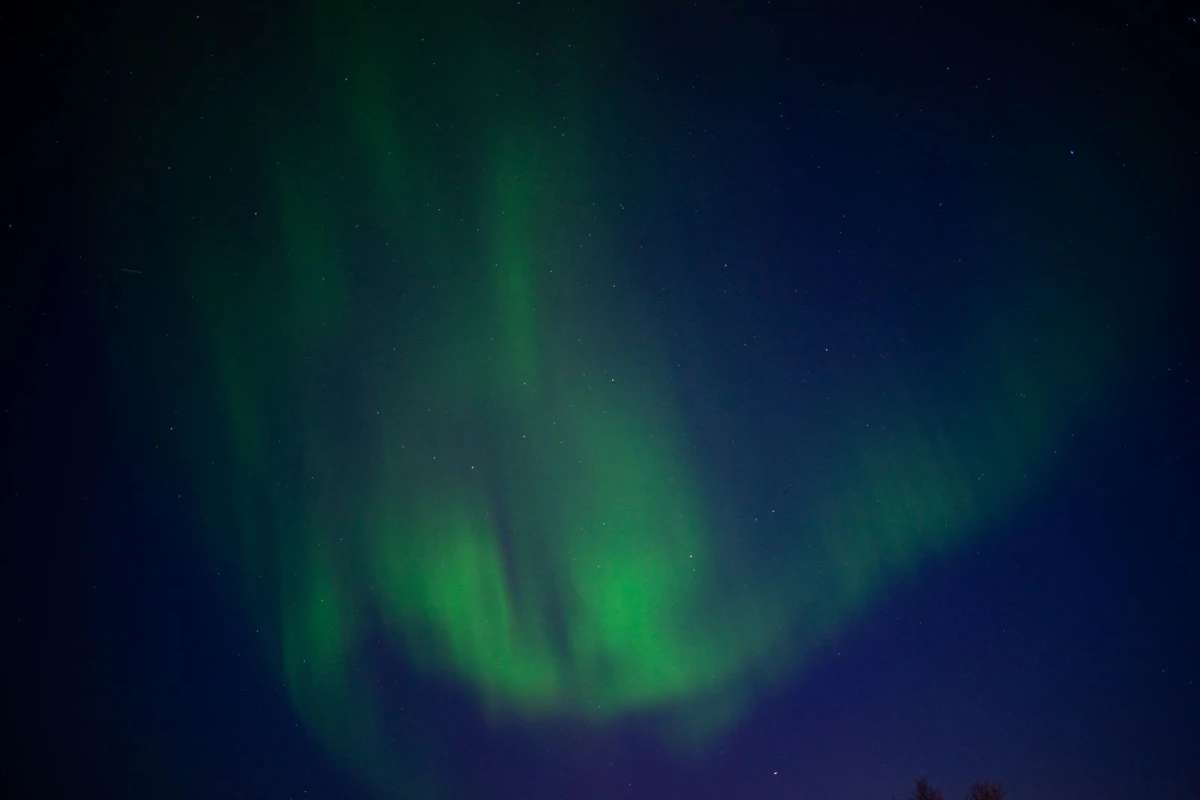
Table of contents
You fly to Tromsø for four nights, book the aurora bus tour, and stand in a snowy field at midnight staring at thick gray cloud. On the fifth night, as you pack, the sky over the hotel turns green. Every aurora hunter knows a version of this story.
A northern lights trip is a bet on three things at once: the sun has to throw particles at Earth, the sky has to be dark, and the clouds have to clear. You cannot control any of them. You can stack the odds by choosing where you go, which weeks you pick, and how many nights you stay.
The sun is past the peak of its 11-year cycle, which has many travelers wondering if they missed their chance. They have not. Here is how the science works and how to turn it into a booking plan.
Is It Too Late After Solar Maximum?
The sun runs on a cycle of about 11 years, swinging from quiet to stormy and back. In October 2024, NASA and NOAA announced that Solar Cycle 25 had reached its maximum phase. That peak brought auroras far south of their usual range, including a May 2024 storm that the UK's Met Office says reached southern parts of the UK.
Now the sun is in its declining phase. Sunspots are fewer, and so are the big eruptions called coronal mass ejections. But the Met Office notes that strong space weather has historically followed solar maximum, and it reported auroras as far south as northern Italy in January.
The declining phase also brings a different engine. As the astronomy site Time and Date explained, citing a University of Alaska Fairbanks researcher, coronal holes become more influential after the peak. These are open regions in the sun's magnetic field that blast out fast solar wind. They tend to produce minor to moderate storms, and because the sun rotates about every 27 days, a coronal hole that sparks auroras once often returns about four weeks later.
What that means for planning
- Fewer extreme storms overall than at the peak, but they still happen.
- Steadier minor storms from recurring coronal holes, which are plenty for viewers in the Arctic.
- A 27-day rhythm you can watch: if a strong display happens, mark the date four weeks later.
Where to Go: The Kp Math
Auroras form in a ring around the magnetic pole called the auroral oval. Your chances depend on how close you are to it. NOAA's Space Weather Prediction Center measures geomagnetic activity on the Kp index, a scale from 0 (calm) to 9 (extreme storm).
The center gives a handy rule. At Kp 0, the equator-facing edge of the oval sits at about 66° geomagnetic latitude. Each step up the Kp scale pushes it about 2° farther south. Run the numbers:
- Kp 0: edge near 66°
- Kp 3: near 60°
- Kp 5: near 56°
- Kp 7: near 52°
- Kp 9: near 48°
Geomagnetic latitude is measured from the magnetic pole, which sits in the islands of northeastern Canada, not at the geographic pole. That is why Alaska and Canada see auroras at lower geographic latitudes than Scandinavia does. You can also see an aurora well beyond the oval's edge: NOAA says that from a hilltop with a clear view north, a display can be visible up to about 1,000 kilometers away.
The practical upshot: go to a place that sits near the oval even on quiet nights. Northern Norway, Swedish and Finnish Lapland, Iceland, Alaska's interior and Canada's Northwest Territories are popular because they need only low Kp values. NOAA says that in a good location, Kp 3 or 4 can still produce nice displays. Farther south, you are waiting for the rare big storm.
When to Book a Northern Lights Trip: Season, Moon and Hour
Pick the right months
The aurora happens year-round, but you need dark skies to see it. NOAA warns that summer nights at high latitudes may never get fully dark, so summer Arctic trips usually fail. Our explainer on the earliest sunset of the year covers why darkness arrives on its own odd schedule around the solstice.
NOAA also says the largest geomagnetic storms tend to occur around the spring and fall equinoxes. Scientists link this to how Earth's magnetic field lines up with the sun's at those times of year. That makes late September through October, and late February through March, the sweet spots: dark enough, and stormier on average.
Mind the moon
A bright moon does not weaken the aurora, but it washes out how bright it looks to you. For winter trips, the darkest windows sit around the new moons of roughly December 9, January 7, February 6 and March 8. Full moons fall around December 24, January 22, February 20 and March 22, according to Time and Date's moon phase tables. A trip centered on a new moon gives you the darkest skies.
Stay up late
NOAA says the best displays usually come within an hour or two of midnight, roughly 10 p.m. to 2 a.m. local time. During stronger storms the window widens into the evening and early morning. Space weather forecasts are usually posted in universal time, so a time zone converter helps you translate an alert into your local clock.
How Many Nights? The Probability Math
The single biggest mistake on a northern lights trip is booking too few nights. Clouds are the most common reason people go home empty-handed, and no forecast can promise a clear sky four days out.
Here is a simple model. Assume each night has a 50% chance of being clear enough to see the sky, and that nights are independent. (Real weather comes in multi-day patterns, so treat this as a rough guide, not a forecast.)
- One night: 50% chance of a clear sky.
- Three nights: the chance that all three are cloudy is 0.5 × 0.5 × 0.5 = 12.5%, so you have an 87.5% chance of at least one clear night.
- Five nights: the chance of five cloudy nights is about 3%, so you have about a 97% chance of at least one clear night.
Clear skies alone are not enough; you also need active auroras on that night. But in a location near the oval, modest activity is common, so the clear-sky odds do most of the work. Going from two nights to five does far more for your chances than any upgrade to a fancier tour.
Build flexibility in: pick a base where you can drive or take a tour bus toward clearer skies. Coastal and inland areas often have very different cloud cover on the same night.
Protecting the Money You Spend
Arctic winter trips are expensive, and flights in and out of small northern airports are vulnerable to storms. Two habits protect you.
- Book refundable or changeable lodging for the first and last nights, when weather delays are most likely to cost you a booking.
- Read the fine print on aurora tours. Ask whether the operator rebooks you for free if the first night stays cloudy, and get the answer in writing.
- Check whether travel insurance covers weather delays. Our guide to when holiday travel insurance pays explains which disruptions policies cover and which they exclude.
Pack for long, still hours outside. Temperatures inland in Lapland or interior Alaska can fall far below zero on clear nights, which are exactly the nights you want. Phone cameras now pick up faint auroras that look gray to the eye, so a small tripod is worth the weight.
Frequently Asked Questions
What is the best month to see the northern lights?
Late September through March offers the dark skies you need, and NOAA says larger storms tend to occur around the spring and fall equinoxes. That makes late September, October, late February and March especially good, ideally around a new moon.
Can you still see the northern lights after solar maximum?
Yes. The sun reached solar maximum in late 2024 and is now declining, but forecasters say strong storms often continue in the declining phase. Coronal holes also drive regular minor storms that are easy to see from the Arctic.
What Kp index do I need to see the aurora?
It depends on where you are. Near the auroral oval, in places like northern Norway or interior Alaska, Kp 2 to 4 can be enough. NOAA says Kp 6 to 7 may bring the aurora into view from the northern edge of the United States.
How many nights should a northern lights trip be?
Plan at least three to five nights. Clouds are the most common spoiler, and each extra night sharply raises your chance of at least one clear, active sky.
Stack the Odds, Then Look Up
A northern lights trip will never come with a guarantee. You can still swing the odds heavily in your favor: go somewhere near the auroral oval, travel near an equinox and a new moon, stay up around midnight, and give yourself five nights instead of two.
The sun may be past its peak, but it is far from quiet. Watch the Kp forecast, keep an eye on the clouds, and be ready to head outside when the sky starts to glow.
Written by
Priya Raman
Health & Living
Covers health, wellness, and everyday living for Quick Trend Insights, with an interest in separating what the research supports from what the marketing claims.
Related Articles
View all
Traveling to Mexico With Kids: The New Proof Rule
Traveling to Mexico with kids? Hotels must now verify you are a parent or guardian. See what the law requires, what to pack and where the SAM form fits.

Jet Lag Recovery: How to Reset Faster After Long Flights
Jet lag recovery runs about an hour a day flying east and 1.5 hours flying west. Use the CDC's timing rules for sleep, light and caffeine to reset days sooner.
Airline Travel Waivers: How to Rebook Free Before a Storm
Airline travel waivers let you change flights free before a storm, but the fine print decides credit or cash. See how windows work and when waiting pays more.