
Earliest Sunset of the Year: Why It Comes Before Solstice
The earliest sunset of the year comes about two weeks before the winter solstice. See the solar noon math behind it, with dates for New York, Chicago and Delhi.
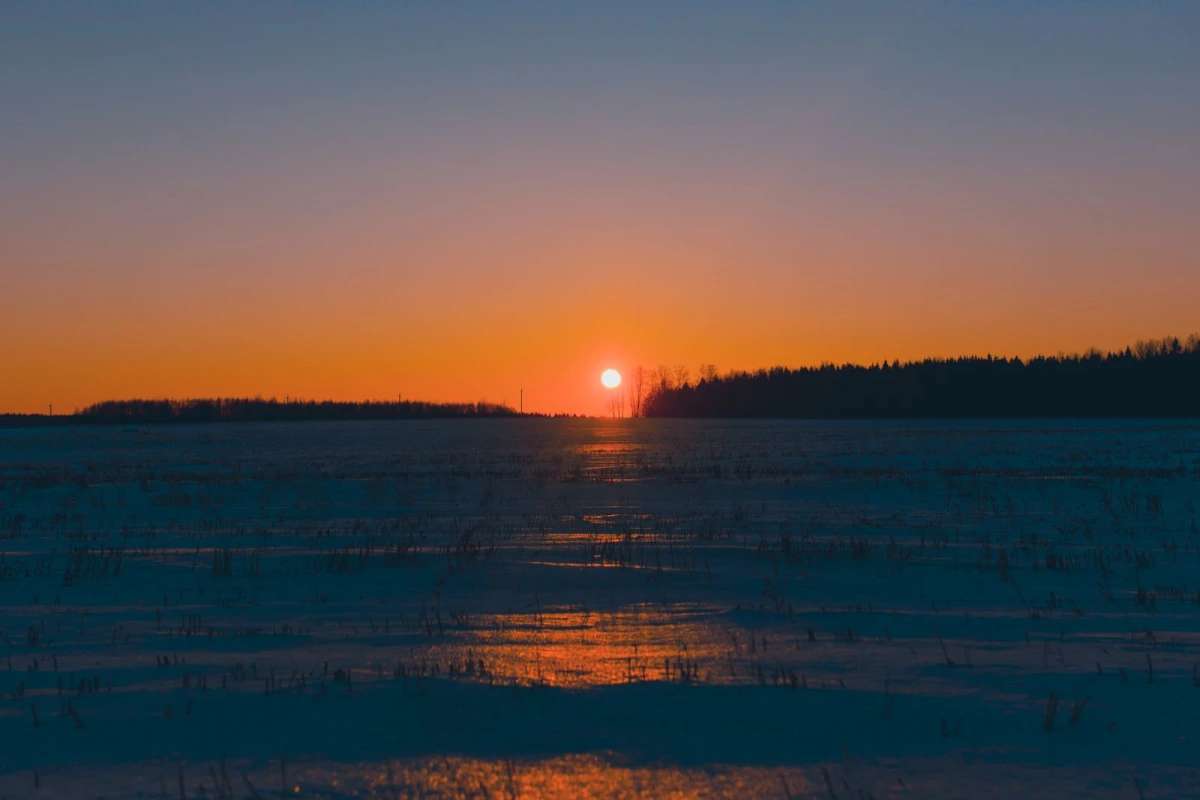
Table of contents
You leave work in early December and it is already dark. Somebody tells you to hang on, because the days start getting longer after the solstice on December 21. Then you notice something odd: by the middle of the month, the sun is already setting a little later each evening, even though the shortest day has not arrived.
You are not imagining it. The earliest sunset of the year comes roughly two weeks before the winter solstice in places like New York and Chicago, and the latest sunrise comes about two weeks after it. The reason is a mismatch between the 24-hour clock on your wall and the real length of a solar day, and once you see how it works, the December evenings make a lot more sense.
The Earliest Sunset of the Year, City by City
Here is how the timing plays out in a few cities, calculated with the standard NOAA solar position method for this December. Times are local standard time and rounded to the minute.
- New York: earliest sunset around December 8 at 4:28 p.m. Latest sunrise around January 4 at 7:20 a.m.
- Chicago: earliest sunset around December 8 at 4:19 p.m. Latest sunrise around January 3 at 7:18 a.m.
- Miami: earliest sunset around November 30 at 5:29 p.m. Latest sunrise not until mid January.
- Delhi: earliest sunset in the first days of December at about 5:24 p.m. Latest sunrise around January 11.
- London: earliest sunset around December 13 at 3:51 p.m. Latest sunrise around December 30.
The pattern holds everywhere in the Northern Hemisphere. The US Naval Observatory and Physics Today both point out that the earliest sunset always lands before the solstice and the latest sunrise always lands after it. Only the size of the gap changes with latitude.
Why the Solstice Is Still the Shortest Day
Sunset timing and day length are two different things. The solstice is the day with the least total daylight, and that does not change. In New York on December 21, the sun rises at about 7:17 a.m. and sets at about 4:32 p.m., giving roughly 9 hours and 15 minutes of daylight.
This year the solstice itself arrives at 20:50 UTC on December 21, which is 3:50 p.m. in New York and 2:20 a.m. on December 22 in India, according to timeanddate.
What shifts is where that short day sits on the clock. Around the solstice, the whole block of daylight is sliding later. Sunset moves later faster than sunrise does, so the day is still shrinking even while evenings are getting brighter.
The Real Reason: Solar Days Are Not 24 Hours
Your clock assumes every day is exactly 24 hours, measured from noon to noon. The sun does not agree. A solar day, the time from one solar noon (when the sun is highest) to the next, runs longer than 24 hours around both solstices and shorter around the equinoxes, timeanddate explains.
Two features of Earth's orbit cause this:
- Earth's tilt of about 23.4 degrees. Near the solstices the sun's yearly path across the sky runs nearly parallel to the equator. That makes its daily eastward shift count for more in clock time, so Earth has to turn a little extra to bring the sun back overhead.
- Earth's oval orbit. Earth is closest to the sun in early January and moves fastest then. The faster it moves along its orbit, the farther the sun appears to shift each day, which again means a little extra rotation is needed.
In December both effects push the same way. The result is a solar day about half a minute longer than the clock day, every day, for weeks.
Worked Example: Watching Solar Noon Drift in New York
The easiest way to see this is to track solar noon, the moment the sun is highest, over a month.
- December 1: solar noon at about 11:45 a.m.
- December 8: solar noon at about 11:48 a.m.
- December 21: solar noon at about 11:54 a.m.
- January 4: solar noon at about 12:01 p.m.
Those match the figures timeanddate publishes for New York, which put solar noon at 11:54 a.m. on December 21 and noon on January 4. Between December 8 and December 21, solar noon moves about 6 minutes in 13 days, or roughly 28 seconds later every day.
Now add the shrinking day
Sunset happens half a day's light after solar noon. In early December, the afternoon half of the day is still losing about 30 seconds a day as the solstice nears. Solar noon is gaining about 28 seconds. So early in the month the loss wins and sunsets keep creeping earlier.
Around December 8 the two balance out. After that, the daylight loss slows to almost nothing while solar noon keeps sliding at its full pace, so sunsets start getting later two weeks before the days start getting longer. The same logic, mirrored, puts the latest sunrise in early January.
Why the Gap Depends on Where You Live
The solar noon drift is the same for everyone. What differs is how fast day length changes near the solstice.
Near the equator, day length barely changes through the year, so the steady drift in solar noon dominates. That is why Miami's earliest sunset comes around November 30, three weeks before the solstice. Physics Today gives a similar date for Miami and puts Quebec City's earliest sunset near December 10.
Farther north, day length changes fast, so the solstice pull is stronger and the earliest sunset sits closer to it. London's earliest sunset lands around December 13. In the far north, where days shrink by several minutes at a time, the earliest sunset is just days from the solstice.
Your time zone matters too
Where you sit inside your time zone shifts every one of these times. Clock time is set for a whole zone, but solar noon depends on your exact longitude. Chicago sits east of the center of the Central zone, so its sunsets come earlier on the clock than in cities farther west in the same zone. Our time zone converter is a quick way to compare clock times across cities.
What This Means for Your December
A few practical takeaways for the darkest stretch of the year:
- Evening light returns first. From about December 8, commutes home in New York and Chicago get a few seconds brighter each day.
- Mornings keep getting darker into January. If you run or walk at dawn, early January is the darkest point, not the solstice.
- Plan skywatching early in the evening. Dark skies arrive before 5:30 p.m. in much of the US, which suits the mid December meteor shower. Our guide to how many Geminids you will really see covers timing and conditions.
Frequently Asked Questions
When is the earliest sunset of the year?
In the mid-latitude United States, around December 7 to 9. In New York and Chicago it falls near December 8. Places closer to the equator, such as Miami, see it in late November, while cities farther north, such as London, see it in mid December.
Why is the earliest sunset not on the winter solstice?
Because solar days in December are about 30 seconds longer than 24 hours. Solar noon drifts later each day, which pulls sunset later even while total daylight is still shrinking. The solstice remains the shortest day, but not the day with the earliest sunset.
When is the latest sunrise of the year?
In New York and Chicago, around January 3 to 4, roughly two weeks after the solstice. The same drift in solar noon that makes sunsets later in December keeps sunrises getting later into early January.
When do the days start getting longer?
Total daylight starts increasing right after the solstice on December 21. The gain is only a few seconds a day at first and grows to more than two minutes a day by February in mid-northern latitudes.
The Bottom Line on the Earliest Sunset of the Year
The earliest sunset of the year comes before the solstice because our clocks assume a 24-hour day, while December's solar days run about half a minute longer. That drift pushes solar noon, sunset and sunrise later each day, so evenings brighten first and mornings stay dark into January.
Mark December 8 if you live near 40 degrees north. From then on, your evenings are already on their way back, a couple of weeks before the calendar says winter has turned.
Written by
Nora Whitfield
Technology & Science
Covers technology and science for Quick Trend Insights, with a focus on what new AI tools, consumer hardware and space missions actually change for the people following them.
Related Articles
View all
Nuclear Reactor on the Moon: Why NASA Needs One
Why NASA wants a nuclear reactor on the Moon: what Lunar Reactor-1 must do, the battery math that rules out solar alone, and how safe a 20 kW lunar reactor is.
ESCAPADE Mars Mission: Why It Looped Back Past Earth
The ESCAPADE Mars mission launched with Mars behind the Sun, waited a year in space, then slingshot past Earth to Mars. Here is how its powered flyby worked.
Starship Catch: Why Catching the Upper Stage Matters
The Starship catch on Flight 15 brought an upper stage home from orbit for the first time. See why it is so hard, what it costs, and what must happen next.