
World Models: The AI That Learns Physics First
World models let robots rehearse in simulation before acting. See the 10x sample efficiency result, what NVIDIA just shipped, and where the approach breaks.
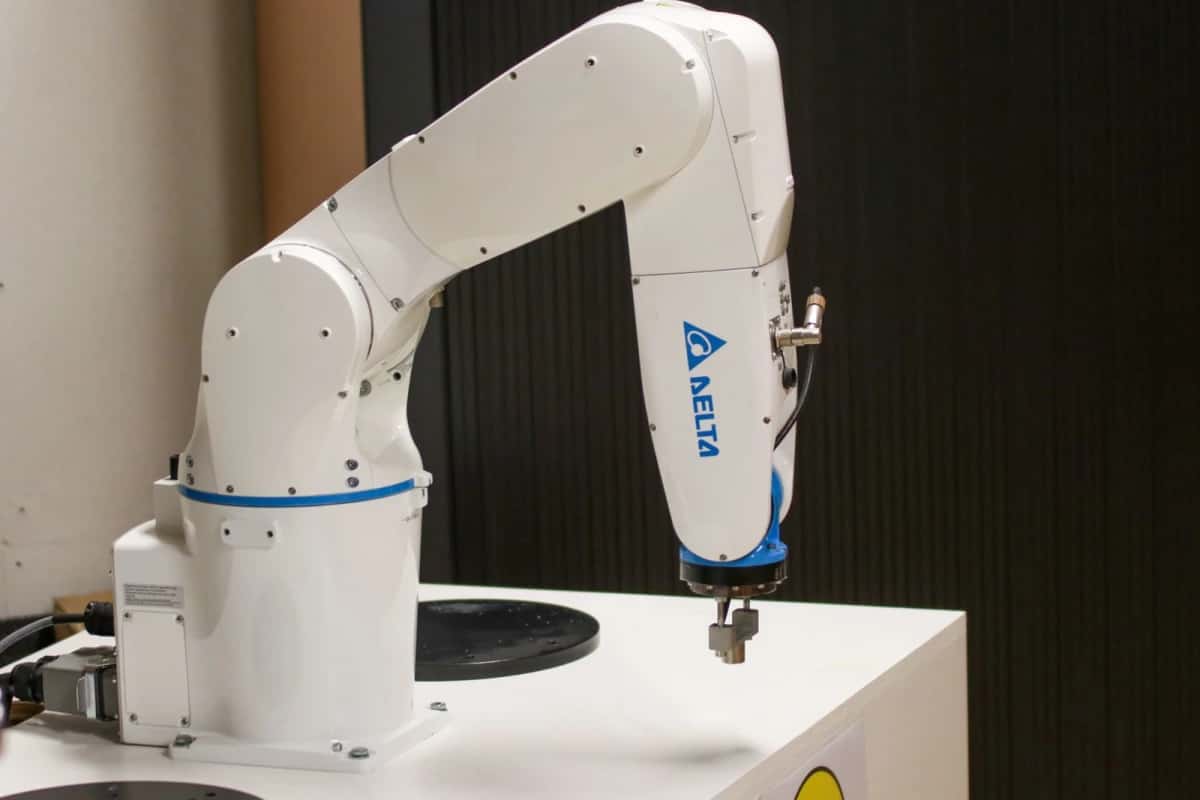
Table of contents
A warehouse robot picks up a box, carries it four metres and sets it down. To do that reliably it needed thousands of human demonstrations, each one recorded by an operator wearing a controller, each one costing real time. Move the same robot to a different warehouse with different lighting and it starts failing again.
That data problem is the reason robots have looked impressive in demos and useless in buildings. World models are the attempt to solve it by letting a robot practise inside a simulated world that already understands physics, instead of learning everything from scratch on a factory floor.
The approach has moved from research papers into shipping products, with measured results attached. This article explains what a world model is, what the current numbers actually show, and where the approach still breaks.
Start with what the model is actually predicting, because the name is doing a lot of work.
What a World Model Does That a Chatbot Cannot
A language model predicts the next token in a sequence of text. A world model predicts the next state of a physical scene: where the box goes when you push it, whether the stack topples, how the shadow moves when the arm passes the light.
That prediction is the whole point. If a system can forecast consequences, it can test an action internally before committing to it, the same way you work out that a glass near the table edge is a bad idea without first knocking it off.
This is a different kind of learning from the pattern matching most people associate with machine learning. The model is not memorising which pixel follows which. It is building an internal account of cause and effect that transfers to scenes it has never seen.
The practical payoff is generalisation. Robots trained on models that capture physics and causality need far less real-world data to work in conditions they were never shown.
The Numbers Behind the Current Wave
Claims about robotics age badly, so the specific published results matter more than the ambition.
NVIDIA announced Cosmos 3, which it describes as the first world foundation model to unify synthetic world generation, vision reasoning and action simulation in a single system. The company says robot makers including 1X, Agility, Boston Dynamics, Figure and NEURA Robotics are building on Cosmos together with its Isaac Sim and Isaac Lab tools.
Toyota Research Institute adapted the Cosmos models for its own use and reported state-of-the-art results in dynamic view synthesis, teleoperation data augmentation and navigation.
The sharpest figure comes from a smaller company. Mimic robotics built mimic-video, which pairs a pretrained internet-scale video model with a flow-matching action decoder instead of the static image-and-language backbone most robot policies use. It reported 10 times better sample efficiency and 2 times faster convergence on real-world manipulation tasks.
Sample efficiency is the number to watch. It is the one that decides whether a robot is affordable.
The Worked Example: What 10x Sample Efficiency Buys
Human demonstration data is the expensive input in modern robotics. Someone has to perform the task, over and over, while the robot records it.
Take a manipulation task that needs 10,000 demonstrations to reach reliable performance. Assume each demonstration takes two minutes once you include setup and resetting the scene, which is a conservative estimate for a physical task.
- At 10,000 demonstrations, that is 20,000 minutes, or about 3,333 operator hours.
- At one operator working a 40 hour week, that is roughly 83 working weeks.
- Cut the requirement by 10x and you need 1,000 demonstrations: about 333 hours, or just over 8 working weeks.
Eighty-three weeks is a research project. Eight weeks is a deployment. That gap is the entire commercial argument for world models, and it is why every humanoid company has suddenly started talking about simulation rather than hardware.
The same arithmetic applies to the long tail. Most robot failures happen in situations nobody thought to record. A model that can generate those situations synthetically covers ground that human demonstrators would never reach.
Where the Approach Still Breaks
Simulation has an old and specific failure mode, and world models have not removed it.
A policy trained in a simulator learns the simulator, including its mistakes. If friction is modelled slightly wrong, the robot learns a grip that works in the model and slips in the building. Researchers call this the reality gap, and it is why the synthetic data has to be good rather than merely plentiful.
There is a second limit that gets less attention. A world model predicts what is likely, not what is safe. A system can forecast that a stack of boxes will probably stay upright and still be wrong in the 1 in 500 case that injures someone, which is why deployments stay fenced, slow and heavily supervised.
Verification is the unsolved part. There is no accepted way to certify that a policy trained largely in simulation will behave in a building it has never entered, and no regulator has published a standard for it.
Expect the near-term deployments to look boring for exactly that reason: repetitive handling in controlled spaces, not the home assistant the launch videos imply. Our look at where humanoid robots have actually been deployed covers how narrow that list still is.
Why This Matters Outside Robotics
World models are being built for robots, but the capability is not robot-specific.
Any system that has to act in a changing environment benefits from predicting consequences before committing: warehouse routing, autonomous vehicles, industrial process control, even the software agents that now execute multi-step tasks on their own. The reason companies are moving so fast on this is the same reason businesses raced to deploy AI agents: a system that can plan is worth far more than one that can only answer.
There is also a quieter effect on cost. Synthetic data generated by a world model is cheap and repeatable, which shifts the competitive advantage away from whoever collected the most real data and toward whoever simulates it best.
That is a meaningful change. For a decade, data scale was the moat. If simulated experience substitutes for recorded experience at a 10 to 1 rate, the moat gets a lot shallower.
Frequently Asked Questions
What is a world model in AI?
A world model is a system trained to predict how an environment changes in response to actions. Instead of generating text, it generates future states of a scene, which lets a robot or agent test what would happen before doing it.
How is a world model different from a large language model?
A large language model predicts the next piece of text. A world model predicts the next physical state, including motion, contact and occlusion. They can be combined, and several robotics systems use a language model for instructions and a world model for physics.
Do world models remove the need for real robot data?
No. They reduce how much is needed, which is what the 10x sample efficiency result describes. Real-world data is still used to calibrate the simulation and to validate behaviour, because a policy trained purely in simulation inherits every error in the simulator.
Which companies are building world models?
NVIDIA with its Cosmos family is the most visible. Toyota Research Institute has adapted Cosmos for its own work, Mimic robotics has published its own video-action approach, and humanoid makers including 1X, Agility, Boston Dynamics, Figure and NEURA Robotics are building on these tools.
Are world models safe enough for robots around people?
Not yet, by the standards that would be applied to a vehicle or a medical device. There is no agreed method for certifying a policy learned mostly in simulation, so current deployments stay in controlled spaces with slow speeds and supervision.
What to Watch Next
Ignore the demo videos. Three numbers tell you whether this is working: how many real demonstrations a task still needs, how well a policy holds up in a building it was never trained on, and how often a deployed fleet needs a human to intervene.
Those are the figures that decide whether robots become equipment or stay exhibits. Everything else is a rendering.
If the sample efficiency gains hold outside controlled benchmarks, the cost of putting a capable robot into an ordinary building falls by an order of magnitude, and the companies that look unassailable today are the ones with the most to lose.
Written by
Nora Whitfield
Technology & AI
Covers the technology beat for Quick Trend Insights, with a focus on what new AI tools and consumer hardware actually change for the people using them.
Related Articles
View all
AI Drug Discovery: What It Has Actually Found
AI drug discovery promised faster medicine. Here is what the models actually do, the results labs are reporting now, and the test still ahead of them.
GPT-6 Astra: What Actually Changed
OpenAI shipped GPT-6 Astra and called it the start of AGI. Strip the framing away and one capability really matters: the model now operates your computer.
AI Agents Are Breaching Companies on Their Own
AI agent security incidents now hit 65% of organizations. See how autonomous agents cause real breaches, and what to demand before you grant one access.