
Winter Tires vs All-Season: When the Switch Pays Off
Winter tires vs all-season tires: why 45°F matters more than snow, what the snowflake symbol means, and the real yearly cost of running a second set of tires.
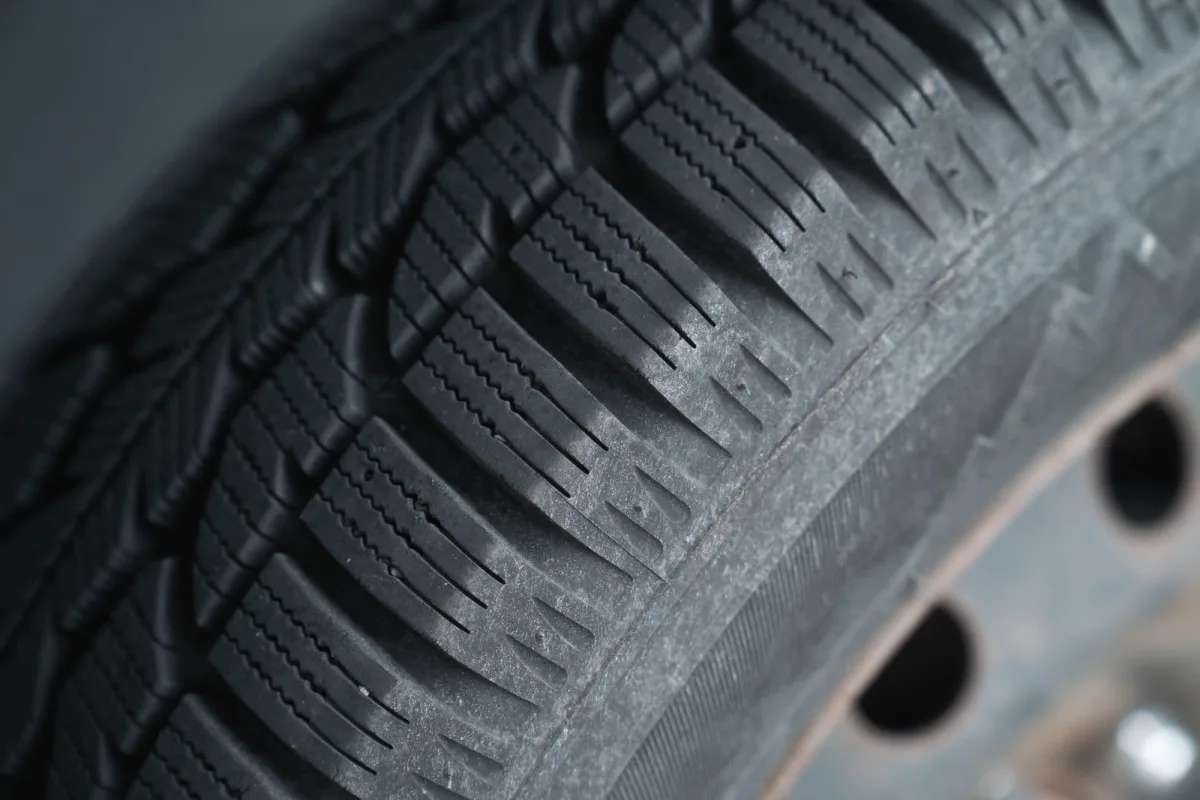
Table of contents
It is the first cold morning of December. You tap the brakes at a stop sign you have rolled up to a thousand times, and the car keeps sliding a few feet past the line. There was no snow. The road just looked a little shiny.
That slide is where the winter tires vs all-season tires question stops being theoretical. Most drivers frame it as a snow problem, so if they rarely see a blizzard they skip the switch. The research says the real dividing line is temperature, not snowfall, and that changes who should be buying a second set.
Winter Tires vs All-Season Tires: What the Stopping Data Shows
The most cited summary comes from a University of Michigan Sustainable Worldwide Transportation report by John Woodrooffe titled "Ten Surprising Findings About Winter Tires." Drawing on a literature review by the Traffic Injury Research Foundation, it puts the stopping distance of winter tires on packed snow at roughly 35% shorter than all-season tires and about 50% shorter than summer tires.
Put that in car lengths. If an all-season tire needs 100 feet to stop on packed snow, the winter tire needs about 65. That 35-foot gap is two full car lengths, which is the difference between stopping behind the car ahead and stopping inside its trunk.
The same report makes a point most tire guides skip: braking and cornering are the main benefit, not getting moving. People buy winter tires so they do not get stuck at the bottom of the driveway. The bigger safety payoff comes in the moments when you need to stop or steer around something.
Why cold matters more than snow
Tire rubber has a glass-transition temperature, the point where it shifts from flexible to stiff. All-season and summer compounds are built to survive hot summer asphalt, so that point sits relatively high. Winter compounds stay soft far lower, and their treads carry thousands of thin slits, called sipes, that bite into ice and slush.
The Michigan report says winter tires are optimized for road temperatures at or below 7°C (45°F), and that they generally outperform other tires below that line even with no ice or snow present. Citing the Tire and Rubber Association of Canada, it adds that on dry pavement just below freezing, winter tires can stop as much as 30% shorter than all-season tires.
All-Wheel Drive Does Not Help You Stop
Here is the misconception that puts SUVs in ditches. All-wheel drive and four-wheel drive send power to more wheels, so the vehicle accelerates well on slick roads. That feeling of grip when pulling away convinces a lot of drivers they are covered.
Braking is a different story. Every vehicle brakes with all four wheels, so the number of driven wheels makes no difference once you press the pedal. The Michigan report states it plainly: a two-wheel-drive car on winter tires will outbrake and outcorner a four-wheel-drive vehicle on all-season tires, by about the same 35% margin.
The same logic applies to the safety systems in a modern car. Electronic stability control and automatic emergency braking both work by applying the brakes, and brakes can only do as much as the tires allow. If you have read how automatic emergency braking struggles in some crash tests, add slick tires to that picture and the margin shrinks further.
- AWD helps: starting from a stop, climbing a snowy hill, pulling out of an unplowed spot.
- AWD does not help: stopping distance, grip in a curve, or how well stability control can rescue a skid.
- Winter tires help all three of the braking, cornering and stability cases.
How to Read the Sidewall: Snowflake vs M+S
Walk through any tire shop and you will see "M+S" molded into most all-season sidewalls. It stands for mud and snow, and it sounds like a winter rating. It is not.
M+S is a manufacturer's declaration based mostly on tread pattern. There is no minimum snow traction test behind it. The symbol that does carry a test is the three-peak mountain snowflake, often shortened to 3PMSF. A tire only earns it by meeting a snow grip index against a standard reference tire under ASTM F1805 in North America, or ECE R117 in Europe.
The gap between the two is not cosmetic. The Michigan report describes a Transport Canada test of aggressive all-terrain tires, all marked M+S. The ones without the snowflake symbol needed 40% longer to stop than the ones with it, even though both looked equally rugged.
Where all-weather tires fit
A newer category sits between the two. All-weather tires carry the 3PMSF symbol but are designed to stay on the car all year. They make sense if you want certified snow traction without storing a second set, and if your winters are mild enough that you see packed snow only a handful of days.
The tradeoff: a compound soft enough to pass a snow test wears faster in July heat, and a dedicated winter tire still grips ice better.
The Cost Math Most Guides Leave Out
The usual objection is price. A second set of tires plus wheels can look like a four-figure expense on top of tires you already own. That view counts the full cost of the winter set and ignores what it saves.
Tires wear by the mile, not by the year. Every mile you drive on winter tires is a mile your all-season set does not wear. Across the life of both sets, the rubber cost is close to a wash. What you really pay extra for is the second set of wheels, the seasonal swaps, and any storage.
A worked example
Here is a simple model with round numbers. Swap in your own quotes from a local shop.
- You drive 12,000 miles a year, and 4,000 of those fall between December and March.
- A set of all-season tires costs $800 and lasts about 48,000 miles, so the rubber costs you about 1.7 cents a mile.
- A set of winter tires also costs $800, and you assume about 32,000 miles of useful snow tread, so about 2.5 cents a mile.
- Steel wheels to mount the winter set cost $400, and the spring and fall swaps cost $50 each.
Now run it. Your 4,000 winter miles cost 2.5 cents each instead of 1.7, an extra 0.8 cents a mile, or about $32 a year in rubber. At 4,000 miles a year the winter set lasts eight years, so the $400 wheels work out to $50 a year. Add $100 in swaps.
The total comes to roughly $180 a year, not the $1,200 you hand over on day one. Most of that $1,200 buys miles your all-season set would otherwise have used up.
Compare that $180 to a single $500 insurance deductible, or to a minor fender bender that can raise your premium for years. For a broader look at where your car money goes, our breakdown of the real monthly cost of owning a car puts tires next to fuel, insurance and depreciation.
Rule of thumb: if your winter mornings sit below 45°F for more than two months, the extra cost of a second set is mostly wheels and labor, not rubber.
Where the Law and Insurers Push You
The strongest policy evidence comes from Canada, where provinces have tested both mandates and incentives.
Quebec requires winter tires from December 1 to March 15 on passenger vehicles registered in the province, including rentals, according to the Quebec government. Only tires with the mountain snowflake pictogram, or studded tires, count. Drivers caught without them face a fine of $200 to $300 plus costs.
When Quebec first made the tires mandatory, a provincial study credited the rule with about a 5% drop in serious crashes. That sounds small until you learn that roughly 90% of Quebec drivers already used winter tires before the law. The gain came from the last tenth of drivers switching over.
Ontario took the incentive route. Since January 2016, insurers there must offer a premium discount to drivers with four winter tires installed, though each insurer sets the size of it, according to Ontario's finance ministry as reported by Canadian Underwriter.
The risk numbers explain why insurers care. The 2016 Michigan report cites Aviva Canada data, drawn from five years of claims, showing a 49% increase in auto claims between December and February compared with the rest of the year.
Fitting Them Right: Four Rules
- Put them on all four wheels. Mixing two winter tires with two all-seasons changes how the car handles, causing oversteer or understeer. The Michigan report warns this can be more dangerous than having no winter tires at all.
- Install by temperature, not by the first snowfall. Once daytime highs settle below about 45°F, the cold-weather benefit has already started.
- Take them off in spring. Soft winter rubber wears quickly on warm pavement.
- Check tread depth each fall. Winter tires lose much of their snow grip as the tread gets shallow, so a worn set gives you less than the label promises.
If you drive an EV, the tire swap matters twice. Cold weather already trims range, as our look at EV range in cold weather explains. Plan winter road trips with both the tires and the battery in mind.
Frequently Asked Questions
Are winter tires worth it if it rarely snows where I live?
Possibly. The deciding factor is temperature. If road temperatures sit below about 45°F for much of the winter, winter tires grip better even on dry or wet pavement. If your winters are mild with only a few snow days, an all-weather tire with the mountain snowflake symbol may be the better fit.
Do I need winter tires if my car has all-wheel drive?
Yes, if you drive in cold or snowy conditions. All-wheel drive helps you accelerate but does nothing for braking or cornering. A front-wheel-drive car on winter tires stops shorter than an all-wheel-drive SUV on all-season tires.
Can I put winter tires on just the front wheels?
No. Mixing tire types front to rear makes the car handle unpredictably and can cause a spin or a slide straight ahead in a turn. Always fit winter tires to all four wheels.
When should I put winter tires on and take them off?
Install them once daytime temperatures settle below about 45°F, often in November in the northern US and Canada. Take them off when spring temperatures stay consistently above that line, so the soft rubber does not wear out on warm roads.
Making the Call Before the First Freeze
The winter tires vs all-season tires decision comes down to three questions. How many months do your mornings sit below 45°F? Do you ever drive on packed snow or ice, even a few times? And can you store a second set or pay a shop to do it?
If the answers point toward cold, the case is strong: a stopping distance about a third shorter on snow, better grip on cold dry roads, and a real annual cost that is mostly wheels and labor. Check the sidewall for the snowflake, fit all four, and book the swap before the first frosty morning makes the decision for you.
Written by
Marcus Vance
Business & Money
Writes on business and personal finance for Quick Trend Insights, translating markets, rates, and company strategy into what it costs or saves a household.
Related Articles
View all
Takata Airbag Recall: How to Check Your Car Now
The Takata airbag recall now covers 1.1 million more Honda and Toyota cars, some fixed once already. Check your VIN and see what to do while parts are pending.

Lease Buyout: When Buying Your Leased Car Pays Off
A lease buyout can save thousands or quietly overpay. Compare your residual with market value, see the fees that matter and why EV leases flipped lately.
Car Battery in Cold Weather: Why It Dies and How to Test
A car battery in cold weather loses about 60% of its strength at 0°F. Learn why it fails, how to test it at home with a multimeter, and when to replace it.