
Stock Market Circuit Breakers: How Trading Halts Work
Stock market circuit breakers explained: the halt levels in the US, India and South Korea, how long pauses last, and what happens to your orders during a halt.
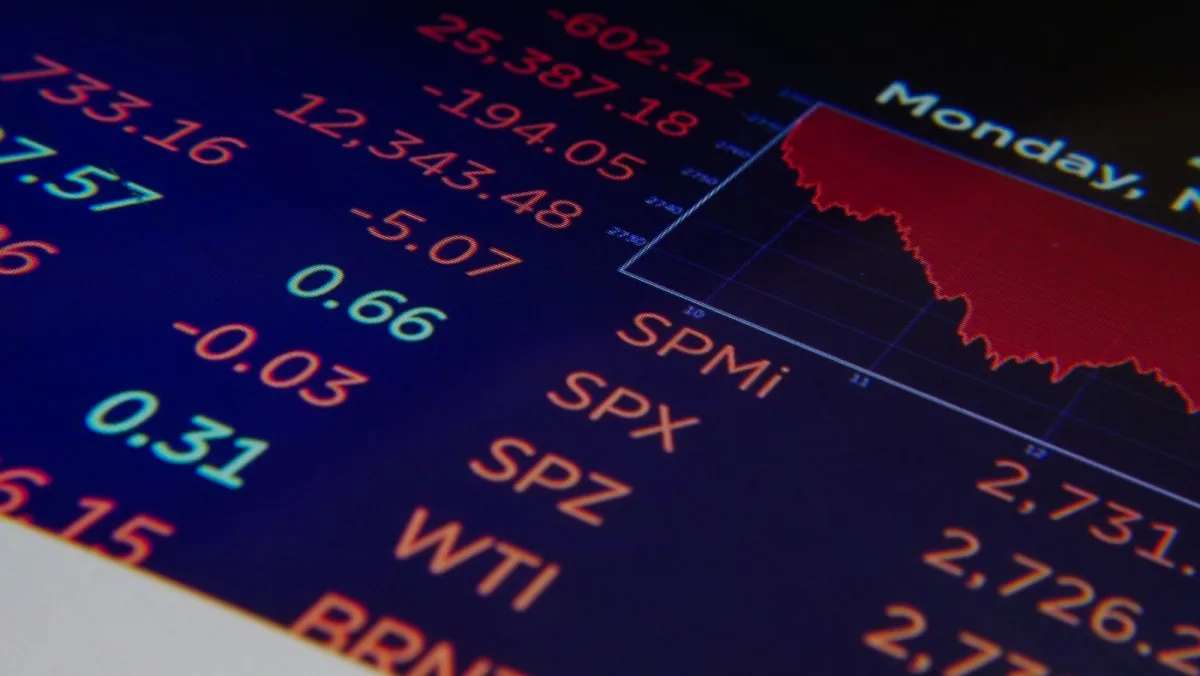
Table of contents
Picture placing a sell order three minutes after the opening bell and watching it sit there, unfilled, while the screen says trading is suspended. That is exactly what happened to investors in Seoul on November 6, when South Korea's main index fell more than 8% almost at the open and the exchange froze the market for 20 minutes.
Stock market circuit breakers are the rules behind that freeze. The US, India and South Korea all have them, but the trigger levels, the pause lengths and the cut-off times differ in ways that matter if you own shares in any of those markets. With global stocks swinging hard on the AI selloff this autumn, here is how the halts actually work and what they do to your orders.
What Stock Market Circuit Breakers Are For
A circuit breaker is a pre-set pause that kicks in when an index falls too far, too fast. The idea dates to the US crash of October 1987, when the Dow fell more than 22% in a day and exchanges had no mechanism to slow it.
The pause has three jobs. It gives investors time to read the news instead of reacting to the price alone.
It also lets market makers, the firms that stand ready to buy and sell, reset their risk limits. And it lets clearing houses recheck margin, the collateral traders must post, before positions are forced closed. A halt buys time, not a better price. If the bad news is real, the selling resumes when trading does.
There are two kinds. Market-wide breakers stop everything when an index drops. Single-stock limits stop one share from moving beyond a band. Most investors meet the second kind far more often.
The US Rules: 7%, 13% and 20%
In the US, the trigger is the S&P 500, measured against the previous day's close. The Securities and Exchange Commission lays out three levels:
- Level 1, a 7% fall: all US stock trading stops for 15 minutes if it happens before 3:25 p.m. Eastern.
- Level 2, a 13% fall: another 15-minute halt, again only before 3:25 p.m.
- Level 3, a 20% fall: trading ends for the rest of the day, whatever the time.
Note the 3:25 p.m. cut-off. A 7% or 13% fall late in the afternoon does not stop trading, because a pause that close to the 4 p.m. close would leave no time to reopen in an orderly way.
The rule only triggers on the way down. There is no upward market-wide halt in the US.
Single stocks have their own bands
Individual US stocks fall under a separate rule called Limit Up-Limit Down. The SEC says it sets a price band above and below a stock's average price over the previous five minutes. If the price hits the band and stays there for 15 seconds, trading in that stock pauses for five minutes. Bands run from 5% for large, liquid stocks up to wider limits for cheap and thinly traded shares.
India's Rules: Both Directions, and the Clock Matters
India's market-wide breaker, introduced by SEBI in 2001, works differently in two ways. It fires on a move in either direction, so a 10% surge halts trading just as a 10% crash would. And it is tied to whichever of the Sensex or Nifty 50 crosses the line first.
The halt length depends on when the trigger is hit. The table below comes from NSE's circular on the mechanism, which still sets the halt lengths today:
- 10% move: a 45-minute halt before 1 p.m., 15 minutes between 1 p.m. and 2:30 p.m., and no halt after 2:30 p.m.
- 15% move: 1 hour 45 minutes before 1 p.m., 45 minutes between 1 p.m. and 2 p.m., and the rest of the day after 2 p.m.
- 20% move: trading stops for the rest of the day.
After a halt, trading does not snap back to normal. It restarts with a 15-minute pre-open call auction, where orders are collected and matched at a single price before continuous trading resumes. India last saw market-wide halts in March 2020, during the pandemic crash.
South Korea's Rules and the November Halt
The KOSPI has been the circuit breaker story of the year. The Korea Exchange halts trading for 20 minutes when the index falls 8% or more from the previous close and stays there for one minute. On November 6, the KOSPI plunged more than 8% just after the open, triggering a halt at 9:03 a.m., Korea's Kyunghyang Shinmun and the JoongAng Daily reported.
Korea also uses a smaller brake called a sidecar. When KOSPI 200 futures fall 5% and stay there for a minute, the exchange pauses program selling, the automated orders large funds use, for five minutes.
A sell-side sidecar fired at 9:34 a.m. that same morning. By 9:40 the index was down 6.8% at about 5,018, still hovering around the 5,000 mark.
The trigger was the AI selloff. Chipmakers Samsung Electronics and SK Hynix were down more than 7% and 8% respectively that morning, and the KOSPI has since fallen about 48% from its record high of 9,385, according to Mint. A market dominated by a few stocks trips its breakers more often, because one sector's bad day becomes the whole index's bad day.
Worked Example: Finding the Trigger Levels Yourself
Because the triggers are percentages of the previous close, the actual index levels change every day. You can work them out in a minute.
The Nifty 50
Say the Nifty closed at 25,800 yesterday.
- 10% trigger: 25,800 × 0.90 = 23,220 on the way down, or 28,380 on the way up
- 15% trigger: 25,800 × 0.85 = 21,930
- 20% trigger: 25,800 × 0.80 = 20,640
So a fall of 2,580 points, hit before 1 p.m., would stop Indian trading for 45 minutes.
The S&P 500
Take the S&P 500's close of 7,353.73 on November 5, as reported by AP, and round it to 7,350.
- Level 1 (7%): 7,350 × 0.93 = 6,836
- Level 2 (13%): 7,350 × 0.87 = 6,395
- Level 3 (20%): 7,350 × 0.80 = 5,880
For context, AP reported that the S&P 500 fell 4.4% on November 5, its worst day since the April 2025 tariff shock. That felt brutal, yet it was still well short of a Level 1 halt. US market-wide breakers last fired four times in March 2020, which shows how extreme a 7% day is.
What a Halt Means for Your Orders
This is where most guides stop, and where real investors get caught out.
- In India, open orders are wiped. NSE's rules cancel all outstanding orders when a market-wide halt begins, so you must place them again for the pre-open auction. Elsewhere, ask your broker how open orders are handled. A market order placed in panic as trading resumes may fill far below where you clicked.
- Limit orders protect you. A sell limit sets the lowest price you will accept, so it will not fill at a crash price you never agreed to.
- Stop-loss orders can backfire. When a stop triggers in a gap down, it turns into a market order and fills wherever trading reopens.
- Mutual funds and ETFs are affected differently. An ETF halts with the market. A regular mutual fund still prices at the day's close, so a halt does not change what you get.
Halts tend to arrive alongside spikes in the fear gauge. Our explainer on what the VIX really prices covers that side of the story, and our guide to liquidity explains why prices gap when buyers step back.
Do Circuit Breakers Actually Work?
The evidence is mixed. Supporters point to March 2020, when the US halted four times in two weeks and markets reopened each time without a disorderly collapse. Critics point to a "magnet effect": as an index approaches a trigger, traders rush to sell before the doors close, which can pull prices toward the halt level faster.
Korea's experience this year cuts both ways. The November 6 halt did not stop the slide, but the index did recover some ground later in the session, and the government followed with emergency support measures. A pause cannot fix the cause of a selloff. What it can do is stop a liquidity gap from turning a bad day into a broken one.
Frequently Asked Questions
What triggers a stock market circuit breaker?
A fall in a benchmark index past a set percentage of the previous close. In the US it is the S&P 500 at 7%, 13% and 20%. In India it is the Sensex or Nifty 50 at 10%, 15% and 20% in either direction. In South Korea it is the KOSPI at 8%, held for one minute.
How long does a circuit breaker halt last?
Fifteen minutes in the US for Level 1 or 2, and 20 minutes in South Korea at the first level. India's halts range from 15 minutes to 1 hour 45 minutes depending on the size of the move and the time of day. The top level closes the market for the day in all three.
Can I cancel my order during a trading halt?
In India you do not need to, because NSE cancels all outstanding orders when a market-wide halt starts, and you re-enter them for the pre-open auction. In other markets the rules vary by exchange and broker, so check your broker's policy and consider using limit orders when trading resumes.
When was the last circuit breaker in India?
India's market-wide breaker last fired in March 2020, when both the Sensex and Nifty fell more than 10% during the pandemic crash and trading was halted for 45 minutes.
The Bottom Line on Stock Market Circuit Breakers
Circuit breakers are speed bumps, not walls. They pause trading at known, published levels so that people and machines can catch up with the news. They do not set a floor under prices.
Knowing the trigger levels lets you see a halt coming, and knowing what happens to your orders keeps you from selling at the worst print of the day. Use limit orders when markets get wild, work out tomorrow's trigger points from today's close, and remember that the price after a halt is set by the same fear that caused it. If you want a refresher on how sharp drops build in the first place, read our piece on how the 200-day line sped up a correction.
Disclaimer: This article is for informational purposes only and does not constitute financial advice. Always consult with a qualified financial advisor before making investment decisions. Past performance is not indicative of future results.
Written by
Marcus Vance
Business & Money
Writes on business and personal finance for Quick Trend Insights, translating markets, rates, and company strategy into what it costs or saves a household.
Related Articles
View all
Rupee Rally: Why It Rose Against a Strong Dollar
Rupee rally explained: how record foreign stock inflows, cheaper oil and a hands-off RBI lifted the rupee while the dollar stayed strong, and what it means.
Fed Rate Hike Odds: How Markets Price the Next Move
Fed rate hike odds explained: how CME FedWatch turns fed funds futures into a probability, with a worked example and what a quarter point hike costs you.
Stock Market on Black Friday: How Half-Day Trading Works
The stock market on Black Friday closes at 1 p.m. on less than half the usual volume. See 19 years of data on how the half-day moves and how to trade it safely.