
Holiday Heart Syndrome: How Drinking Triggers AFib
Holiday heart syndrome is AFib triggered by drinking. See how many drinks raise the odds, why risk peaks after the party ends, and when to get checked.
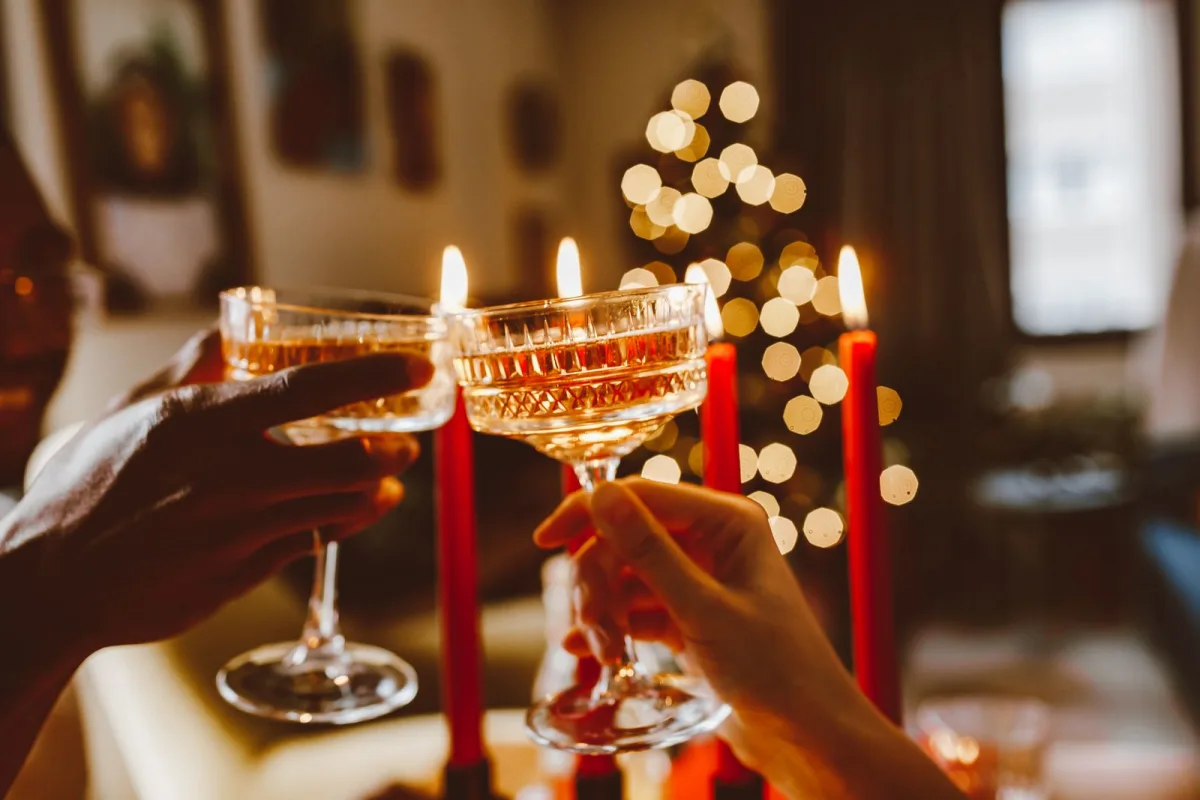
Table of contents
It is 1 a.m. after the office party. You are lying in bed and your heart feels like a bag of fish flopping against your ribs: fast, then pausing, then fast again. You are 38, you have never had a heart problem, and you had "only" a few glasses of wine.
Cardiologists have a name for this. Holiday heart syndrome is an irregular heart rhythm, most often atrial fibrillation (AFib), that follows a bout of drinking in people who may have no known heart disease. December, with its parties and long dinners, is the season the name points to.
Here is what the research says about how alcohol knocks the heart out of rhythm, how many drinks it takes, and when a fluttering chest means a trip to the hospital.
What Holiday Heart Syndrome Actually Is
The term dates to 1978, when a New Jersey team led by Dr. Ettinger described rhythm problems in heavy drinkers who showed no other sign of heart disease. Many of the episodes clustered around weekends and holidays, which gave the syndrome its name.
The rhythm involved is usually atrial fibrillation. In AFib, the heart's upper chambers quiver instead of squeezing in a steady beat. Blood can pool there, which is why AFib raises stroke risk.
The CDC lists the symptoms people notice most often:
- Irregular heartbeat or palpitations (rapid, fluttering or pounding)
- Lightheadedness
- Extreme fatigue
- Shortness of breath
- Chest pain
Some people feel nothing at all. That is one reason AFib sometimes shows up first on a smartwatch alert rather than as a symptom.
How Alcohol Knocks Your Heart Out of Rhythm
Alcohol works on the heart through more than one route at once. Researchers have not settled which matters most, but three show up repeatedly in the evidence.
The nervous system swing
The MunichBREW II study, published in the European Heart Journal, wired up young adults with 48-hour heart monitors during a night of heavy drinking. Heart rate variability showed sympathetic activation, the "fight or flight" system, during drinking and the recovery period after. That was followed by a swing toward the calming parasympathetic system. Both swings can make the upper chambers more prone to misfire.
Fluid and electrolyte loss
Alcohol makes you urinate more. The Cleveland Clinic notes that this can drain electrolytes, the minerals heart cells rely on to keep their electrical timing steady.
The hangover window
The timing surprises most people. In MunichBREW II, clinically relevant arrhythmias appeared in more than 5% of otherwise healthy participants, and mainly in the recovery phase after drinking had stopped. Lead investigator Moritz Sinner of LMU University Hospital Munich flagged that pattern in the study's release. So the danger window can open while you sleep, or the next morning.
How Many Drinks Does It Take?
Less than you might think. In the HOLIDAY Monitors study led by Gregory Marcus at UCSF and published in the Annals of Internal Medicine, 100 people with a history of intermittent AFib wore heart monitors and alcohol sensors for four weeks. Fifty-six of them had at least one AFib episode.
The link with drinking was close and fast. According to the American Heart Association and Advisory Board summaries of the study, one drink roughly doubled the odds of an AFib episode within the next four hours. Two or more drinks raised the odds about 3.5 times.
These were people who already had AFib, so the numbers do not apply directly to everyone. But it changes the usual framing. Holiday heart is not only a problem of extreme binges.
A worked example: one holiday party
The NIAAA defines a US standard drink as 0.6 fluid ounces of pure alcohol. It defines binge drinking as a pattern that brings blood alcohol to 0.08%, which typically means about five drinks for men or four for women in about two hours. Here is how fast a normal party gets there.
- Wine, generously poured: a generous party pour can easily reach 8 ounces, not the 5-ounce standard. At 13.5% alcohol, 8 ounces contains 1.08 fluid ounces of pure alcohol. Divide by 0.6 and that is 1.8 standard drinks per glass.
- Two glasses: 1.8 times 2 equals 3.6 standard drinks.
- One spiked eggnog: 1.5 ounces of 40% rum is 0.6 fluid ounces of alcohol, exactly 1 standard drink.
- Total: 3.6 plus 1 equals 4.6 standard drinks, though it felt like three.
Packed into two or three hours, that meets the NIAAA binge pattern for a woman and comes close for a man. It is also well past the two drinks in four hours that tripled AFib odds in the Marcus study.
Why the Holidays Hit Hearts Harder
Alcohol is only part of the seasonal picture. A Swedish study in The BMJ looked at 283,014 heart attacks recorded in the SWEDEHEART registry over 16 years. Heart attack risk was 15% higher across the Christmas and New Year holiday than in a control period two weeks earlier.
Christmas Eve stood out. Risk that day was 37% higher, peaking around 10 p.m., and New Year's Day was 20% higher. The strongest effects showed up in people 75 and older and in those with diabetes or known heart disease. The authors pointed to emotional stress and other external triggers, though the design cannot prove cause.
Late nights, travel and broken routines stack on top of drinking during this stretch of the year. Energy drinks used as mixers add another stimulant; our look at energy drinks and heart risk covers what those reports found.
When a Fluttering Heart Needs Medical Care
Most holiday heart episodes settle on their own. The Cleveland Clinic says AFib in this setting usually resolves within 24 hours, though it can recur, in some cases up to a year later.
That does not mean you should wait it out at home. Chest pain, fainting, severe shortness of breath or sudden confusion call for emergency care right away. If the flutter is milder, a clinician still needs to see an ECG, ideally while it is happening, to tell AFib apart from harmless extra beats.
A check matters even if the episode passes. The CDC says AFib is linked to a roughly fivefold higher risk of ischemic stroke and causes about 1 in 7 strokes. Your clinician can weigh your stroke risk and decide whether any treatment is needed. Do not start or stop heart medicine on your own.
Who faces higher risk
The Cleveland Clinic lists several factors that make holiday heart more likely:
- Age over 65
- High blood pressure
- Diabetes
- Obesity
- Sleep apnea
- Regularly drinking five or more drinks at a time
If a watch has flagged an irregular rhythm before, our guide to which fitness tracker numbers are real explains how much weight to give that alert.
Does Cutting Back Actually Help?
Yes, and there is trial evidence. An Australian randomized trial in the New England Journal of Medicine enrolled 140 regular drinkers with AFib, each having at least 10 drinks a week. Half were asked to abstain, and their intake fell from about 17 drinks a week to about 2.
Over six months, AFib came back in 53% of the abstinence group versus 73% of those who kept drinking. Time spent in AFib was also lower. For people already diagnosed with AFib, that is a strong case for asking a cardiologist whether to drink at all.
For everyone else, the American Heart Association points to a simple ceiling: no more than two drinks a day for men and one for women. A few practical moves keep a party inside that line:
- Ask for a standard 5-ounce pour, or use smaller glasses at home.
- Alternate each drink with water or a zero-proof option.
- Eat before and while you drink.
- Skip the "one more" after midnight, since the recovery window is when rhythm trouble tends to show up.
Frequently Asked Questions
What are the symptoms of holiday heart syndrome?
The most common are a racing, pounding or fluttering heartbeat, lightheadedness, fatigue, shortness of breath and sometimes chest pain. Symptoms can start during drinking or hours after. Some people with AFib feel no symptoms at all.
How long does holiday heart syndrome last?
The Cleveland Clinic says episodes usually resolve within 24 hours. They can recur, sometimes months later. Anyone who suspects AFib should get checked, even after symptoms fade.
Can one night of drinking cause AFib?
Yes. In the MunichBREW II study, more than 5% of healthy young adults developed clinically relevant arrhythmias after a single heavy drinking session. The risk is higher in people who already have AFib or other heart conditions.
Should you go to the ER for heart palpitations after drinking?
Go right away if palpitations come with chest pain, fainting, severe breathlessness or confusion. For milder palpitations, contact a clinician promptly so an ECG can confirm the rhythm.
The Bottom Line
Holiday heart syndrome is common enough to have a name for nearly 50 years, yet many people have never heard of it until it happens to them. The research points the same way: heavy drinking can push a healthy heart into AFib, often hours after the last drink, and even modest amounts raise the odds for people who already have it.
You do not need to skip the party. Count your pours honestly, keep within the AHA's daily limits, and treat an irregular heartbeat as a reason to see a clinician rather than a hangover to sleep off.
Written by
Priya Raman
Health & Living
Covers health, wellness, and everyday living for Quick Trend Insights, with an interest in separating what the research supports from what the marketing claims.
Related Articles
View all
Irregular Sleep Schedule: Why Your Heart Notices the Drift
An irregular sleep schedule may raise heart risk, new studies suggest. See what the research found, its limits, and how to measure your own bedtime drift.
Early Flu Season: What the H1N1 Surge Means for You
Early flu season is here, driven by a mutated H1N1 strain. See what CDC data says about the vaccine match, contagious days, and when to call a doctor.
Daraxonrasib Pancreatic Cancer Trial: What It Found
Daraxonrasib pancreatic cancer trial explained: what the phase 3 study found on survival and side effects, why RAS was undruggable, and who can get it now.