
Delhi Fog Flight Delays: What Airlines Owe You
Delhi fog flight delays explained: why CAT III lets some planes land, the DGCA meal, hotel and refund rules, and the Rs 10,000 payout fog usually voids.
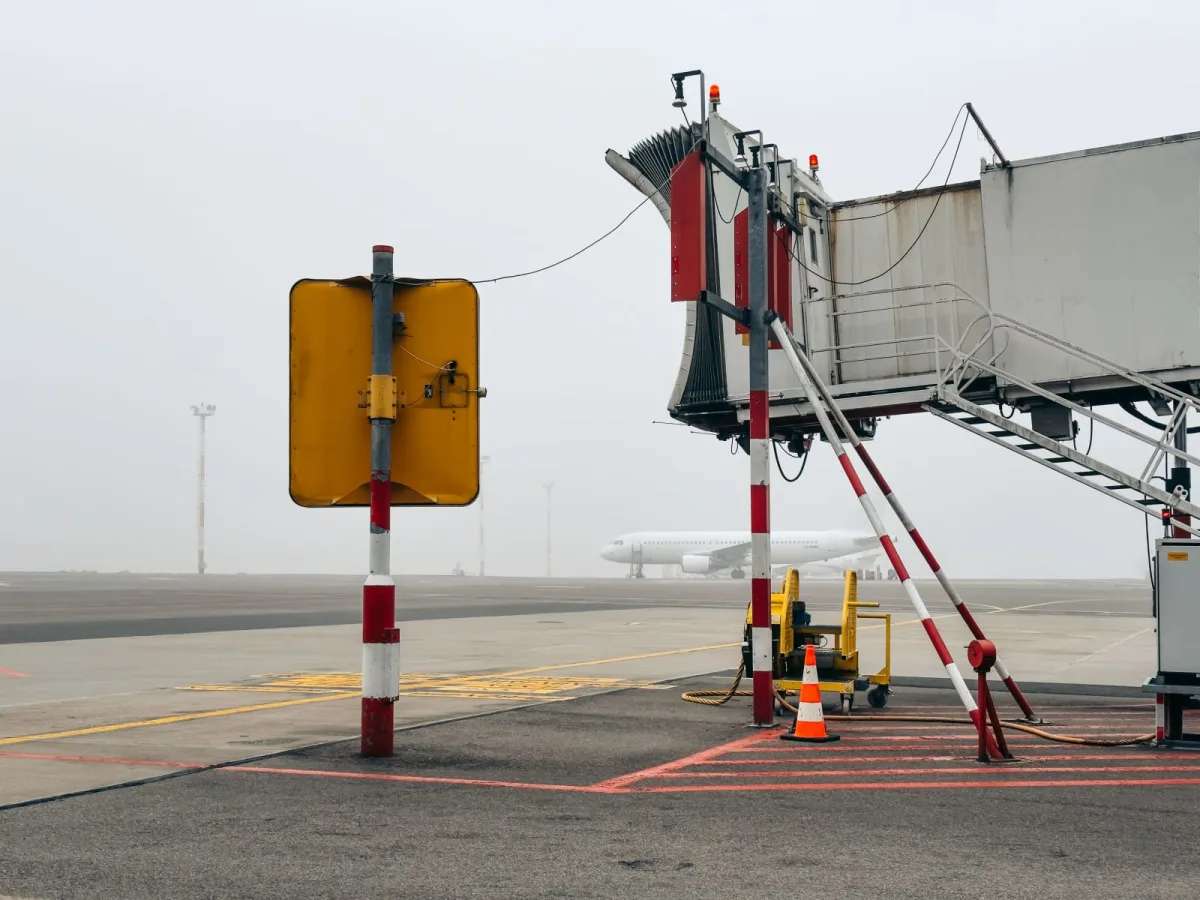
Table of contents
Your 6:40 am flight out of Delhi shows "delayed" at 4 am. By 7 the board says "cancelled," the queue at the counter is 200 people long, and the agent offers you a seat two days later. You have a wedding in Mumbai tomorrow. Delhi fog flight delays follow this pattern almost every winter, and what you walk away with depends on rules most travelers never read.
Winter smog and fog now arrive every year from November, and the worst of it lands right on top of the Christmas, New Year and wedding-season travel rush. This guide covers why some planes still land in near-zero visibility while yours sits at the gate, what India's aviation regulator says airlines owe you, and how to book so fog matters less.
Why Delhi Fog Flight Delays Hit Some Flights and Not Others
Pilots land in fog using an instrument landing system, or ILS. Radio beams guide the plane down a fixed path to the runway. The categories (CAT I, II, III) describe how little visibility the system, the plane and the crew can handle together.
Delhi's runways are equipped for CAT III, the top category, built for landings when you can barely see the runway lights from the cockpit. CAT II and CAT I need progressively more visibility. With CAT III in place, it sounds like the whole problem is solved. It is not, because the runway is only one of three links in the chain.
- The runway needs CAT III lighting and ILS equipment. Delhi has it on several runways. Many smaller North Indian airports do not.
- The aircraft needs certified autoland equipment that has been kept current. Not every plane in a fleet qualifies.
- The crew needs CAT III training and recent practice. If either pilot lacks it, the flight is limited to the higher CAT I or CAT II minimums.
That third link is where airlines have stumbled. In January 2024, India's Directorate General of Civil Aviation (DGCA) issued show-cause notices to Air India and SpiceJet for rostering pilots who were not CAT III compliant during low visibility, after flights were diverted from Delhi. So the flight beside yours may land because its crew is certified, while yours circles or diverts to Jaipur.
What the Airline Must Do When Fog Strikes
After the January 2024 chaos, when passengers sat on planes for hours, the DGCA issued a standard operating procedure for fog. Two parts matter to you.
First, airlines may cancel flights expected to be delayed by more than three hours, rather than boarding people and waiting. Second, they must publish accurate, real-time delay information on their websites and send it to affected passengers by SMS, WhatsApp and email, with airport displays kept current. The Tribune and Business Today both reported the order at the time.
The practical effect is that a 3-hour fog problem now often shows up as a cancellation the night before or early morning. That feels worse. It can be better, because a cancellation triggers clearer rights than a vague rolling delay.
Your Rights Under DGCA Rules, in Numbers
India's passenger protections sit in a DGCA rulebook called Civil Aviation Requirement Section 3, Series M, Part IV. It sets out facilities by delay length and compensation by flight length. Here is the core of it. Each airline also publishes a passenger charter based on these rules, so check your airline's own charter before you argue at the counter.
Meals and refreshments during a delay
You qualify if you checked in on time. The threshold depends on the flight's block time, which is the scheduled time from gate to gate.
- Block time up to 2.5 hours: meals once the delay reaches 2 hours
- Block time 2.5 to 5 hours: meals at 3 hours
- Block time above 5 hours: meals at 4 hours
Hotels, refunds and alternate flights
For a domestic delay of more than 6 hours, the airline must offer an alternate flight or a full refund. A hotel with transfers is due when the delay passes 24 hours, or 6 hours if the flight was due to leave between 8 pm and 3 am.
Cash compensation for cancellations
If the airline cancels with less than 24 hours' notice and cannot rebook you acceptably, it owes a refund plus compensation. The amount is the lower of the one-way basic fare plus fuel charge, or a cap set by block time: Rs 5,000 for flights up to an hour, Rs 7,500 for one to two hours, and Rs 10,000 beyond two hours.
Fog changes this. The rule exempts airlines from compensation when the cause is an extraordinary circumstance beyond their control, and weather is the textbook case. For delays, the airline can also decline meals and hotels if the disruption could not reasonably have been avoided. Your refund right survives either way.
A Worked Example: Delhi to Mumbai on a Foggy Morning
Say you paid Rs 6,200 for a 7:00 am Delhi to Mumbai flight. The basic fare plus fuel charge is Rs 4,800, and the rest is taxes and airport fees. Block time is 2 hours 10 minutes. Here is how three outcomes play out.
- Cancelled at 10 pm the night before for crew shortage. That is within the airline's control. You can take an alternate flight, or a full Rs 6,200 refund plus compensation of Rs 4,800 (the fare and fuel charge, because it is lower than the Rs 10,000 cap). Total back: Rs 11,000.
- Cancelled at 5 am because visibility is below minimums. Fog is extraordinary. You get an alternate flight or the Rs 6,200 refund. No compensation.
- Delayed 7 hours in fog, then operates. The 2-hour meal rule applies to this block time, but the airline can lean on the weather exemption. Past 6 hours, ask for an alternate flight or a refund in writing.
The gap between outcome 1 and outcome 2 is Rs 4,800. So when an airline blames "weather," ask whether your specific flight was cancelled for visibility or for crew and aircraft reasons. On a morning when other carriers are landing, a crew that was not CAT III rostered is an operational choice, not the weather.
How to Book Around the Fog
You cannot control the weather. You can control when you are exposed to it.
- Fly after late morning. Airline advisories from IndiGo, Air India and SpiceJet consistently flag early mornings as the risk window. A 7 am departure is far more exposed than a 1 pm one.
- Avoid tight connections through Delhi. A 90-minute layover on a separate ticket is a gamble from mid-December to early February. Book one ticket so the airline owns the misconnect.
- Leave a buffer day for anything fixed. Weddings, exams and cruise departures need a day of slack. Outlook Traveller describes the fog window as running from mid-December into early February.
- Check your flight before leaving home. The DGCA order requires airlines to push status updates. Make sure your booking has your current phone number and email, especially if you booked through an agent.
If you are flying in from abroad, remember that a long-haul arrival into Delhi at dawn faces the same minimums. Use the time zone converter to see when your inbound flight actually lands in Indian time, and push for a later connection if it lands between midnight and 9 am.
When You Should Push Back
Airlines sometimes use fog as a blanket explanation for a whole morning's problems. That is not always fair to you.
Ask for the reason in writing at the counter or by email. If the airline says weather, note whether other flights on your route operated that morning. If the stated reason is technical, crew or a late inbound aircraft not caused by fog, you are back in compensation territory. File first with the airline. If it does not resolve the complaint, escalate through AirSewa, the Ministry of Civil Aviation's grievance portal.
Keep every receipt for meals and transport while you wait. Even when cash compensation is off the table, a refund for an unused leg and reasonable expenses can be. The same logic of reading the airline's own waiver and policy pages applies here as it does in our guide to rebooking free before a storm.
Consider insurance too. A trip-delay benefit can pay for a hotel when the airline legally does not have to. Our breakdown of when holiday travel insurance pays and when it won't explains the waiting-period fine print.
Frequently Asked Questions
Do airlines pay compensation for fog delays in India?
Usually not. DGCA rules exempt airlines from cash compensation when the cause is an extraordinary circumstance such as weather. You keep the right to a refund or an alternate flight if your flight is cancelled or delayed past 6 hours.
What is CAT III at Delhi airport?
It is the highest category of instrument landing system, allowing landings in very low visibility. Delhi has CAT III equipment, but only aircraft and pilots certified for it can use those lower limits, so other flights wait or divert.
Can I get a full refund if my flight is cancelled due to fog?
Yes. A cancelled flight entitles you to a full refund of the ticket or a seat on an alternate flight, whatever the cause. What fog removes is the extra cash compensation on top.
What time of day is fog worst for flights in Delhi?
Early morning, roughly from late night through mid-morning. Airline advisories warn about these hours every winter, so departures after late morning carry noticeably lower risk.
Plan for the Fog Window, Not Against It
Fog season in North India is as predictable as monsoon season. What changes year to year is how well airlines staff CAT III crews and how quickly they communicate. Book later departures, keep connections on one ticket, and know the block-time thresholds before you reach the counter.
Then, when the board flips to "cancelled," you will know within a minute whether you are owed a refund, a meal, a hotel or Rs 10,000.
Written by
Priya Raman
Health & Living
Covers health, wellness, and everyday living for Quick Trend Insights, with an interest in separating what the research supports from what the marketing claims.
Related Articles
View all
Flying With Christmas Gifts: What TSA Lets Through
Flying with Christmas gifts? What TSA opens, which food and liquids must be checked, the 5-liter spirits cap, and the power bank math for gadget presents.
EU261 Compensation: What the New Rules Change for You
EU261 compensation pays up to €600 for a 3-hour delay. Which flights count, a worked family example, and what the reform approved in July changes next year.
Credit Card Transfer Partners: When Moving Points Pays
Credit card transfer partners can make a point worth 1 cent or 6. The value formula, Chase's new Qantas and Cathay partners, and five mistakes to avoid.