
Warming Up Your Car in Winter: How Long Is Enough?
Warming up your car in winter takes about 30 seconds, not 10 minutes. What a cold engine needs, what idling costs per season, and how EV owners should warm up.
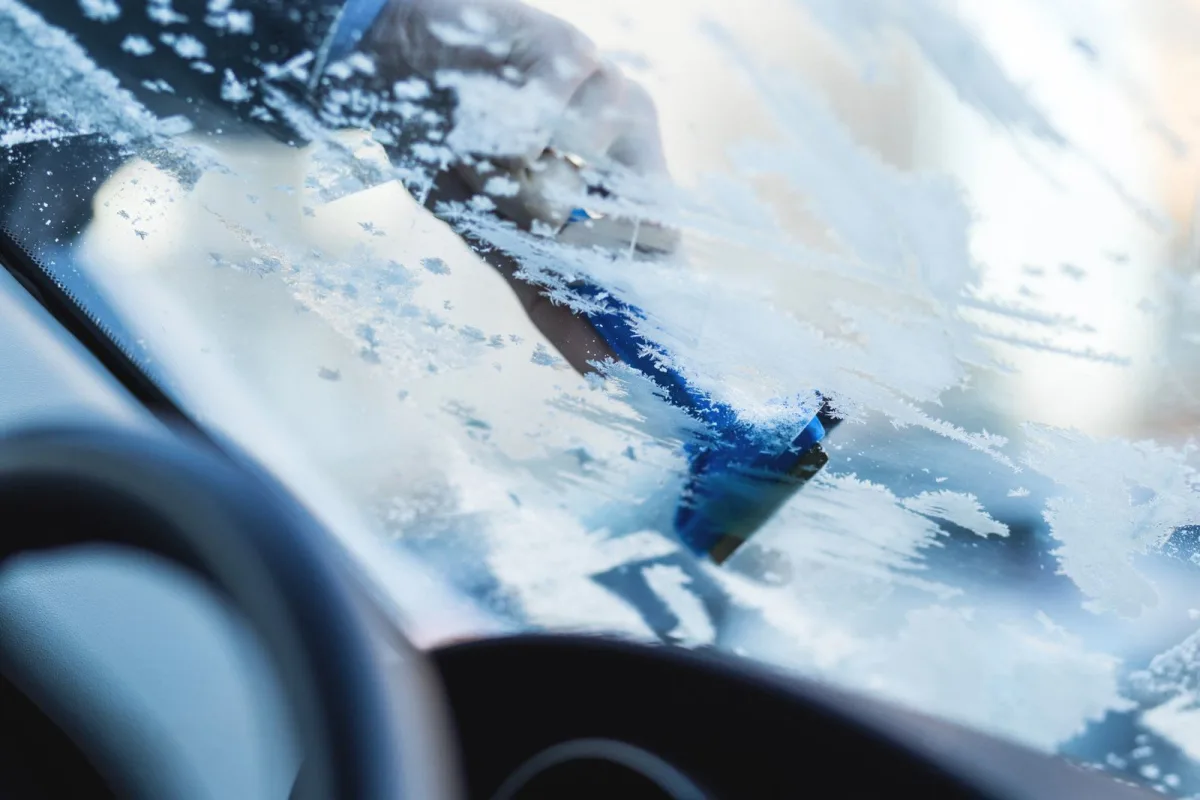
Table of contents
It is 7 a.m., 18°F, and you are standing at the kitchen window with your coffee while the car runs in the driveway. Ten minutes of idling feels like the responsible thing to do. Your parents did it, and the engine sounds happier once it has had time to settle.
Most of that ritual is a leftover from carburetor-era cars. When it comes to warming up your car in winter, the Department of Energy's guidance is short: most manufacturers recommend driving off gently after about 30 seconds. The other nine and a half minutes cost you fuel, add wear, and do less for the cabin than driving would.
Here is what actually happens inside a cold engine, what idling costs over a season, and the few cases where a longer warm-up is the right call.
Why the Long Warm-Up Habit Exists
Cars built before fuel injection used carburetors to mix air and fuel. A cold carburetor struggled to vaporize gasoline, so the engine would stall or stumble until it warmed up. Idling for several minutes was a practical fix.
Fuel injection ended that problem. Modern engines use sensors to measure air temperature, coolant temperature and oxygen in the exhaust, then adjust the fuel mix many times a second. A computer handles the cold start that a driver once had to nurse through.
The habit outlived the hardware. A 2009 study led by Vanderbilt University researchers and published in the journal Energy Policy found Americans spent an average of 4.2 minutes a day idling to warm up their cars, about a quarter of all personal idling time. That survey is old, but the behavior is easy to recognize on any cold morning.
Warming Up Your Car in Winter: What the Engine Needs
Two things happen in the first seconds after a cold start. Oil, thick from the cold, has to reach the bearings, cams and other moving parts. And the engine runs a richer fuel mix to compensate for gasoline that does not vaporize well on cold metal.
The first job takes seconds. Oil pressure builds almost instantly, and modern multigrade oils are designed to flow at low temperatures. That is why the official guidance focuses on about 30 seconds, roughly the time it takes to buckle your seatbelt and check your mirrors.
The second job is where idling backfires. An idling engine produces very little heat because it is doing very little work. So it stays in that rich, inefficient cold mode longer. Driving gently puts a light load on the engine, which warms it far faster than sitting still.
What "gently" means
- Keep acceleration smooth and avoid high revs for the first few miles.
- Skip hard highway merges until the temperature gauge starts to move.
- Expect the transmission to shift a little later at first, which is normal as fluids warm.
The Fuel Cost of Idling, Worked Out
The government's fuel economy site says idling uses a quarter to a half gallon of fuel per hour, depending on engine size and whether accessories like the AC compressor are running. Larger engines sit at the top of that range.
Run the numbers on a 10-minute morning warm-up:
- Ten minutes is one-sixth of an hour, so you burn between 0.04 and 0.08 gallons each time.
- At $3.642 a gallon, the Energy Information Administration's national average for regular in the week of November 23, that is about 15 to 30 cents a morning.
- Over a 90-day winter, it adds up to roughly $14 to $27.
- Do it before both your morning and evening commutes and the total doubles to about $27 to $55.
That is not a budget-breaking sum on its own. But you get zero miles for it, and the engine would have warmed faster if you had simply driven off. The bigger cost is the cold-weather fuel penalty that idling does nothing to fix.
Winter already cuts your mpg
Government testing summarized on the fuel economy site shows a conventional gas car's city fuel economy runs about 15% lower at 20°F than at 77°F. On short trips of 3 to 4 miles, the drop can reach 24%. Hybrids take a larger hit, about 30% to 34% in city driving, partly because the engine has to run more often to supply cabin heat.
The reasons stack up: thicker oil and fluids add friction, cold air is denser and increases drag, tire pressure drops, and winter gasoline blends hold slightly less energy per gallon. If you are weighing a hybrid partly for fuel savings, our hybrid vs gas car payback math shows how much a winter penalty can stretch the break-even point.
Does Idling Hurt the Engine?
Extended idling is not a disaster for an engine, but it is not neutral either. That rich cold-start fuel mix means more fuel than can burn cleanly. Some of it can slip past the piston rings and dilute the oil, a problem mechanics call fuel dilution.
Normally, that fuel cooks off once the engine reaches full temperature. Short trips plus long idles are the worst combination, because the oil may never get hot enough to clear it out. If your winter driving is mostly short hops, change your oil on the schedule your manual lists for severe service, not the normal one.
Not every expert agrees on the exact number of seconds. AAA's guidance allows a few extra minutes in extreme cold or for older cars, especially those without fuel injection. That fits the logic above: the older and more basic the engine, the more it benefits from a gentler start.
When a Longer Warm-Up Makes Sense
There are real reasons to let the car run a little longer, and none of them is the engine.
- Visibility: you must be able to see out of every window. Run the defroster until the windshield is clear, and scrape the rest. Driving with a peephole in the frost is the actual danger on a cold morning.
- Extreme cold: well below zero, fluids thicken enough that a minute or two more helps. A block heater, which warms the coolant while plugged in overnight, is a better tool in places that see those temperatures often.
- Older vehicles: a car with a carburetor or a decades-old engine still benefits from the old routine.
- Diesels and heavy trucks: follow the owner's manual, which may call for a longer idle or a block heater in severe cold.
Never warm up a car in a closed garage. Even with the door open, exhaust can build up in an attached garage and seep into the house. Our guide to carbon monoxide poisoning in winter explains why this odorless gas is so dangerous.
EVs and Hybrids: A Different Kind of Warm-Up
An electric car has no oil to circulate and no fuel mix to adjust. You can drive off the moment you sit down. Letting it sit "running" just drains the battery.
What matters in an EV is heat for you and the battery. The fuel economy site reports that EV efficiency drops about 39% in cold weather in mixed driving when the cabin heater is used, but only about 8% without it. About two-thirds of the extra energy goes to heating the cabin.
That makes preconditioning the single best winter habit for EV owners. Schedule the car to warm the cabin and battery while it is still plugged in, so the energy comes from the wall instead of your range. A warm battery also accepts regenerative braking and fast charging more readily. For the full picture on how much range to expect, see our breakdown of EV range in cold weather.
Plug-in hybrids sit in between. Their engines still benefit from the 30-second rule, but you can precondition on grid power and use heated seats to rely less on the engine for cabin heat.
Related reading: EV Charging Cost Per Mile: Home vs Fast Charging, Winter Tires vs All-Season: When the Switch Pays Off and Car Battery in Cold Weather: Why It Dies and How to Test.
Frequently Asked Questions
How long should I let my car warm up in winter?
For most cars built in the last few decades, about 30 seconds is enough, according to the Department of Energy. Then drive gently for the first few miles. Allow longer only to clear frost from the windows or in extreme subzero cold.
Is it bad to drive a car immediately after starting it in the cold?
No, as long as you drive gently. Oil circulates within seconds of starting, and light driving warms the engine faster than idling. Avoid hard acceleration and high revs until the temperature gauge rises.
Does idling waste a lot of gas?
Idling uses a quarter to a half gallon of fuel per hour. A 10-minute daily warm-up costs roughly $14 to $27 over a 90-day winter at current gas prices, with nothing to show for it in miles.
Do electric cars need to warm up?
No. An EV can drive right away. Preheating the cabin while it is plugged in is still worth doing, because heating the cabin from the battery is the biggest cause of lost winter range.
Thirty Seconds, Then Go
The case for warming up your car in winter rests on engines that mostly left the road decades ago. A modern engine needs about 30 seconds for oil to circulate, and it reaches operating temperature faster under a light load than at idle. Long idles burn fuel, can dilute your oil, and do nothing about winter's built-in mpg penalty.
Spend the time on what actually keeps you safe: clear every window, check your tire pressure as temperatures drop, and keep the garage door out of the equation. Then buckle up, wait for the oil light to go out, and drive away easy.
Written by
Marcus Vance
Business & Money
Writes on business and personal finance for Quick Trend Insights, translating markets, rates, and company strategy into what it costs or saves a household.
Related Articles
View all
Takata Airbag Recall: How to Check Your Car Now
The Takata airbag recall now covers 1.1 million more Honda and Toyota cars, some fixed once already. Check your VIN and see what to do while parts are pending.

Lease Buyout: When Buying Your Leased Car Pays Off
A lease buyout can save thousands or quietly overpay. Compare your residual with market value, see the fees that matter and why EV leases flipped lately.
Car Battery in Cold Weather: Why It Dies and How to Test
A car battery in cold weather loses about 60% of its strength at 0°F. Learn why it fails, how to test it at home with a multimeter, and when to replace it.