
Circadian Depression: What the Body Clock Subtype Means
Circadian depression is a proposed body clock subtype seen in 23% of people with depression. Learn the six signs, how to check your sleep, and what to ask.
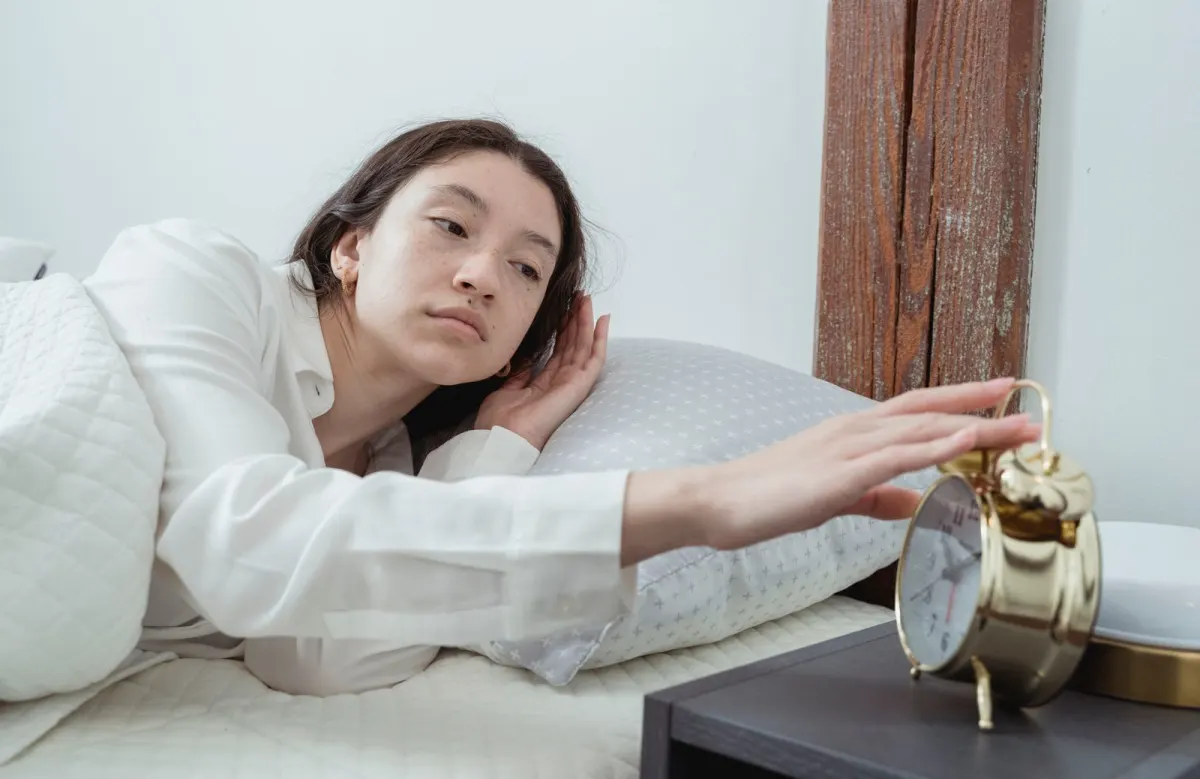
Table of contents
Your alarm goes off at 6:30 on a Monday and you feel like you were hit by a truck. On Saturday you fell asleep near 2 a.m. and slept past 10. You have been treated for depression, and the pill you were given never seemed to do much. Researchers now have a name for that pattern: circadian depression, a proposed subtype tied to a body clock that runs late.
The idea comes from a large Australian study published on October 20 in The British Journal of Psychiatry. It found that nearly one in four people with depression fit a body clock profile. That group got sick younger, reported worse symptoms, and said common antidepressants helped them less.
This guide explains what the researchers measured, how to check your own sleep timing against their criteria, and what the findings can and cannot tell you. It also covers the questions to bring to your doctor, because none of this replaces a clinical assessment.
What Circadian Depression Means
Your circadian rhythm is the roughly 24-hour clock that times sleep, alertness, hormones and body temperature. Most people's clocks line up well enough with work and school. Some run hours late, so the alarm rings in what their body treats as the middle of the night.
Doctors have long known that depression and sleep problems travel together. What this study adds is a proposed way to sort depression by body clock features, then test whether that group differs in course, treatment response and genes. The team behind it includes researchers at the University of Sydney's Brain and Mind Centre and QIMR Berghofer, with collaborators at the US National Institute of Mental Health and Oxford.
They used survey data from the Australian Genetics of Depression Study. All 11,380 participants in the analysis had a history of depression and European ancestry. Of those, 2,604 people (23%) met the circadian criteria and 8,776 did not.
The Six Body Clock Signs Researchers Used
A person counted as circadian if they met at least three of these six features. Each is a simple yes or no:
- Hypersomnia: sleeping much more than usual during your worst stretch of depression. This was the most common sign, found in 84% of the circadian group.
- Morning tiredness: feeling "very tired" in the first half hour after you wake. Found in 83%.
- Evening chronotype: describing yourself as "definitely an evening type." Found in 68%.
- Late sleep midpoint on free days: the halfway point of your sleep falls later than an age-based cutoff. Found in 42%.
- Seasonality: mood, sleep and energy shift a lot with the seasons. Found in 41%.
- Social jetlag: your free-day sleep midpoint lands well after your workday one. Found in 35%.
The sleep midpoint cutoffs change with age, because body clocks tend to shift earlier as people get older. For ages 25 to 34, a free-day midpoint later than 5:30 a.m. counts. For ages 35 to 64, the cutoff is 5:00 a.m.
Social jetlag thresholds work the same way. Ages 25 to 34 need a gap of at least 2 hours 15 minutes between workday and free-day midpoints. Ages 35 to 64 need at least 2 hours. The full cutoffs for every age band are listed in the British Journal of Psychiatry paper.
Worked Example: Checking Your Own Sleep Timing
Take Priya, who is 30. On workdays she falls asleep at 11:30 p.m. and wakes at 6:30 a.m. That is 7 hours, so her workday sleep midpoint is 3:00 a.m.
On weekends she falls asleep at 2:00 a.m. and wakes at 10:30 a.m. That is 8.5 hours, so her free-day midpoint is 4 hours 15 minutes after 2:00, or 6:15 a.m.
- Late midpoint check: 6:15 a.m. is later than the 5:30 a.m. cutoff for her age band. She meets this feature.
- Social jetlag check: 6:15 minus 3:00 is 3 hours 15 minutes. That clears the 2 hour 15 minute threshold. She meets this feature too.
- Morning tiredness check: if she also feels very tired in the first 30 minutes after waking, she has three features.
If Priya had a history of depression, three features would place her in the study's circadian group. Now picture Priya at 40 with the same schedule. Her midpoint cutoff drops to 5:00 a.m. and her jetlag threshold to 2 hours, so the same habits clear both bars by an even wider margin.
Two limits matter here. First, plenty of healthy night owls would hit the sleep timing features, and the subtype only applies to people who already have depression. Second, the researchers used questionnaires, not lab measures of the body clock. A wearable can log your sleep window for a couple of weeks, though our look at which fitness tracker numbers are accurate explains why timing data is more trustworthy than sleep stage data.
How the Circadian Group Differed
The circadian group was younger on average, about 38 compared with 46, and 80% were women compared with 73% in the rest. The differences went well beyond age and sex.
Earlier start and heavier symptoms
People in the circadian group first had depression at an average age of 18.7, versus 23.2 for the others. That gap of about four and a half years means more of life spent with the illness.
They also scored higher on every symptom scale the study reported. Psychological distress averaged 5.40 versus 3.56. Suicidal thinking averaged 8.18 versus 4.96. Manic-like experiences were more common too, and 12% reported a bipolar diagnosis, compared with 9% of the non-circadian group.
Weaker reported response to common antidepressants
Participants rated how well each antidepressant they had taken worked. For SSRIs, the circadian group had an odds ratio of 0.88 for a good response. For SNRIs it was 0.89. In plain terms, their odds of reporting benefit were roughly 11% to 12% lower than everyone else's.
That is a modest gap, not a sign that these drugs fail. Two other drugs, mirtazapine and amitriptyline, showed no clear difference. The circadian group also reported more side effects, including drowsiness, fatigue and weight gain.
A genetic tilt
The team compared polygenic scores, which add up many small genetic variants linked to a trait. The circadian group carried higher scores for ADHD, major depression, anxiety and bipolar disorder. They also scored higher for traits tied to metabolism and inflammation, such as BMI, triglycerides and insulin resistance. The authors call these genetic findings exploratory.
What the Circadian Depression Study Cannot Tell You
The authors are direct about the weak points, and you should weigh them before reading too much into your own sleep log.
- It is one snapshot. The design was cross-sectional, so it cannot show that a late body clock causes depression or the reverse.
- Everything was self-reported. Drug response came from memory, not from a clinical trial, and recall can be biased.
- The cutoff was a choice. Three of six equally weighted features was not set in advance as a validated threshold.
- The sample was narrow. All participants had European ancestry, so results may not carry over to other groups.
- No body clock was measured directly. Hormone timing or core temperature, the usual lab markers, were not part of the study.
For context, depression is common. The National Institute of Mental Health estimates that 21.0 million US adults, or 8.3%, had at least one major depressive episode in a single year, and only 61.0% of them got treatment. A subtype that helps match people to the right care sooner would matter at that scale, but it has to be confirmed first.
Questions to Ask Your Clinician
The authors suggest that people with this profile might do better with treatments aimed at the body clock. Their examples include more daylight during the day, less light at night, a regular sleep and wake time, and melatonin or drugs that act on melatonin receptors. These were ideas for future testing. The study did not try any of them.
So treat this as a reason for a conversation, not a new plan. Useful things to bring to your appointment:
- Two weeks of sleep times, workdays and free days, so your doctor can see your midpoint and social jetlag.
- Whether you sleep much more than usual when depressed, and how tired you feel right after waking.
- Any seasonal pattern in your mood or energy.
- Which antidepressants you have tried, how long you took each one, and the side effects you had.
- Any history of very high energy, racing thoughts or needing little sleep for days. The study found more manic-like experiences in this group, which can change which treatments are safe.
Some steps are low risk for most people, like getting outside in morning light. Our guide to how much daylight you need covers practical light targets. For shifting a late schedule gradually, the steps in resetting your body clock after a time change apply here too.
Do not stop, cut or switch an antidepressant on your own, even if it seems to do little. Stopping suddenly can cause withdrawal symptoms and relapse. If you have thoughts of suicide, call or text 988 in the US, or visit the 988 Suicide and Crisis Lifeline, or contact local emergency services.
Frequently Asked Questions
What is circadian depression?
It is a proposed subtype of depression linked to a late or disrupted body clock. In the Australian study, it meant meeting at least three of six features, such as oversleeping when depressed, a late sleep midpoint, and strong morning tiredness. It is not yet an official diagnosis.
Can being a night owl cause depression?
This study cannot answer that. It took one snapshot of people who already had depression, so it shows a link, not a cause. Many night owls never become depressed.
Why don't antidepressants work for me?
There are many possible reasons, including dose, duration and the type of depression. In this study, people with the circadian profile reported somewhat lower odds of benefit from SSRIs and SNRIs. Talk to your prescriber before changing anything.
Does melatonin help circadian depression?
The authors listed melatonin and drugs acting on melatonin receptors as options worth testing, but the study did not test them. Timing and dose matter for melatonin, so ask a clinician before using it alongside depression treatment.
How do I calculate my sleep midpoint?
Add half your sleep duration to the time you fall asleep. If you sleep from 1:00 a.m. to 9:00 a.m., that is 8 hours, so your midpoint is 5:00 a.m. Compare your workday and free-day midpoints to see your social jetlag.
The Bottom Line
Circadian depression is a promising idea, not a settled one. In more than 11,000 people, a body clock profile picked out nearly a quarter who got ill younger, felt worse and reported less help from first-line drugs. That pattern deserves testing in trials.
For now, your sleep timing is useful information for your doctor. Log it for two weeks, bring the numbers and your medication history, and ask whether light, schedule or other body clock approaches fit your care.
Written by
Priya Raman
Health & Living
Covers health, wellness, and everyday living for Quick Trend Insights, with an interest in separating what the research supports from what the marketing claims.
Related Articles
View all
Undiagnosed Diabetes: Why You Won't Feel It Coming
Undiagnosed diabetes affects 252 million adults, often with no symptoms. See who should get screened, what A1C and glucose numbers mean, and how to get tested.

New Stroke Prevention Pill: What Asundexian Changes
The FDA approved asundexian, a new stroke prevention pill. See what the trial showed, who it suits, the bleeding fine print, the cost and what to ask a doctor.
Stopping Statins After 70: What a New Trial Shows
Stopping statins after 70? A new trial of 1,880 older adults found it safe for two years, but heart attacks and strokes rose later. What to ask your doctor.