
PM2.5 Health Effects: What Smog Does Inside Your Body
PM2.5 health effects explained: what an AQI of 329 means in micrograms, why smog hits your heart first, and how to size a purifier and mask that protect you.
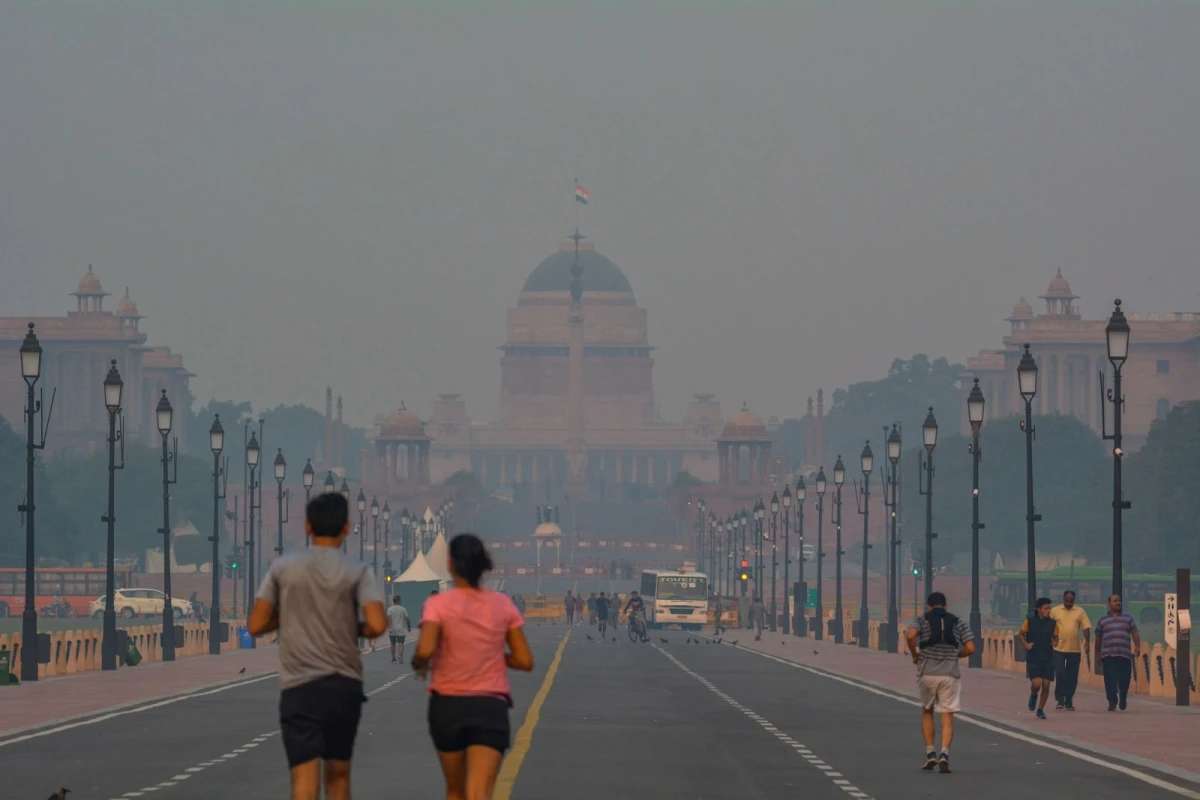
Table of contents
It is 6:30 a.m. in Delhi and you are lacing up for your morning run. Your phone says the air quality index is 329, "very poor." The sky looks like weak tea. You can't see the end of the road, but you can't see the problem either, and that is exactly why it is easy to run anyway.
The problem is fine particles small enough to slip past your nose and throat. This guide explains the real PM2.5 health effects, what that AQI number means in actual particles per cubic meter, and which protections hold up when you check the numbers. Delhi is the example, but the same rules apply in any smoggy city.
Why a "Very Poor" Day Is Worse Than It Sounds
On a "very poor" day, when India's AQI sits above 300, the haze can hang over Delhi from dawn to dusk. In smog season those days rarely arrive alone. The "poor" days in between, with readings from 201 to 300, are not clean air either, as the numbers below show.
A city's monthly average can hide a lot of that exposure. A few cleaner afternoons pull the average down, while the mornings you actually spend outdoors stay thick. Your lungs do not average across the month. They take each breath as it comes.
So the useful question is not what the season looks like on paper. It is what the number on your phone means for your body this morning, and that takes a little translation.
What PM2.5 Actually Does Inside Your Body
PM2.5 means particles 2.5 micrometers across or smaller, far too small to see one at a time. Your nose and airways trap bigger dust well. These particles are small enough to travel deep into the lungs, and the WHO says the finest of them can even enter the bloodstream.
That second step explains a surprising fact. When the WHO broke down the 4.2 million premature deaths it attributed to outdoor air pollution in 2019, the split looked like this:
- Heart disease and stroke: 68%
- Chronic obstructive pulmonary disease (COPD): 14%
- Acute lower respiratory infections: 14%
- Lung cancer: 4%
Most of the harm lands on the heart and blood vessels, not the lungs. The WHO says the main effects of fine particles are on the heart and lungs, which is why a heavy smog week matters for cardiac patients as much as for people with asthma. The WHO's cancer agency has also classified outdoor air pollution and particulate matter as carcinogenic to humans.
Translating the AQI Into PM2.5 Health Effects
India's AQI, run by the Central Pollution Control Board, is a scale from 0 to 500. Each band matches a range of PM2.5 concentration over 24 hours. Here is how the bands line up, with the board's own description of who feels it:
- Good (0 to 50): 0 to 30 micrograms per cubic meter. Minimal impact.
- Satisfactory (51 to 100): 31 to 60. Minor breathing discomfort for sensitive people.
- Moderate (101 to 200): 61 to 90. Discomfort for people with lung or heart disease, children and older adults.
- Poor (201 to 300): 91 to 120. Breathing discomfort for most people on prolonged exposure.
- Very poor (301 to 400): 121 to 250. Respiratory illness on prolonged exposure.
- Severe (401 to 500): above 250. Affects healthy people and seriously affects those with existing disease.
A worked example: what AQI 329 really means
The AQI scales in a straight line inside each band. AQI 329 sits 28 points into the "very poor" band, which runs 99 points from 301 to 400. That band covers 129 micrograms, from 121 to 250.
So the PM2.5 level is about 121 plus 28/99 of 129, which works out to roughly 157 micrograms per cubic meter. The WHO's 24-hour guideline is 15. India's own national 24-hour standard is 60. A "very poor" morning is therefore about ten times the WHO level and more than two and a half times India's legal limit.
This is why the label "poor" can mislead. An Indian "poor" day is already six to eight times the WHO guideline.
The Death Toll From Short Spikes
For years, most air pollution research focused on long-term exposure. A study published in The Lancet Planetary Health in July 2024 looked at short-term spikes in ten Indian cities instead, matching daily PM2.5 to daily deaths.
Across all ten cities, it linked about 7.2% of deaths, roughly 33,000 a year, to short-term PM2.5 above the WHO guideline. Delhi had the highest share at 11.5%, about 12,000 deaths a year. Even Shimla, the cleanest city in the study, came in at 3.7%.
The study also put a number on each spike. A rise of 10 micrograms per cubic meter over two days was linked to a 1.42% increase in daily deaths. On that scale, the jump from a "satisfactory" day near 50 to a "very poor" day near 157 is not a small change. It is more than ten of those steps.
Who Is Most at Risk
Everyone breathes the same air, but not everyone pays the same price. The CPCB's health notes and the WHO's disease figures point to the same groups:
- People with heart disease, including anyone who has had a heart attack, stroke or heart failure
- People with asthma or COPD, whose airways react to particles within hours
- Children, who breathe faster for their size and spend more time outdoors
- Older adults, who are more likely to carry hidden heart and lung conditions
- Outdoor workers and exercisers, who breathe more air per minute
That last group surprises people. During a hard run you can move several times more air through your lungs than at rest. On a "very poor" morning, your workout also raises your dose. Shifting to an indoor session on those days makes sense, and a home routine like the one in our guide to strength training for longevity needs no outdoor air at all.
What Actually Protects You
You can't filter a whole city. You can control the air in the room where you sleep, and the air right in front of your face.
Size an air purifier with real numbers
Look for a true HEPA filter. Washington State's Department of Health notes that HEPA removes 99.97% of particles at 0.3 micrometers and catches larger and smaller ones even better. Then check the clean air delivery rate (CADR), measured in cubic feet per minute.
Washington's health department and Health Canada give the same rule: the smoke CADR should be at least two-thirds of the room's floor area in square feet, assuming an 8-foot ceiling. A 12 by 15 foot bedroom is 180 square feet, so you need at least 120 CFM. A 400 square foot living room needs about 267 CFM. Higher ceilings call for more.
- Run it with doors and windows closed. A purifier can't keep up with an open window.
- Run it on high when you sleep. You spend about a third of your day in the bedroom, so that room matters most.
- Replace filters on schedule. A clogged filter moves less air than the box claims.
- Do not burn fuel indoors to stay warm. A charcoal or kerosene heater adds particles and carbon monoxide. Our guide to carbon monoxide poisoning in winter explains why that risk peaks in cold months.
Masks only work if they seal
Cloth and loose surgical masks leak around the edges, and air takes the easy path. An N95 respirator is built to seal around the nose and mouth. The FDA notes these respirators are not designed for children or people with facial hair, because a proper fit can't be achieved.
If you wear one, pinch the nose clip, check that it pulls in slightly when you inhale, and replace it when it gets damp or loose. A respirator with a gap at the nose protects far less than the rating on the box suggests.
Frequently Asked Questions
What are the health effects of PM2.5?
PM2.5 reaches deep into the lungs and can enter the bloodstream. The WHO links it to heart disease, stroke, COPD, lung infections and lung cancer, and attributes 68% of outdoor air pollution deaths to heart disease and stroke.
Is it safe to exercise outside when the AQI is above 300?
India's pollution board says "very poor" air causes respiratory illness on prolonged exposure, and hard exercise raises the amount you inhale. Moving workouts indoors on those days is the cautious choice, especially with heart or lung disease. Ask your clinician if you have a condition.
How do I convert AQI to PM2.5?
Find your AQI band, then scale within it. In India, AQI 301 to 400 covers 121 to 250 micrograms of PM2.5, so AQI 329 is about 157. Note that US and Indian AQI scales use different breakpoints.
Does an air purifier really help with Delhi pollution?
Yes, in a closed room with the right size unit. Choose a HEPA purifier with a smoke CADR of at least two-thirds of the room's floor area in square feet, and keep windows shut while it runs.
Do N95 masks protect against smog?
They can, if they seal well around your face. Gaps at the nose or cheeks let unfiltered air in, and the FDA says they are not designed for children or for people with facial hair.
Treat the Season Like the Weather
You check the forecast before you pick a coat. During smog season, check the AQI before you pick your plans. Turn the number into micrograms, compare it with the WHO's 15, and decide where your run, your child's playtime and your windows belong that day.
Most of the protection comes from one well-sized purifier in the bedroom, a mask that actually seals, and indoor workouts on the worst days. None of it fixes the air outside. All of it lowers what ends up in your blood. If smog leaves you with chest pain, wheezing or breathlessness that does not settle, see a doctor rather than waiting for the wind to change.
Written by
Priya Raman
Health & Living
Covers health, wellness, and everyday living for Quick Trend Insights, with an interest in separating what the research supports from what the marketing claims.
Related Articles
View all
RSV Vaccine for Adults: Who Needs One This Winter
RSV vaccine for adults: the CDC now covers everyone 75+ and at-risk adults 50 to 74. Who qualifies, how well each shot works, and why one dose is enough.

How Many Steps a Day Do You Actually Need?
How many steps a day do you need? Big studies show 7,000 steps cuts death risk 47% vs 2,000, with gains flattening early. Your target by age, plus a plan.
How Long to Stay Home Sick With Flu, COVID or RSV
How long to stay home sick with flu, COVID or RSV: the CDC's 24-hour fever rule, the 5 days after, contagious windows by virus and a worked return date.