
RSV Vaccine for Adults: Who Needs One This Winter
RSV vaccine for adults: the CDC now covers everyone 75+ and at-risk adults 50 to 74. Who qualifies, how well each shot works, and why one dose is enough.
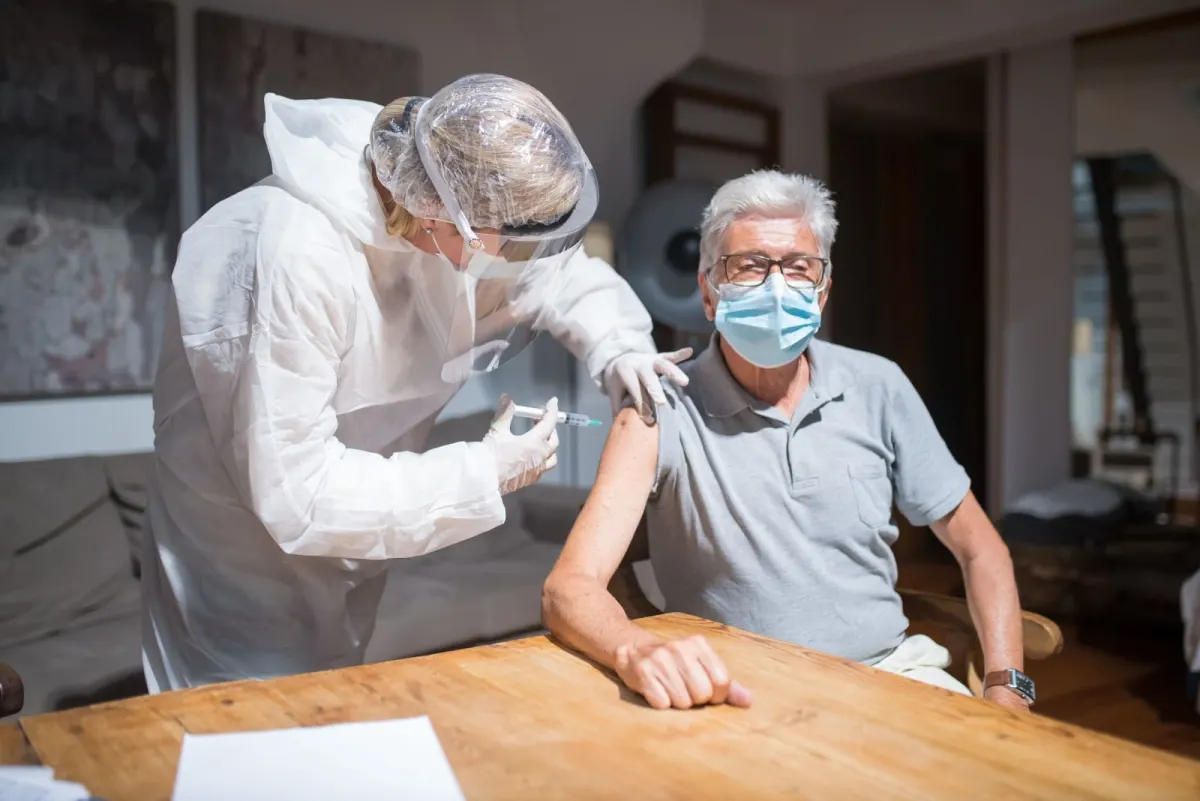
Table of contents
You are at the pharmacy for a flu shot, and the pharmacist asks a question you did not expect: "Do you want your RSV vaccine too?" You are 58, you take insulin for type 2 diabetes, and you assumed RSV was a baby illness. You have about ten seconds to decide.
The rules on the RSV vaccine for adults have changed twice in three years, which is why so many people are unsure whether they qualify. Here is who the CDC now says should get one, how much protection each shot gives, what the rare safety signal really means in numbers, and why late November is not too late.
Why RSV Is Not Just a Baby Illness
Respiratory syncytial virus is best known for filling children's wards every winter. In older adults it behaves more like flu. It can inflame the lungs, worsen heart failure and tip a stable lung condition into a hospital stay.
CDC estimates put the yearly toll among US adults 65 and older at 60,000 to 160,000 hospitalizations and 6,000 to 10,000 deaths. Those ranges are wide because RSV is rarely tested for in adults, so many cases are logged as pneumonia or a bad cold.
Timing matters too. RSV usually rises alongside flu in late autumn and winter, and this season flu arrived early. Our look at what the early H1N1 flu surge means covers that side of the picture.
Who Should Get the RSV Vaccine for Adults Now
The CDC's adult guidance, last updated in February, splits people into two groups. If you are 75 or older, you qualify. No condition is needed.
If you are 50 to 74, you qualify when you have something that raises your risk of severe RSV. The CDC lists these:
- Chronic heart disease, such as heart failure or coronary artery disease
- Chronic lung disease, such as COPD
- End-stage kidney disease or dialysis
- Diabetes with complications, or diabetes treated with insulin or an SGLT2 inhibitor
- Neurologic or neuromuscular conditions that make it hard to clear the airway or breathe
- Chronic liver disease
- Chronic blood disorders, such as sickle cell disease or thalassemia
- Severe obesity, meaning a BMI of 40 or higher
- Moderate or severe immune compromise
- Living in a nursing home
The list ends with a catch-all. A provider can judge that other factors raise your risk, such as frailty or living somewhere remote where getting to care is hard. The CDC also says your own word is enough: pharmacies should not turn you away for lack of paperwork. Not sure about the obesity cut-off? Our BMI calculator gives your number in a few seconds.
Three people, three answers
- Maria, 77, healthy and active. She qualifies on age alone.
- Dev, 58, on insulin. He qualifies because insulin-treated diabetes is on the list.
- Sam, 62, with well-controlled blood pressure and nothing else. He does not meet the current CDC criteria. He can still ask his clinician whether anything else applies.
What about adults under 50?
The FDA has approved Abrysvo and mResvia for adults 18 to 49 at higher risk. The CDC and its advisers are still reviewing that group and do not currently recommend vaccination for it. If you are under 50 with a serious lung or heart condition, that is a conversation for your specialist.
One Dose, Not an Annual Shot
This is the part people most often get wrong. Unlike the flu shot, the RSV vaccine is a single dose. The CDC says one dose protects adults 50 and older for at least two years, and it is still studying how long protection lasts.
So if you got an RSV shot in 2023 or 2024, the CDC's current advice is clear: do not get another one at this time. Whether a booster will ever be needed is still being evaluated.
The best window is late summer to early fall, which in most of the continental US means August to October. But the CDC says eligible adults can be vaccinated at any time of year. If you missed that window, getting it in late November or December still gives you cover for the rest of this season and the next one.
How Well Each of the Three Vaccines Works
Three RSV vaccines are licensed in the US: GSK's Arexvy, Pfizer's Abrysvo and Moderna's mResvia. The CDC states no preference among them, so the one your pharmacy stocks is fine.
The CDC's clinical guidance gives these figures for adults 60 and older:
- Arexvy: about 77% effective against RSV emergency visits and 83% against RSV hospitalization in the 2023 to 2024 season. Trial protection lasted at least 23 months, with some waning.
- Abrysvo: about 79% effective against emergency visits and 73% against hospitalization in the same season. Trial protection lasted at least 16 months, with some waning.
- mResvia: about 80% efficacy against symptomatic RSV in the first four months of its trial, falling to 56% over 12 months and 34% through 18 months. Real-world hospitalization data are not yet available.
Those mResvia numbers measure something different (any symptomatic illness, in a trial) from the other two (emergency visits and hospital stays, in real use). Comparing them directly would be unfair to all three. What they share is meaningful protection against the outcome that matters most, ending up in hospital.
The Guillain-Barré Signal in Real Numbers
In January 2025, the FDA required a warning about Guillain-Barré syndrome (GBS) on the Abrysvo and Arexvy labels. GBS is a rare nerve condition that causes weakness and, in severe cases, paralysis. Most people recover, but it can take months.
The FDA's estimate came from Medicare claims for people 65 and older. It found about 9 extra GBS cases per million Abrysvo doses and 7 per million Arexvy doses in the 42 days after vaccination. The FDA said the evidence was not enough to prove the vaccines caused GBS, and it concluded the benefits still outweigh the risks.
A worked example
Turn those rates into odds. Nine per million is 1 in about 111,000. Seven per million is 1 in about 143,000. If every adult in a mid-sized city of 500,000 people over 65 got Abrysvo, you would expect about 4 or 5 extra GBS cases.
Set that against a virus that the CDC estimates sends tens of thousands of older adults to hospital each year, and a vaccine that cut hospital visits by roughly three quarters. The UK's medicines regulator saw a similar signal, estimating 15 to 25 extra cases per million Abrysvo doses in adults 75 to 79, and still called the risk rare. If you have had GBS before, tell the person vaccinating you before the shot.
Getting It With Your Flu and COVID Shots
You can get your RSV vaccine at the same visit as other adult vaccines. The CDC notes two tradeoffs. Data are limited, and giving several respiratory vaccines together may slightly lower antibody levels, though nobody knows yet whether that changes real protection.
Stacking shots may also raise the chance of a sore arm, fever, headache or muscle aches the next day. If one trip is all you can manage, doing them together beats skipping one. If you have the time, splitting them across two visits is reasonable. Our guide to which flu shot to get this year covers the other half of that appointment.
If you live in the UK
The NHS runs its own program. It offers the RSV vaccine to everyone 75 and over, to people 65 to 74 with a weakened immune system or a long-term lung condition, to older adults in care homes, and to pregnant women from 28 weeks to protect the baby. Like the US, it is a single dose for older adults, given all year round.
Frequently Asked Questions
Who should get the RSV vaccine for adults?
The CDC recommends it for everyone 75 and older and for adults 50 to 74 with a higher risk of severe RSV, such as chronic heart or lung disease, insulin-treated diabetes, a BMI of 40 or more, a weakened immune system, or living in a nursing home.
Do I need an RSV vaccine every year?
No. It is a single dose. The CDC says protection lasts at least two years, and people who have already had one should not get another at this time.
Is it too late to get the RSV vaccine in winter?
No. The CDC prefers August to October, but eligible adults can be vaccinated at any time of year, and a winter dose still protects you into next season.
Which RSV vaccine is best for older adults?
The CDC has no preference among Arexvy, Abrysvo and mResvia. Real-world data show Arexvy and Abrysvo each cut RSV hospitalizations by roughly three quarters in adults 60 and older.
Can I get the RSV vaccine with my flu shot?
Yes, at the same visit. Side effects such as a sore arm or tiredness may be a little more common, so ask your pharmacist or clinician which approach suits you.
Your Ten-Second Decision at the Pharmacy
Go back to that pharmacy counter. If you are 75 or older, the answer is yes. If you are 50 to 74, run down the list: heart, lungs, kidneys, insulin, liver, blood disorders, a BMI of 40 or more, a weakened immune system, or a care home. Any one of them puts you in.
If you already had the shot, you are covered for now. If you are unsure whether your condition counts, the person holding the needle can usually tell you on the spot, and your own clinician can settle anything harder. Getting sick anyway? Our guide on how long to stay home with flu, COVID or RSV covers what comes next.
Written by
Priya Raman
Health & Living
Covers health, wellness, and everyday living for Quick Trend Insights, with an interest in separating what the research supports from what the marketing claims.
Related Articles
View all
PM2.5 Health Effects: What Smog Does Inside Your Body
PM2.5 health effects explained: what an AQI of 329 means in micrograms, why smog hits your heart first, and how to size a purifier and mask that protect you.

How Many Steps a Day Do You Actually Need?
How many steps a day do you need? Big studies show 7,000 steps cuts death risk 47% vs 2,000, with gains flattening early. Your target by age, plus a plan.
How Long to Stay Home Sick With Flu, COVID or RSV
How long to stay home sick with flu, COVID or RSV: the CDC's 24-hour fever rule, the 5 days after, contagious windows by virus and a worked return date.