
How Long to Stay Home Sick With Flu, COVID or RSV
How long to stay home sick with flu, COVID or RSV: the CDC's 24-hour fever rule, the 5 days after, contagious windows by virus and a worked return date.
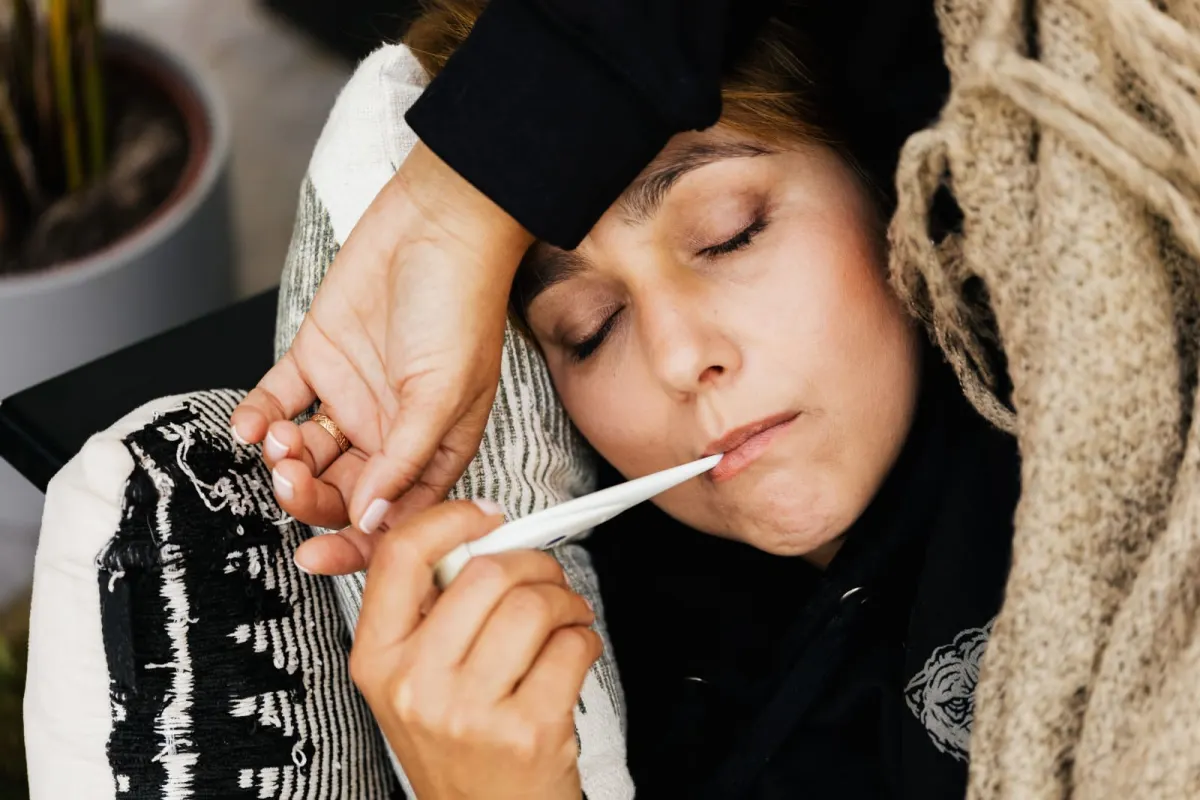
Table of contents
It is Sunday night. Your fever finally broke after three rough days, you have a project review at 9 a.m., and your manager has already asked if you will "be in tomorrow." You feel about 70% human. Your partner thinks you should stay home. You are not sure who is right.
Figuring out how long to stay home sick used to mean a different rule for every virus. Public health guidance has since simplified it into one test you can run on yourself, with a few exceptions you should know. This guide covers that test, the contagious window for flu, COVID, RSV and common colds, a worked timeline, and the separate rules for children and stomach bugs.
The One Rule That Covers Most Respiratory Bugs
In 2024 the CDC folded its separate COVID, flu and RSV advice into one set of respiratory virus guidance. Its current version, updated in August 2025, gives you two conditions. Both have to be true for at least 24 hours before you go back to work, school or the gym:
- Your symptoms are improving overall. Not gone, but clearly better.
- You have had no fever, without taking fever-reducing medicine. A pill that hides a fever does not count as being fever-free.
If a fever returns or you feel worse after you go back, the CDC says to stay home again and restart the 24-hour clock. That rule exists because a temporary good day is common in the middle of flu or COVID.
What counts as a fever? The NHS treats 38°C (100.4°F) or above as a high temperature. It adds that you can be feverish even below that if you feel hot, cold or shivery.
Why Five More Days of Precautions Matter
Feeling better is not the same as being clear of the virus. The CDC says you are usually less contagious once symptoms fully resolve, but your body takes time to clear the infection. So for the five days after you return, it recommends added steps around other people indoors:
- Wear a well-fitted mask, especially in shared offices, buses and trains
- Improve the air: open a window or run a purifier where you can
- Wash your hands often and cover coughs and sneezes
- Keep your distance, particularly from older adults, babies and anyone with a weak immune system
- Test for COVID if you can; the CDC says a positive test means you are more likely to be contagious at that moment
The same five days apply if you test positive with no symptoms at all. You may still be spreading the virus, and you have no fever to tell you.
How Long to Stay Home Sick, Virus by Virus
The 24-hour rule tells you when you can rejoin normal life. These figures explain why the five-day buffer is there.
Flu
The CDC says flu can be detected from about one day before symptoms start until five to seven days after. People are most contagious in the first three days. Young children and people with weakened immune systems can stay contagious longer.
Flu also has a time-sensitive treatment. Prescription antivirals work best when started within 48 hours of the first symptoms, according to the CDC, which recommends early treatment for people at higher risk, such as those with asthma, diabetes or heart disease. If that is you, call your clinician on day one rather than waiting it out. This season started early, as our piece on the early H1N1 flu surge explains.
RSV
People with RSV are usually contagious for three to eight days, and can spread it a day or two before symptoms appear, the CDC says. Some infants and people with weakened immune systems can spread it for four weeks or longer, even after they seem well. RSV can also survive for hours on hard surfaces such as tables and crib rails.
COVID-19
COVID now falls under the same 24-hour rule as flu and RSV in CDC guidance, with no fixed isolation period. The NHS is a little more specific for children. A child who tests positive should stay home for three days after the day of the test.
Common colds
The NHS says most respiratory tract infections pass within one to two weeks. A mild cold with no fever rarely means a day off for an adult who feels well enough, but the five-day habits still help the people around you.
A Worked Example: Your Return Date
Here is how the rules play out on a real calendar. Say your flu symptoms start on Friday evening.
- Friday to Sunday: fever, aches, cough. You take fever-reducing medicine as directed on the package or by your pharmacist.
- Monday morning: you feel better and skip the medicine. Your temperature stays below 38°C all day, and your cough is easing.
- Tuesday morning: still no fever, 24 hours without medicine, symptoms still improving. You can go back.
- Tuesday to Saturday: your five days of added precautions. A mask in meetings, no shared snacks, and you skip visiting your 80-year-old aunt.
Now compare that with the CDC's contagious window. Five to seven days after a Friday start lands on Wednesday to Friday. Your return on Tuesday falls inside that window, which is exactly why the precautions run through the weekend.
Notice what Monday does not count as. Your fever may have stopped on Sunday night, but if you took medicine Sunday evening, the 24-hour clock starts when the medicine wore off and the fever stayed away. If your temperature creeps back on Tuesday afternoon, you are home again until another clean 24 hours pass.
Children, School and Stomach Bugs
The NHS publishes a plain guide to when a child is too ill for school. Its core rule is short: keep your child home while they have a high temperature, and send them back once it has gone. A child with a mild cough or cold who is otherwise well and has no temperature can go in.
Two conditions have stricter rules:
- Vomiting and diarrhea: stay home until 48 hours after the last episode. Stomach bugs like norovirus spread fast in classrooms, and our guide on how long norovirus stays contagious covers how to stop it moving through a household.
- Chickenpox: stay home until all the spots have crusted over, usually about five days after they appear.
In the US, school and daycare policies are set by states, districts and individual providers, so there is no single national rule. Check your school's handbook before the first sick day, not during it, and ask whether a doctor's note is ever required.
When to Call a Doctor Instead of Waiting
Most of these infections clear on their own. Some signs mean you should not just wait for the 24-hour clock:
- A high temperature lasting more than three days. The NHS advises seeing a GP at that point.
- A fever that is not improving or is getting worse despite home treatment.
- A cough lasting more than three weeks.
- Trouble breathing, chest pain, confusion or signs of dehydration. These need urgent care.
- You are at higher risk, such as being pregnant, over 65, or living with diabetes, heart or lung disease. Early contact matters most for you, especially with flu antivirals.
Prevention also shortens the season. If you are 75 or older, or 50 to 74 with certain conditions, check whether you qualify for the RSV vaccine for adults. Medication questions, including what fever reducer suits you or your child, belong with your pharmacist or clinician.
Related reading: MMR Booster for Adults: Do You Need One Now? and Which Flu Shot Should You Get? The New mRNA Option.
Frequently Asked Questions
How long should you stay home with the flu?
Stay home until your symptoms have been improving and you have had no fever for at least 24 hours without fever-reducing medicine. Then take extra precautions for five more days, since flu can stay contagious for five to seven days after symptoms start.
Can I go to work if I have a fever but feel fine?
No. Both the CDC and the NHS advise staying home while you have a fever. Feeling fine on medicine does not count, because the medicine can hide the fever while you are still contagious.
How long is RSV contagious in adults?
Usually three to eight days, starting a day or two before symptoms, according to the CDC. People with weakened immune systems can spread it for four weeks or longer.
Do you still have to isolate for 5 days with COVID?
Not in current CDC guidance. COVID follows the same rule as other respiratory viruses: 24 hours of improving symptoms and no fever without medicine, then five days of added precautions. In the UK, the NHS asks children who test positive to stay home for three days after the test.
When can my child go back to school after vomiting?
The NHS says 48 hours after the last episode of vomiting or diarrhea. US schools set their own rules, so check your school's policy.
Your Monday Morning Answer
Back to that Sunday night. Ask yourself two questions: Have my symptoms been improving for a full day? Have I gone 24 hours without a fever and without a pill hiding one? If both answers are yes, you can go in, with a mask and some distance for the next five days.
If either answer is no, one more day at home costs you far less than a week of sick coworkers. Send the email, sleep in, and let the clock do its work.
Written by
Priya Raman
Health & Living
Covers health, wellness, and everyday living for Quick Trend Insights, with an interest in separating what the research supports from what the marketing claims.
Related Articles
View all
RSV Vaccine for Adults: Who Needs One This Winter
RSV vaccine for adults: the CDC now covers everyone 75+ and at-risk adults 50 to 74. Who qualifies, how well each shot works, and why one dose is enough.
PM2.5 Health Effects: What Smog Does Inside Your Body
PM2.5 health effects explained: what an AQI of 329 means in micrograms, why smog hits your heart first, and how to size a purifier and mask that protect you.

How Many Steps a Day Do You Actually Need?
How many steps a day do you need? Big studies show 7,000 steps cuts death risk 47% vs 2,000, with gains flattening early. Your target by age, plus a plan.