
Scanner Overcharges: What Wrong Register Prices Cost You
Scanner overcharges are common at discount chains. After the $63 million Family Dollar settlement, see what register errors cost you and how to get paid back.
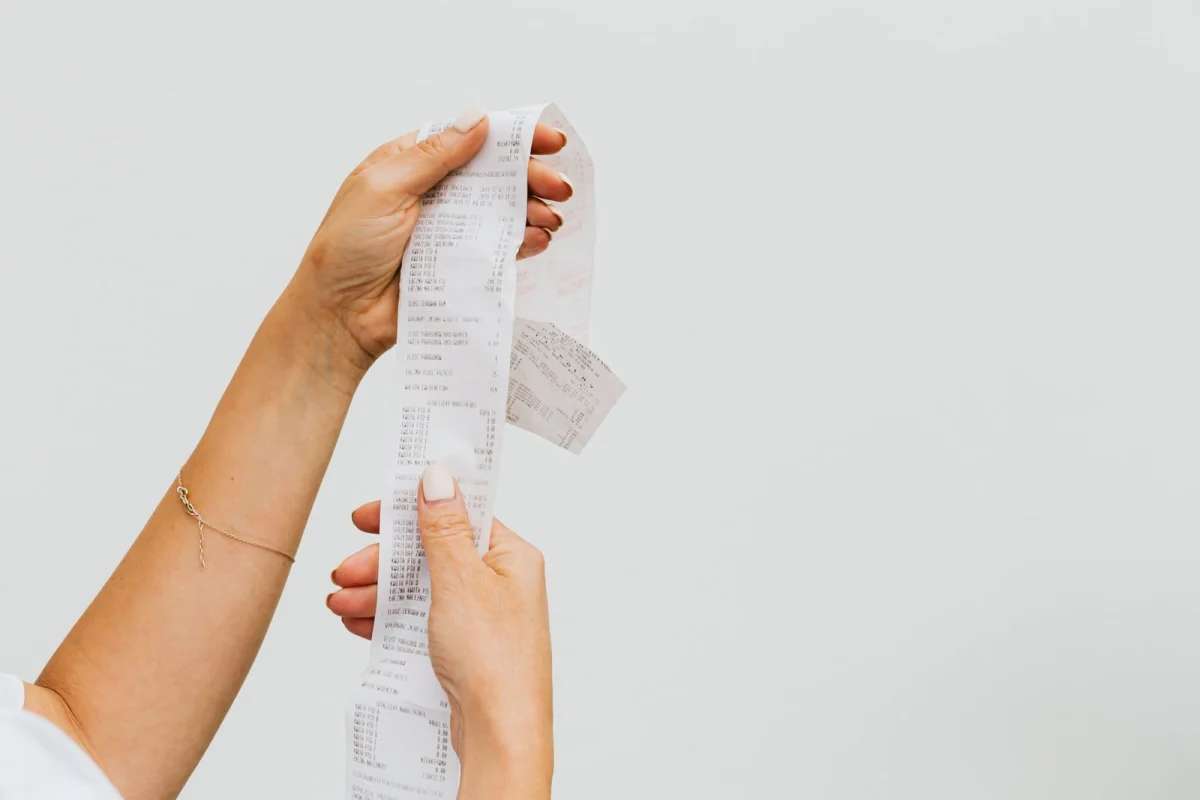
Table of contents
You grab dish soap tagged at $2.75, a bag of rice, some cat food, and a few snacks. The total looks about right, so you tap your card and leave. At home, the receipt says the soap rang up at $3.50. Scanner overcharges like that one happen far more often than most shoppers assume.
On November 12, the Federal Trade Commission and 17 states announced a $63 million settlement with Family Dollar over registers that charged more than the shelf. Two weeks earlier, regulators sued Dollar General over the same problem. If you shop at discount chains, the question is no longer whether these errors exist. It is how much they cost you and how to get the money back.
What the Family Dollar Settlement Says About Scanner Overcharges
The complaint alleges that thousands of Family Dollar stores charged more at the register than the price on the shelf, the sticker, the weekly mailer, the website, and the mobile app. According to the FTC's announcement, state and local regulators cited the chain for thousands of pricing violations over five years, with fines topping $3 million. The problem kept going anyway.
The settlement splits the money three ways:
- $40 million in refunds for customers who bought at a Family Dollar store between January 1, 2023 and October 1, 2026.
- $20 million in discounts, delivered as 15% off a range of goods for two days.
- About $3 million to the 17 states that joined the case.
Family Dollar did not admit wrongdoing. The order still needs a federal judge's signature, and an outside assessor must check the chain's new pricing accuracy program every year.
Why your refund check will be small
Family Dollar runs more than 7,000 stores, CBS News reported. Divide $40 million by 7,000 and you get about $5,700 per store, spread across nearly four years of shoppers. Per person, that is likely a few dollars. The settlement fixes the system going forward; it does not repay what you lost.
The 98% Rule: How Inspectors Decide a Store Passes
Price checks in most states follow a procedure published by the National Institute of Standards and Technology in Handbook 130. An inspector pulls a random sample of items, compares each shelf price with what the register charges, and counts the mismatches.
A store passes if 98% or more of the sampled items are priced correctly. The standard assumes some human error is unavoidable. In North Carolina, only overcharges count against the store. Undercharges get noted, but they don't help or hurt the score.
That pass mark has a quiet consequence. A store can overcharge on 1 item in every 50 and still pass. If you buy 50 items a month there, you can expect about one mistake against you every month, from a store regulators consider compliant.
What a failing store looks like
The numbers from real inspections are far worse than 2%. In its October report from the North Carolina Department of Agriculture, inspectors fined 19 stores in 14 counties for third-quarter scanner errors. A few results from 300-item samples:
- Family Dollar, New Bern: 124 overcharges, a 41.33% error rate
- Dollar General, Cove City: 33 overcharges, 11%
- Dollar General, Swannanoa: 32 overcharges, 10.67%
- Family Dollar, Ellerbe: 29 overcharges, 9.67%
- Walmart Supercenter, Glenwood Avenue in Raleigh: 13 overcharges, 4.33%
Discount chains dominate the list, though a Publix and two Walmart Supercenters also paid. Fines ran from $390 to more than $6,600 per store.
Why Shelf Prices and Register Prices Drift Apart
The register never reads the shelf tag. It reads a barcode and looks up a price in a database, while the tag is paper someone prints and hangs by hand.
When a sale ends or a price rises, the database updates in seconds. The tag waits for an employee, which in a two-person store can take days. The FTC complaint says Family Dollar kept failing inspections despite repeated warnings, which points to staffing and process rather than a one-off glitch.
Three situations cause most mismatches:
- Expired sales. The yellow sale tag stays up after the promotion ends, so the register charges full price.
- Price increases. The new price loads into the system before anyone changes the shelf label.
- App and coupon failures. The FTC says shoppers complained for six years that Family Dollar's Smart Coupons app failed to apply discounts at the register.
Notice which way the errors lean.
When a price goes up, a lagging tag means you pay more. When a price goes down, a lagging tag usually still shows the old, higher number, so the register charges less and nobody complains. Slow tag updates tilt the errors toward overcharges. Regulators score only overcharges for a related reason: those are the errors you pay for.
Worked Example: What Scanner Errors Cost a Household
Here's how the math plays out over a year. Assume you make one trip a week, buy 30 items, and each overcharge averages 60 cents. That per-item figure is an assumption for illustration, but it is in line with typical gaps between a sale tag and a regular price.
- Store at the 2% pass line: 30 items × 2% = 0.6 overcharges a week. At 60 cents each, that is 36 cents a trip, or $18.72 a year.
- Store at 10% (like the Swannanoa Dollar General): 3 overcharges a week, $1.80 a trip, $93.60 a year.
- Store at 41.33% (the New Bern Family Dollar): about 12.4 overcharges a week, $7.44 a trip, $386.88 a year.
Compare the settlement discount: 15% off a $40 trip saves $6. A shopper at a high-error store loses more than that in one week.
Those losses stack on everything else. Our look at why your grocery bill beats the inflation rate shows how basics outpace the headline number. A 10% scanner error rate adds a hidden layer on top, and it shows up in your personal inflation rate even though no official index captures it.
How to Catch an Overcharge Before You Leave
You don't need to audit every line. You need a system that takes under a minute.
At the shelf
- Snap a photo of any sale tag for an item you are buying because of the price. A photo with the tag and the product in frame settles most disputes.
- Check the end date on sale tags. An expired tag is the most common source of mismatches.
At the register
- Watch the screen as items scan, at least for the three or four priciest items in your cart.
- Ask for a paper receipt even if you usually skip it. You need it for any refund or bonus.
Before you walk out
Scan the receipt for the items you photographed. Fixing it at the service desk takes two minutes now. After you get home, you will probably decide 75 cents isn't worth a second trip, which is exactly the decision that lets errors pile up.
State Laws That Pay You for a Scanner Overcharge
Several states go further than a simple refund. Knowing your state's rule turns a 60-cent error into real money.
Michigan: refund plus a bonus
Under the Michigan Scanner Law, the store owes you the difference plus a bonus of ten times the difference, with a minimum bonus of $1 and a maximum of $5. You must tell the store within 30 days and have a receipt. The bonus doesn't apply if a cashier keyed in the wrong price by hand or fixed it before you paid.
On a 60-cent overcharge, ten times the difference is $6, which the cap trims to $5. You walk away with $5.60. If the store refuses, you can sue for your actual damages or $250, whichever is greater.
Massachusetts: the item is free
Massachusetts covers groceries, pet food, cleaning supplies, paper goods, and light bulbs. If you are charged more than the lowest posted price, the first item is free when that price is $10 or less, and you get $10 off when it is higher. Other units of the same item ring up at the lower price.
Everywhere else
Most states don't pay a bonus, but stores almost always correct the difference on the spot. If they won't, or if errors repeat, file a complaint with your state's weights and measures office, usually part of the department of agriculture. North Carolina reinspects failing stores every 60 days until they pass.
Should You Change Where You Shop?
A dollar store near your home can still be the cheapest option, even with errors. A store that saves you $8 a week on its shelf prices but costs you $1.80 in overcharges still leaves you $6.20 ahead. Store choice isn't just about the tag price, it's about the tag price plus the error rate plus the time you spend fixing mistakes.
At the New Bern error rate, though, a household loses more than $7 a week, which can wipe out the discount. If your state publishes named inspection results, as North Carolina does every quarter, look up your store.
Stores that post a scanner accuracy policy at the register are a safer bet. Like the stores that pay you back after a price drop, the policy only pays if you ask.
Frequently Asked Questions
How do I get a refund from the Family Dollar settlement?
Once a judge approves the order, Family Dollar must post notices in its stores and on its website and app explaining who is eligible and how to claim. The refund fund covers purchases made at Family Dollar stores from January 1, 2023 through October 1, 2026. Watch for official notices rather than responding to emails or texts that ask for payment details.
Does a store have to honor the shelf price if it scans higher?
In most states, charging more than the posted price is treated as a deceptive practice, and stores routinely refund the difference when you point it out. A few states, including Michigan and Massachusetts, require a bonus or a free item on top. Keep the receipt and a photo of the tag.
Where do I report a store that keeps overcharging?
Contact your state's weights and measures division, which usually sits in the department of agriculture or consumer protection. Include the store address, the date, the item, the shelf price, and the charged price. Attach the receipt and a photo of the tag.
The Receipt Is Your Best Protection
The Family Dollar settlement and the Dollar General lawsuit show that scanner overcharges can run for years at a large chain without being fixed. Regulators can collect fines. They cannot stand at your register.
So build the habit.
Photograph sale tags, watch the screen, and read the receipt before you leave. If you live in Michigan or Massachusetts, claim the bonus or the free item every time. Elsewhere, report repeat offenders, because complaints are what send inspectors back. A minute at the door is worth up to a few hundred dollars a year, and that's money you have already earned.
Written by
Priya Raman
Health & Living
Covers health, wellness, and everyday living for Quick Trend Insights, with an interest in separating what the research supports from what the marketing claims.
Related Articles
View all
Coffee Prices Are Falling, Just Not on the Shelf Yet
Coffee prices are falling on the futures market but barely on the shelf. Learn why your bag lags, what it costs a household, and how to catch the drop.
Holiday Return Fees: What Sending Gifts Back Costs
Holiday return fees can take $12 from a mailed refund and 15% from an opened camera. See what major stores charge and how to send gifts back for free.

Product Recall Refunds: Why a CPSC Warning Pays Nothing
Product recall refunds only come with a recall. When the CPSC issues a warning instead, you may get nothing. How to check gifts and claim your money back.