
CDC Attestation Form: What US-Bound Flyers Must Sign
The CDC attestation form is now required on every flight to the US, citizens included. Who must sign, how airlines collect it, and how the 21-day rule works.
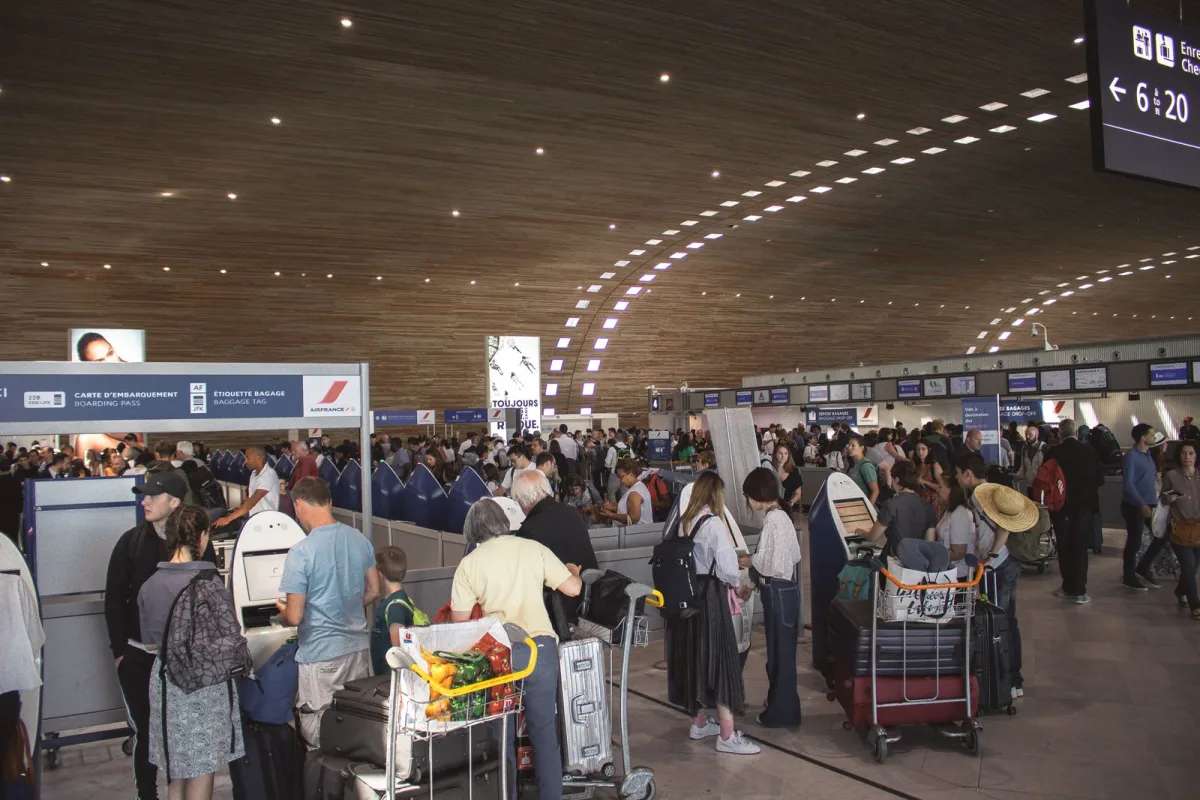
Table of contents
You land in Paris for a connection home, coffee in hand, and the gate agent stops you before the jet bridge. Your boarding pass is fine. Your passport is fine. What you are missing is a CDC attestation form, a short signed statement that you have not been in the Democratic Republic of the Congo in the last 21 days.
Since November 3, every person boarding a flight to the United States has to complete one. That includes US citizens, green card holders, children and even the crew. Skip it and the airline must refuse to board you, no matter how far from Congo your trip took you.
The rule landed weeks before Thanksgiving, the busiest flying stretch of the year. This guide covers who the form applies to, how each big airline collects it, how the 21-day count works, and what happens if you get it wrong.
What the CDC Attestation Form Requires
The rule comes from a CDC order responding to an outbreak of Bundibugyo virus disease, a member of the Ebola family, in eastern Congo. According to the CDC's order page, it applies to anyone boarding a flight from a foreign country to the US at or after 11:59 p.m. EST on November 3.
The statement itself is one claim. You confirm that you were not physically present in the Democratic Republic of the Congo during the 21 days before you board. It does not ask about other countries, symptoms or vaccinations.
The scope is the part most travelers miss. The order covers:
- Every nationality, including US citizens, US nationals and lawful permanent residents.
- Every aircraft type: commercial airlines, private jets, cargo flights and general aviation.
- Connecting passengers who are only passing through a US airport on the way to somewhere else.
- Crew, including pilots riding as passengers to reposition, under an amendment the CDC added on October 28.
- Preclearance flights, such as those from Dublin or Toronto, where you clear US customs before departure.
Some trips are outside it. The order does not apply at land borders or seaports, so driving in from Canada or arriving on a cruise ship needs no form. US territories also do not count as foreign countries, which means a flight from San Juan to Miami is unaffected.
How Each Airline Collects It
The CDC lets airlines choose the method. A signed paper form, a digital signature, an electronic checkbox or a recorded spoken statement all count. In practice, the big three US carriers have folded it into check-in.
Delta
According to Delta's travel advisory, you complete the attestation during check-in in the Fly Delta app or on delta.com. Delta also puts a link in the check-in reminder it sends 24 hours before departure.
American
American lets you complete it on aa.com, in the American app, or at the airport. If you skip it online, build extra time into your airport arrival.
United
United shows it as a confirmation step inside check-in, where you confirm you have not traveled to or through Congo in the last 21 days.
Foreign carriers flying to the US follow the same order, so British Airways, Air France, Emirates and others must collect it too. If you check in at a kiosk or counter abroad, expect a paper form at the desk or the gate. The CDC has published a fillable PDF in English, Spanish and French for exactly that case.
The 21-Day Rule, Worked Out
This is where people get the math wrong. The CDC counts in calendar days, with the day you leave Congo as Day 0. You may board a US-bound flight starting on Day 22.
Take an aid worker who flies out of Kinshasa on November 10. That is Day 0. Counting forward, Day 21 falls on December 1. Day 22 is December 2, the first date this traveler can board a flight to the US.
Now say that same worker spends two weeks in Nairobi first and tries to fly home on November 24. That is only Day 14. The airline in Nairobi must deny boarding. Delta's advice for this case is to rebook for a date after the 21 days have passed. Its advisory mentions no fee waiver, so plan for change fees or a fare difference.
The layover trap
A stop at a Congolese airport counts as being in Congo, even if you never step off the plane. If your itinerary from elsewhere in Africa includes a scheduled stop in Kinshasa or Lubumbashi, your 21-day clock starts that day. Flying over the country at cruising altitude does not count.
Check every leg of a multi-stop booking before you travel.
Quick check: if your last day in Congo (including a connection there) was fewer than 22 calendar days ago, you cannot board. If you have never been there or left more than 21 days ago, you sign and fly.
Families, Groups and Kids
You do not need each child to sign. A parent, guardian, travel companion or another adult in the same party can attest on behalf of the others, and one person can cover a whole group.
The record still has to be individual. Picture a family of four flying Paris to New York for Thanksgiving on one booking. One parent can tick the box for everyone during check-in, but the airline must hold four separate attestation records, one per traveler. If the app only processes the lead passenger, you can end up at the gate with three family members still unconfirmed.
You do not need to keep a copy. The airline must retain each attestation for at least 42 days after arrival and hand it to the US government on request. It must not send the data through the passenger manifest system airlines normally use for customs.
Why Everyone Signs When So Few Travelers Are Affected
The form asks 100% of travelers a question that applies to very few of them. A Reuters report on a letter from Airlines for America puts last year's international arrivals screened by US Customs at about 130 million passengers. Fewer than 25,000 of them had any documented link to Congo, a ratio of fewer than 1 in 5,200.
The order replaces something stricter. An earlier CDC entry restriction covered foreign nationals who had been in Congo within 21 days, and in July it was extended to US citizens and green card holders. The attestation moves the check from the border to the departure gate.
The outbreak behind it is large. A Tech Times report cites European Centre for Disease Prevention and Control data showing 9,964 confirmed cases and 4,851 deaths across three Congolese provinces as of October 25. There is no approved vaccine or antiviral for this strain.
Airlines pushed back
Airlines for America, the trade group for United, American, Delta and Southwest, called the order "overly stringent, costly and burdensome." IATA, which represents more than 370 airlines, asked for "a more surgical approach" and a transition period. Neither request changed the start date. The Department of Transportation has said it will not penalize airlines that deny boarding to passengers who cannot present an attestation.
What a Wrong Answer Can Cost You
Signing falsely is not a paperwork slip. The CDC states that willfully giving false or misleading information can lead to criminal fines and imprisonment under 18 U.S.C. 1001, the federal false statements law, which carries up to five years in prison.
Delta notes it does not check whether your answer is accurate. That shifts the responsibility to you, and it makes an honest mistake easy. A traveler who forgets about a fuel stop in Kinshasa three weeks ago has technically signed something untrue. If you are unsure about any leg, pull up the original itinerary before you tick the box.
Refusing to sign has a simpler cost. You do not fly. Exemptions exist, but the CDC calls them rare. They cover medical evacuation flights carrying Ebola patients and individual cases the CDC approves for humanitarian or government reasons.
How to Prepare for a US-Bound Flight This Holiday Season
Thanksgiving week packs airports, and a gate line of people filling in paper forms is a delay nobody needs.
- Check in online as early as your airline allows. That is usually 24 hours out, and it is where the form appears.
- Confirm every passenger on the booking shows as complete, especially children.
- Print the CDC's fillable PDF if you are flying a foreign carrier or checking in at a counter abroad.
- Review every stop on a multi-leg itinerary for a Congolese airport.
- Watch for an extension. The current end date is December 18, and the CDC can extend or change the order.
If you are also flying within the US over the holidays, make sure your ID is in order. Our guide on flying without a REAL ID and the new $45 fee covers that checkpoint. Travelers heading to Europe face their own new entry step, explained in our piece on Europe's new biometric border. And if you have not booked yet, read up on the holiday airfare booking window before prices climb further.
Frequently Asked Questions
Do US citizens have to fill out the CDC attestation form?
Yes. The order applies to US citizens, US nationals and lawful permanent residents in the same way it applies to foreign visitors. Citizenship gives no exemption. If you do not attest, the airline must deny you boarding.
Do I need the attestation for a domestic flight?
No. The form applies only to flights arriving in the US from a foreign country. Flights within the mainland US and flights from US territories such as Puerto Rico are not covered. Land border crossings and cruise arrivals are also outside the order.
When does the CDC attestation requirement end?
Delta's advisory says it runs through December 18. The CDC can extend or modify the order before then, so check your airline's advisory page in the days before you fly.
What happens if I was in Congo less than 21 days ago?
You cannot board a US-bound flight until Day 22, counting the day you left as Day 0. Rebook for a date after that window. Airlines have not announced fee waivers, so a change fee or fare difference may apply.
Can a parent fill out the attestation for children?
Yes. A parent, guardian or another adult in the same travel party can attest for everyone. The airline must still keep a separate record for each traveler, so confirm each person shows as complete after check-in.
The Bottom Line
For almost every traveler, the CDC attestation form is a single checkbox that sits between you and your boarding pass. It only stops you if you were in Congo, or connected through one of its airports, within the last 21 days.
The risk is not the question. It is being surprised by it at the gate with a family in tow and a connection to make. Check in early, confirm every name on the booking, and look at each leg of your route. Do that and the newest rule in international travel costs you almost nothing.
Written by
Priya Raman
Health & Living
Covers health, wellness, and everyday living for Quick Trend Insights, with an interest in separating what the research supports from what the marketing claims.
Related Articles
View all
Flying Without REAL ID Now Costs $45: What to Know
Flying without REAL ID now means a $45 TSA fee, a 10-day limit, and no guarantee. See what a holiday trip costs and the cheaper IDs that work at the checkpoint.
Holiday Airfare: The Booking Window That Saves Most
Holiday airfare is the priciest in a decade. See where the booking curve bottoms out, which departure days cost the most, and what one date change saves.
Europe's New Biometric Border: What Travelers Face
Europe's biometric border has replaced the passport stamp across 29 countries. Here is what EES records, the queues to expect, and the new 90 day rule.