
Europe's New Biometric Border: What Travelers Face
Europe's biometric border has replaced the passport stamp across 29 countries. Here is what EES records, the queues to expect, and the new 90 day rule.
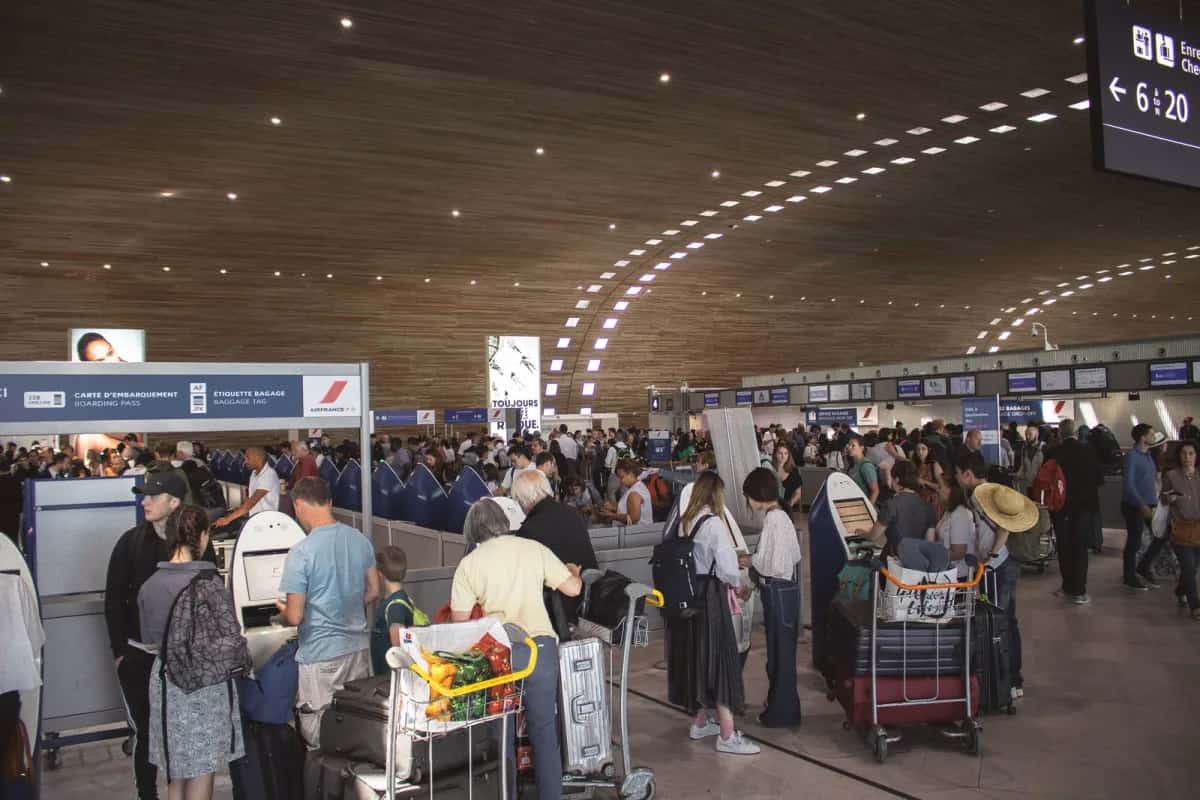
Table of contents
You land in Lisbon after an overnight flight and join the non-EU queue expecting the usual thirty seconds: hand over the passport, hear the stamp, walk out. Instead there is a kiosk, a camera, a fingerprint reader, and a line that has not moved in forty minutes.
The ink stamp is gone. Europe's biometric border now records your face and fingerprints on first entry and tracks every crossing digitally, across 29 countries, with no app to install and no fee to pay.
Most of the coverage has focused on the queues. The bigger change is what the system does after you leave, because a computer now counts your days instead of a guard squinting at stamps. Here is how it works, what to expect at the border, and the rule that just became impossible to get away with breaking.
Start with what happens at the desk, since that is the part people are getting wrong.
What Europe's Biometric Border Records
The Entry/Exit System replaces a manual process with a database. On your first crossing after the rollout, border officers create a file for you.
That file holds your name and passport details, a facial image, fingerprints, and the date and place of each entry and exit. It also records refusals of entry, which previously left no durable trace at all.
The first registration is the slow one. Subsequent crossings verify you against the record you already have, which is a scan rather than an enrolment, and these are much faster once the file exists.
The official EU travel pages are the place to check current details before a trip, because individual crossings have been switching on at different speeds.
One point causes repeated confusion. EES is not a visa and not an authorisation. You do not apply, pay or receive approval. It is a record created about you at the border, not a document you carry.
Which Countries and Who Is Exempt
Twenty-nine countries participate: the Schengen members plus associated states, which includes Iceland, Liechtenstein, Norway and Switzerland alongside the EU members in the zone.
You are exempt if you are an EU citizen, if you hold a long-stay visa or residence permit for a participating country, or if you are a national of Andorra, Monaco, San Marino or the Vatican. Cruise passengers departing outside the Schengen Area are typically treated separately.
Everyone else from outside the EU is enrolled, including travellers from the United States, the United Kingdom, Canada and Australia who have always entered visa-free.
Dual nationals should travel on the right passport. Entering on a non-EU passport creates an EES record and starts the clock, even if you also hold an EU nationality that would have exempted you.
If you spend extended periods in Europe, the exemption for long-stay permits is the one worth planning around, and our guide to which countries make digital nomad visas easy covers the routes that get you one.
The Queues Are Real, and Temporary
The rollout produced exactly the problems you would predict from enrolling millions of people at physical desks during a travel peak.
Reported effects have included much longer processing times, travellers missing connecting flights, and biometric enrolment being paused temporarily at some crossings to clear backlogs. Waits measured in hours were reported at several major airports.
Two things ease it. First, enrolment is one-off, so the queue shortens as more travellers already have records. Second, participating countries are installing self-service kiosks that handle the capture before you reach an officer.
Practical advice for now: add at least an hour to your arrival planning at a major hub, do not book a tight onward connection through a Schengen entry point, and use a kiosk if one is offered. If you are already stretching the budget on flights, the timing advice in our piece on where airfare deals still are matters more when a missed connection costs you a replacement ticket.
The Worked Example: 90 Days in 180, Now Counted Exactly
This is the part that changes behaviour, and almost nobody is talking about it.
Visa-free visitors may stay up to 90 days in any rolling 180 day period across the whole zone. That rule always existed. Enforcing it meant an officer counting stamps, and stamps were frequently illegible, missing or applied inconsistently at land borders.
Now the system computes it. Take a traveller with three separate trips:
- January 1 to February 10: 41 days
- March 15 to April 20: 37 days
- June 1 to June 20: 20 days
Total: 98 days. The 180 day window looking back from June 20 reaches to late December, so all three trips count. That traveller is 8 days over the limit, and under the old system would very likely have walked through unnoticed.
Under EES, the overstay is calculated at the desk and attached to a permanent record. Consequences range from a warning to a refusal of entry and a formal ban, and refusals are now stored too, so a single bad crossing follows you.
Count in days, not months. Four separate three-week trips in a year are fine. Three five-week trips clustered in one half of the year are not.
ETIAS Is a Separate Thing Coming Next
These two get conflated constantly, and they work differently.
EES is automatic, free and happens at the border. ETIAS is a travel authorisation you apply for online in advance, it carries a fee, and it applies to visa-free nationals of more than 60 countries. It is expected to begin after EES is settled.
The sequence matters for planning. Once ETIAS starts, a trip to Europe requires an approved authorisation before you board, in the same way the US ESTA and UK ETA already do. Showing up without one means not flying.
Check the official EU pages for the start date and fee before your first trip after the change, rather than relying on third-party sites, several of which charge a markup for an application you can submit yourself.
And build buffer into the itinerary generally. Between enrolment queues and a new authorisation step, the comfortable margin that used to exist between landing and your onward train has quietly disappeared, which is worth factoring in alongside the mandatory hotel fees that inflate your nightly rate when you budget a trip.
Frequently Asked Questions
Do I need to register for EES before travelling to Europe?
No. There is no pre-registration, no app and no fee. Your record is created by border officers the first time you enter after the system went live, which is why that first crossing takes longer than later ones.
Does Europe still stamp passports?
No. The ink stamp has been replaced by the digital Entry/Exit System across the 29 participating countries. Your entries and exits are recorded in a database instead of on a passport page.
How long does EES registration take at the border?
The first enrolment adds a few minutes per traveller for fingerprints and a facial image, which is what has produced long queues during busy periods. Later crossings are a verification check and are considerably faster.
How does the 90 day rule work now?
You may spend up to 90 days in any rolling 180 day period across the whole zone, and the system now calculates that automatically from your recorded entries and exits. Days in different countries all count toward the same total.
What is the difference between EES and ETIAS?
EES is a border record created automatically, with no application and no fee. ETIAS is a separate travel authorisation you apply for online before departure, it has a fee, and it is arriving later for visa-free travellers from more than 60 countries.
How to Travel Around It
Three habits cover almost all of the risk.
Keep your own day count. A simple note of entry and exit dates lets you check the rolling 180 day window yourself before you book, rather than discovering the problem at a desk.
Give the first crossing room. One enrolment, done without a connection to miss, turns the rest of your travel for the next few years into a scan.
And treat the record as permanent, because it is. The old system forgave a smudged stamp and a generous officer. This one keeps a file, and the file is the point.
Written by
Priya Raman
Health & Living
Covers health, wellness, and everyday living for Quick Trend Insights, with an interest in separating what the research supports from what the marketing claims.
Related Articles
View all
The Fees That Turn a $160 Hotel Into a $240 One
Mandatory hotel fees add 40% to 70% on top of the rate you were quoted. Here is the full math on a four-night stay, and which charges you can actually refuse.

Your Airline Miles Are Quietly Losing Value
Airline miles are being devalued through earning cuts and scrapped award charts. Here is what changed, what a balance is worth now, and when to spend.

Airfare Is Up 23%: Where the Deals Still Are
Airfare climbed 23.4% in a year while hotels rose under 3%. Here is what that gap means for your next trip, and the shoulder season math that recovers it.