
FAA Ground Stop Refunds: What Airlines Owe You
Stuck in the FAA ground stop? See which FAA ground stop refunds airlines owe, why hotels rarely apply, and the delay rule that now starts with January flights.
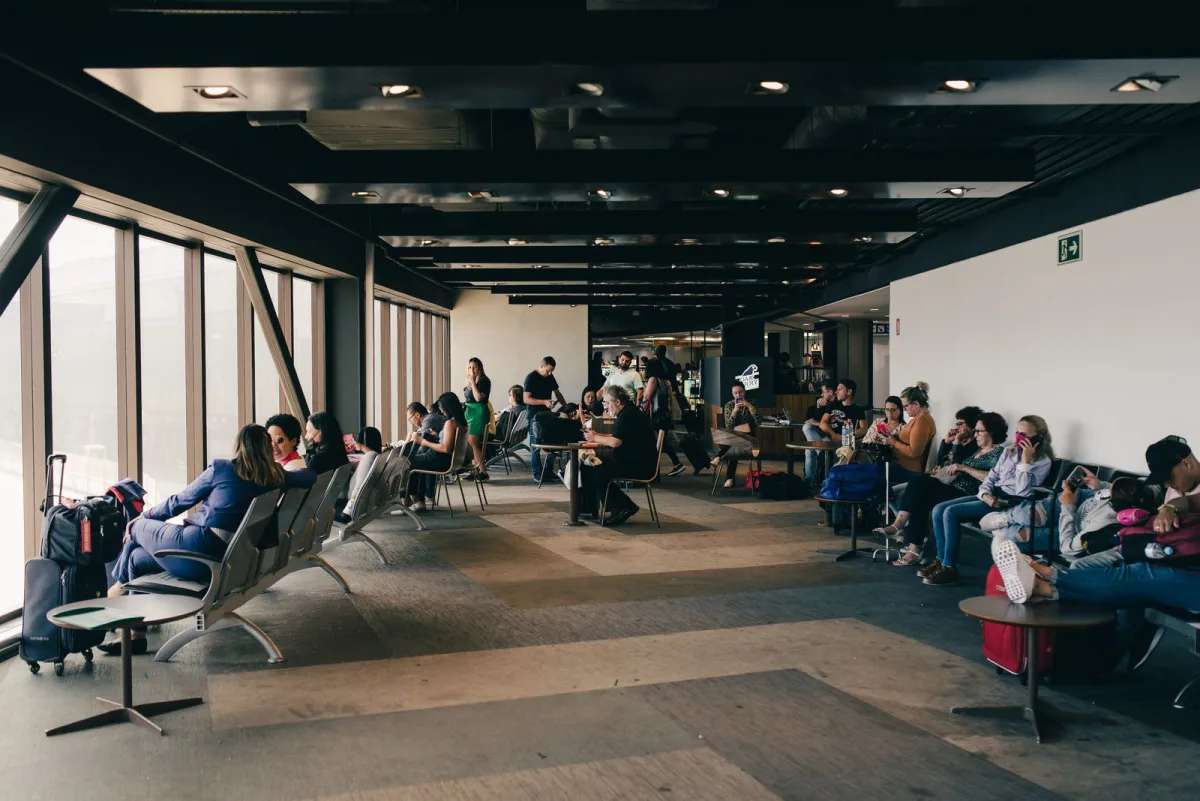
Table of contents
Your 6 p.m. flight home shows "Canceled." The gate agent says the FAA grounded everything, the next open seat is Sunday, and the hotel is on you. That was the scene for well over a million travelers on Friday, November 13, and it raises the question every stranded flyer asks about FAA ground stop refunds: what does the airline owe you when the government, not the airline, caused the mess?
The answer is less than most people assume, and it is about to shrink further. A federal rule that reclassifies ten common delay causes now kicks in for flights from January 1. So the choices you make at the gate, and before you book your next trip, matter more than they did a month ago.
This guide walks through what you are owed after a ground stop, what you are not, and the math on whether to rebook or take the cash.
What Happened During the FAA Ground Stop
The FAA halted departures nationwide at 3:54 p.m. Eastern on November 13, citing a telecommunications outage at the centers that guide planes between airports. Departures resumed at about 8:15 p.m. According to Al Jazeera's reporting on the ground stop, FlightRadar24 counted more than 4,700 cancellations and 10,000 delays that Friday, with about 700 more flights already canceled for Saturday.
Those four hours hit at the worst possible time. Data firm Cirium said roughly 11,000 flights carrying more than 1.5 million passengers were scheduled to leave after 4 p.m. that afternoon.
Transportation Secretary Sean Duffy blamed aging equipment, including what he called "1980s little copper lines," and said recovery would be slow. He expects normal operations before Thanksgiving. Still, the knock-on cancellations are the ones you need to watch, because they are where the rules get interesting.
FAA Ground Stop Refunds: What the Law Requires
Start with the part that does not depend on who caused the problem. Under the Transportation Department's refund rule, which took effect in late October two years ago, a canceled flight means a cash refund if you choose not to travel on the alternative the airline offers. The cause does not matter. Weather, an FAA outage, or a broken plane all count the same.
The Federal Register text of the refund rule spells out the key thresholds:
- Significant delay: a departure or arrival change of more than 3 hours on a domestic flight, or more than 6 hours on an international one, also triggers a refund if you decline it.
- Speed: refunds must land within 7 business days for credit card purchases and 20 calendar days for other payment types.
- Form: you get money back to your original payment method. A voucher or travel credit only counts if you agree to it.
- Extras: fees for a service you paid for but did not get, like seat selection or Wi-Fi, come back too.
One trap shows up at almost every gate. An agent may offer a credit first, because that keeps the money with the airline. Say "I want a refund to my card" in plain words, and get a confirmation number for the request before you walk away.
Why Meal Vouchers and Hotels Usually Don't Apply
Refunds are a legal requirement. Meals and hotels are not. They come from public commitments the 10 largest US airlines posted on the Transportation Department's customer service dashboard, and those commitments cover only delays and cancellations the airline controls.
For a controllable disruption, most of those carriers promise a meal or meal voucher once you have waited 3 hours, and a free hotel room when you get stuck overnight. A mechanical problem, a late crew, or a catering delay usually qualifies. An air traffic control failure does not. Federal delay data has long filed those events under the national aviation system, not under the airline.
So if your flight died during the ground stop itself, the airline likely owes you your fare back and nothing more. Some carriers hand out vouchers anyway as goodwill, especially to elite members. You can ask. You just cannot demand.
The Next-Day Cancellation Is Different
Here's where it gets interesting. A Saturday flight that cancels because its crew timed out on Friday night is not obviously an FAA problem. Airlines generally treat crew availability as within their control, and the reason recorded for your specific flight is what drives the dashboard commitments.
When the agent says "it's the FAA," ask a follow-up: was this flight canceled for air traffic control, or for crew or aircraft? If the answer is crew or aircraft, cite the airline's own dashboard promise and ask for the meal voucher and hotel.
The Delay Rule That Now Starts in January
Many travel sites told readers that a new Transportation Department rule took effect on October 19. It did not. According to the Federal Register notice delaying the rule, the department pushed the effective date to February 1, after the trade group Airlines for America asked for more time on September 21. In practice, it applies to delays and cancellations on flights from January 1, since airlines report each month's data within 15 days of the month ending.
The rule implements a section of the 2024 FAA reauthorization law. It removes ten types of events from the "Air Carrier" cause code, the bucket reserved for problems within an airline's control, and moves them into a new category. The ten are:
- Cleaning an aircraft after a passenger's death
- Aircraft damage from extreme weather, debris on the runway, or sabotage
- Baggage loading delays from a bag system outage the airline does not control
- Cyberattacks, if the airline follows applicable security rules
- Failures of government systems that affect the ability to fly safely
- Overheated brakes after a safety incident
- Unscheduled maintenance that cannot be deferred before flight
- Medical emergencies that are not the airline's fault
- Removal of an unruly passenger
- Airport closures for volcanic ash, wind, or wind shear
Items 5 and 7 are the big ones for you. Surprise maintenance is one of the most common reasons travelers get stranded, and today it typically earns a meal voucher on most large carriers. Lawyers at Crowell & Moring read the change as meaning airlines are no longer obligated under their service plans to provide amenities or compensation for these ten causes. The department's own analysis expects passengers to receive amenities for fewer disruptions.
Refund rights do not change. A cancellation from any of these ten causes still means cash back if you decline the rebooking.
Rebook or Take the Refund? A Worked Example
Picture a family of four booked Chicago to Orlando on the Friday evening of the ground stop. They paid $310 per ticket, $1,240 total, plus $35 each for seat selection. The airline cancels and offers seats on Sunday morning.
Option A: accept Sunday. The fare is used as planned. Because the FAA caused the cancellation, the family covers two nights near the airport at $180 a night, plus about $100 a day for meals. That adds $560 out of pocket, and they lose two vacation days.
Option B: take the refund and rebook elsewhere. They get $1,240 back plus $140 in unused seat fees, or $1,380. If a competitor still has four seats on Saturday morning at $440 each, the new tickets cost $1,760.
One hotel night at $180 plus $100 in meals brings the total to $2,040, against $1,380 refunded. That is a net extra cost of $660, compared with $560 for waiting.
The numbers are close, so the deciding factor is usually the day you lose. Run your own version with three inputs:
- Your refund amount, including any extras you paid for.
- The real replacement fare, checked before you decline the airline's offer.
- Your cost per extra day stuck away from home, including lodging, food, and unpaid time off.
Never decline the rebooking until you have a confirmed seat on the replacement flight.
How to Cover the Costs the Airline Won't
If the airline owes you nothing for the hotel, your card might. Many premium travel credit cards include trip delay coverage that pays for meals and lodging after a set wait, often 6 or 12 hours or an overnight stay, when you paid for the fare with that card. Covered causes vary by issuer, so read your benefits guide for whether an air traffic control failure qualifies. Our breakdown of whether a $150 airline card fee still pays off covers how those perks stack up.
Standalone policies can fill the gap too. Our guide to when travel insurance pays and when it won't explains the "covered reason" fine print, which decides whether a ground stop counts.
A few habits lower your exposure before anything goes wrong:
- Book the first flight of the day. Morning departures have the most rebooking options left if something breaks.
- Keep every receipt, and photograph the departure board showing the cancellation.
- Avoid tight connections on peak travel days, when a short outage can ripple for 24 hours.
- Have a ground backup. For trips under about 400 miles, the numbers in our drive or fly cost comparison show driving is often competitive.
Frequently Asked Questions
Do airlines have to refund you for an FAA ground stop?
Yes, if your flight is canceled or significantly delayed and you decline the rebooking. The federal refund rule applies no matter what caused the cancellation, and the refund must go back to your original payment method unless you choose a voucher.
Do airlines pay for hotels when flights are canceled by air traffic control?
Usually not. The hotel and meal commitments posted by the 10 largest US airlines apply only to disruptions within the airline's control, and air traffic control problems fall outside that.
When does the new DOT delay rule take effect?
The Transportation Department delayed the rule from October 19 to February 1. It applies to delays and cancellations on flights operated from January 1, the first month airlines must report under the new categories.
Is a maintenance delay still the airline's fault?
For now, routine mechanical problems remain in the airline-controllable category. Under the new rule, unscheduled maintenance that cannot be deferred moves to a separate category, which may mean fewer meal and hotel vouchers for those delays.
Can you get compensation for a delayed flight in the US?
US law does not require cash compensation for delays. The Transportation Department withdrew its proposed compensation rule last year, so your protections are the refund rule plus whatever each airline voluntarily promises on its customer service plan.
Know Your Rights Before the Next Ground Stop
The November 13 outage showed how little a stranded traveler is owed when the cause sits with the FAA: your fare back, and not much else. Starting with flights in January, that same treatment extends to ten more causes, including surprise maintenance.
Your best protection is preparation. Know the refund thresholds, ask for the specific cancellation reason, and pay for flights with a card that covers delays. Do the rebook math before you hand back your seat, and the next grounded Friday will cost you a lot less.
Written by
Priya Raman
Health & Living
Covers health, wellness, and everyday living for Quick Trend Insights, with an interest in separating what the research supports from what the marketing claims.
Related Articles
View all
Mexico Tourist Fee Rises: What Your Trip Now Costs
The Mexico tourist fee rises 17.8% to 1,158 pesos per person. See what it adds to flights and cruises, and how to avoid Cancún's inflated Visitax charge.
Japan Tax-Free Shopping Changed: How to Get Your Refund
Japan tax-free shopping now means paying full price and claiming tax back at the airport. Here's what you pay, the kiosk steps, and the fees to ask about first.
Holiday Travel Insurance: When It Pays and When It Won't
Holiday travel insurance costs 4% to 10% of your trip, but it only pays for listed reasons. See the cost math, CFAR limits, and the gaps that deny claims.