
Dynamic Currency Conversion: Always Pay Local Abroad
Dynamic currency conversion adds 2.6% to 12% when you pay in your home currency abroad. A worked €200 example, where the offer hides and how to say no.
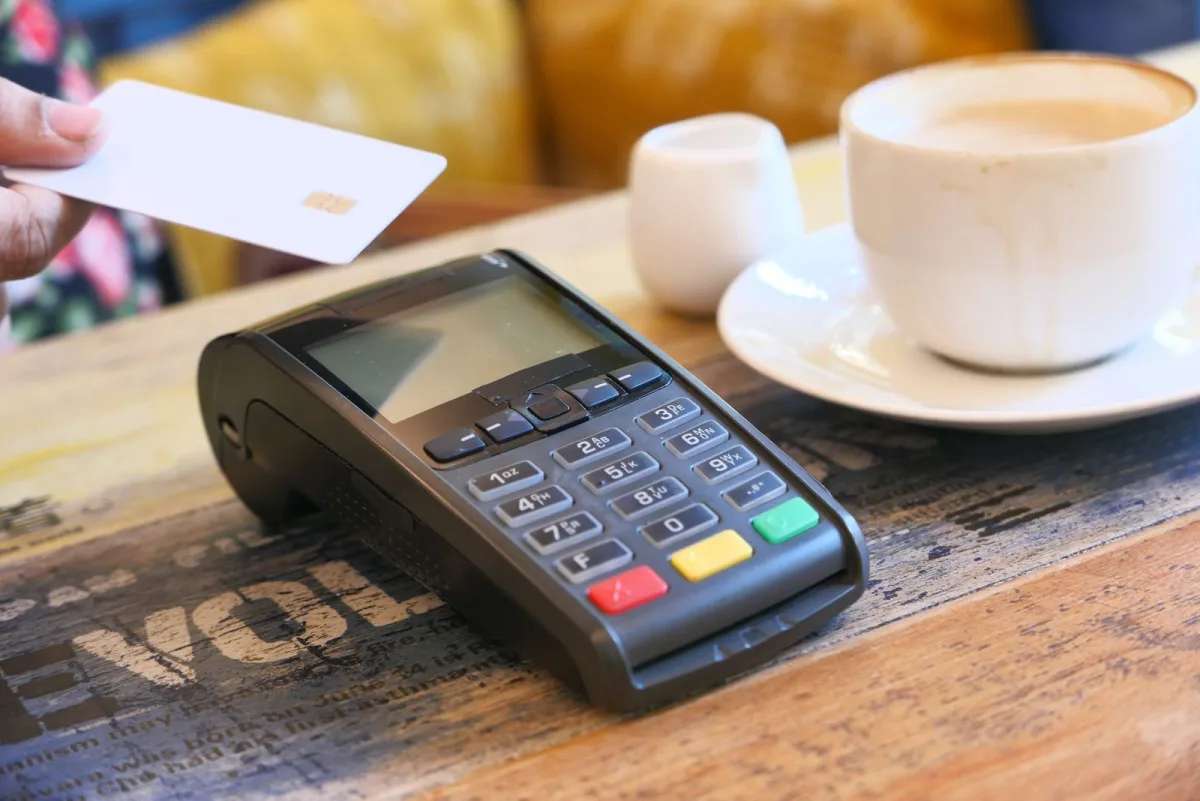
Table of contents
You finish dinner in Rome and the waiter brings the card machine. The screen asks a friendly question: pay €200, or pay $247 in US dollars? Dollars feel safer. You know exactly what you are spending. You tap the button.
That tap probably cost you around $17. Dynamic currency conversion, the offer to pay in your home currency abroad, almost always costs more than paying in the local currency. It shows up at restaurants, hotels and ATMs across Europe, Asia and the Middle East. Here is how the markup works, what consumer groups have measured, and the simple rule that avoids it every time.
What dynamic currency conversion actually is
Every foreign card payment has to be converted at some point. The only question is who does it, and at what rate.
- If you pay in the local currency (euros in Rome, yen in Tokyo), your card network converts it. Visa or Mastercard uses its daily wholesale rate, and your bank may add its own foreign transaction fee on top.
- If you pay in your home currency, the merchant's payment provider converts it on the spot. That is dynamic currency conversion, or DCC. The provider picks the exchange rate, and that rate carries a markup.
The merchant usually gets a cut too. Researchers at Utrecht University, writing in The Conversation, say retailers typically earn around 1% of the transaction value from DCC. That is why waiters, hotel desks and ATMs often steer you toward the home-currency option.
How much the dynamic currency conversion markup costs
Two separate consumer studies put numbers on it.
Stiftung Warentest, the German consumer testing organisation, sent investigators to 11 countries where DCC was offered. As reported by The Motley Fool, it found prices rose by 2.6% to 12% when shoppers accepted the conversion.
The Norwegian Consumer Council, in a submission to the European Commission cited by Utrecht University researchers in The Conversation, found the average DCC fee was 7.6%. The Utrecht team compares that with roughly 1.5% to 3% when the customer's own bank handles the conversion. Their own research found that more than half of international customers still chose to pay in their home currency.
So the typical markup sits somewhere between a few percent and over 10%, and you usually cannot see it on the screen. The rate looks official, but the markup is built into it.
A worked example: the €200 dinner
Here is the dinner from the opening, run three ways. For this example, assume the card network's rate is $1.15 per euro.
Option 1: Pay €200 on a card with no foreign transaction fee
- €200 x $1.15 = $230.00
Option 2: Pay €200 on a card with a 3% foreign transaction fee
- $230.00 + 3% fee ($6.90) = $236.90
Option 3: Accept dynamic currency conversion and pay in dollars
- At the 7.6% average markup: $230.00 + $17.48 = $247.48
- At the 12% high end measured by Stiftung Warentest: $230.00 + $27.60 = $257.60
Even the worst card beats the average DCC offer. Paying in euros on a card with a 3% foreign fee still saves $10.58 against the average conversion. On a no-fee card, the saving is $17.48 on one dinner.
Now scale it. A week-long winter trip with $2,500 of card spending on hotels, meals and shopping would cost about $190 extra at a 7.6% markup. That is a night in a decent hotel, gone to a button.
The same trap in rupees and pounds
The offer works the same way for any home currency. Say you are an Indian traveller paying a AED 1,000 hotel bill in Dubai, and the network rate works out to ₹23 per dirham. Paying in dirhams costs ₹23,000 plus your card's own foreign currency markup, listed in its fee schedule. Accepting a rupee conversion at a 7.6% markup costs about ₹24,750 before any card charges, roughly ₹1,750 more on one bill.
A UK traveller in Spain faces the same choice between euros and pounds. The currency changes, but the answer does not: pick the local one.
Choosing local currency does not cancel your card's own overseas fee. First Direct, for example, notes that its credit card charges a fee for purchases abroad, often around 3%, whichever currency you pick. So read your card's fee schedule before you travel, and pick the card with the lowest one.
Where you will meet the offer
DCC is not only a restaurant trick. Watch for it in four places:
- Card machines at restaurants and shops, as a two-option screen showing both currencies.
- Hotel checkout, where the front desk may ask "would you like to be charged in dollars?" or quietly process it that way. Our guide to hotel fees that inflate your nightly rate covers other charges to check on the bill.
- ATMs, which may offer a "guaranteed" conversion rate for your withdrawal. Decline it and let your bank convert.
- Online checkouts on foreign websites, which may preselect your home currency based on your card or location.
What the card networks require
You always have the right to say no. Visa's consumer guidance says merchants and ATMs "should give you a choice to accept or decline currency conversion and must not choose on your behalf."
Visa also says the screen must show the amount in both currencies, the exchange rate and any markup. Merchants are not supposed to use bigger fonts or brighter colours to push you toward the conversion.
If a merchant converts without asking, or you only notice afterwards, Visa recommends reporting it to your card issuer. Keep the receipt. It will show the currency you were charged in.
UK banks give the same advice. First Direct tells its customers it is "usually more cost effective to pay in local currency" with a debit card abroad. If you chose local currency but the receipt shows pounds, it suggests asking the merchant to void the transaction and try again. In the European Union, rules on cross-border payments aim to make providers show the cost of conversion more clearly at the point of sale.
The simple rule, and the one exception
Always choose the local currency. Euros in Europe, yen in Japan, dirhams in Dubai. That single habit avoids DCC every time.
The only time the math changes is if your card charges a high foreign transaction fee and the DCC offer happens to have a small markup. That combination is rare, and you cannot check the markup quickly at a card machine. Choosing local currency is the safer default.
A few habits make the rule easier to follow:
- Carry a card with no foreign transaction fee. Many travel credit cards waive it. Our breakdown of whether an airline card's annual fee is worth it covers how travel cards compare.
- Know the real rate before you pay. Check the current rate with our currency converter and multiply quickly. If the dollar figure on the screen is far above your estimate, it includes a markup.
- Say it out loud. At a restaurant or hotel desk, ask to be charged "in local currency, please" before they run the card.
Frequently Asked Questions
Should I pay in local currency or my home currency abroad?
Pay in local currency. Consumer studies found dynamic currency conversion adds 2.6% to 12% to the price, with an average around 7.6%. Paying in local currency lets your card network set the rate, which is usually far cheaper.
What is dynamic currency conversion?
It is an offer, at a card machine, hotel desk or ATM abroad, to pay in your home currency instead of the local one. The merchant's provider sets the exchange rate and adds a markup, and the merchant often earns a share of it.
Can a merchant charge me in dollars without asking?
Visa says merchants and ATMs must give you a choice and must not decide for you. If you were converted without being asked, keep the receipt and report it to your card issuer.
Should I accept the conversion rate at a foreign ATM?
No. Decline the ATM's offer to convert your withdrawal and let your own bank do it. The ATM's "guaranteed" rate typically includes a markup, on top of any withdrawal fee.
One button, every trip
Dynamic currency conversion works because it feels helpful. Seeing a familiar currency makes you feel in control, and the markup stays invisible. Choosing the local currency every time is the simplest money rule in travel, and on a typical week abroad it can save you the cost of a hotel night. Practise saying "local currency, please," and let your card do the converting.
Disclaimer: This article is for informational purposes only and does not constitute financial advice. Always consult with a qualified financial advisor before making investment decisions. Past performance is not indicative of future results.
Written by
Priya Raman
Health & Living
Covers health, wellness, and everyday living for Quick Trend Insights, with an interest in separating what the research supports from what the marketing claims.
Related Articles
View all
Lost Luggage Compensation: What Airlines Owe You Now
Lost luggage compensation now tops out at 1,519 SDRs, about $2,000, but many guides quote the old cap. Claim deadlines, the bag fee refund rule and an example.

Aircraft Deicing Delays: Why Your Winter Flight Waits
Deicing delays follow a federal rule, a truck queue and a fluid with a time limit. How long deicing takes, why planes get sprayed twice and your refund rights.
UK ETA for Holiday Trips: Cost, Timing and Scams
A UK ETA now costs £20 per traveller, kids included, and airlines check it at boarding. What a family pays, when to apply, the transit rule and fake sites.