
Coronary Calcium Score: Do You Need a CAC Test?
A coronary calcium score can settle whether you need a statin. See what the CorCal trial found, what the scan costs, and who should skip the CAC test.
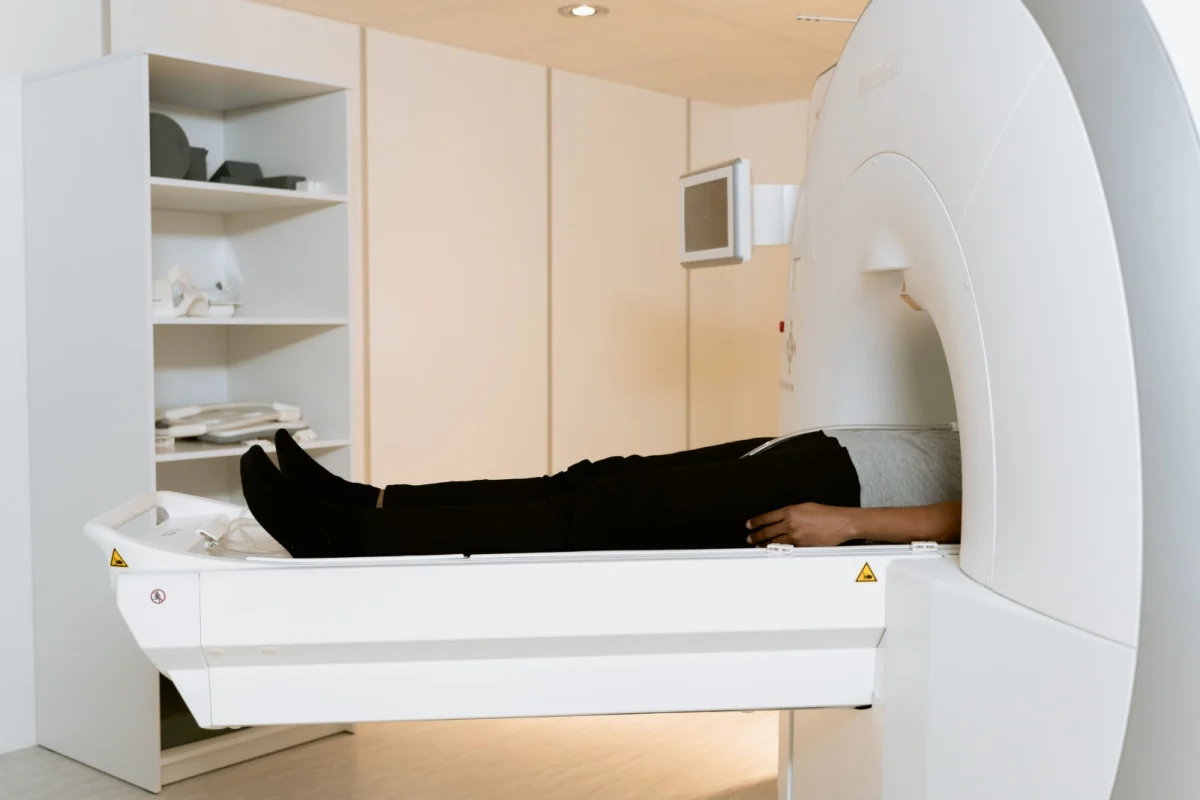
Table of contents
Your doctor runs your numbers and tells you your 10-year heart risk is about 6%. That lands you in the gray zone. Maybe you should start a statin, maybe not. Then someone mentions a coronary calcium score, a quick scan that looks for real plaque in your heart arteries, and you suddenly have a way to break the tie.
The scan is getting fresh attention right now, and for good reason. A new national cholesterol guideline has made millions more adults eligible for statins. A large US trial just tested whether a calcium score can guide that choice. And in November the American Heart Association published a plain-language guide asking a blunt question: should you even get one? Here is what the test measures, who it helps, what it costs, and where it falls short.
What a Coronary Calcium Score Actually Measures
A coronary calcium scan is a CT scan of your heart. According to the American Heart Association, it takes about 10 to 15 minutes, needs no injected dye. You lie on a table, the scanner passes over your chest, and you can go back to your day.
The scan looks for calcium in the walls of your coronary arteries. Calcium is a marker of hardened plaque, the slow buildup that narrows arteries and can rupture to cause a heart attack. Software adds up the size and density of every calcium spot and gives you a single number.
RadiologyInfo, the patient site run by the American College of Radiology and the Radiological Society of North America, groups the scores like this:
- 0: no evidence of coronary artery disease
- 1 to 10: minimal evidence
- 11 to 100: mild evidence
- 101 to 400: moderate evidence
- Over 400: extensive evidence
One limit matters from the start. The scan sees calcified plaque only. Softer, newer plaque has not hardened yet, so it can be invisible. RadiologyInfo notes the test is less useful under age 50 for exactly this reason: younger arteries may carry disease that has not calcified.
Why Millions More People Are Now Statin Candidates
The scan matters more this year because the rules for who gets a statin just shifted. The American College of Cardiology and the American Heart Association released a new dyslipidemia guideline that uses a newer risk calculator, called PREVENT, as the starting point for estimating your 10-year odds of a heart attack or stroke.
Researchers led by Dr. Timothy Anderson ran the numbers on national survey data. Their study in JAMA estimated that 87.5 million US adults aged 30 to 79 are now statin eligible, or 56.6% of that age group. Of those, 21.5 million are newly eligible under the new rules.
The figures climb steeply with age. More than 93% of adults in their 70s qualify, and 85% of adults in their 60s. Yet the average 10-year risk among the newly eligible group was only 3.1%. That is a lot of people being offered a daily pill for life on the basis of a modest risk estimate, which is exactly the situation a tiebreaker test was built for. If you are older and already weighing the opposite question, our look at what a new trial shows about stopping statins after 70 covers that side.
What the CorCal Calcium Score Trial Found
The CorCal Outcomes trial asked a direct question: if you let a calcium score decide who gets a statin, do people do worse than if you use the standard formula? Investigators at Intermountain Health enrolled 5,772 adults with no known heart disease, no diabetes, and no prior statin use. The average age was 64, and 51% were women.
Half got statin advice based on the older pooled cohort equations, the risk formula most US doctors have used for a decade. The other half got advice based on their calcium score. In both groups, the final call stayed with the patient and their doctor. The European Society of Cardiology presented the results at its congress in Munich in August, and they drew renewed coverage in November.
After an average of 4.2 years, major cardiovascular events occurred in 2.7% of people in both groups. That covered death from any cause, heart attack, stroke, and procedures to reopen arteries. The hazard ratio was 0.99, statistically a dead heat.
The adherence gap
The more striking result came from what people did after the advice. The standard formula recommended statins more than three times as often as the calcium score did. But among people told to take a statin, 62% in the calcium score group stuck with it, compared with 23% in the formula group.
"For far too many patients, the first symptom of ASCVD is a heart attack," said principal investigator Dr. Joseph Muhlestein of Intermountain Medical Center. One plausible reason for the gap is that seeing plaque on your own scan feels more concrete than a percentage on a calculator. The trial did not test that, though, and the researchers said they could not establish why adherence differed.
What the trial did not prove
Fewer heart events happened than the investigators expected, which shrank the trial's statistical power. As a result, the study did not formally show that calcium-guided treatment protects as well as the standard approach. Equal event rates are encouraging. They are not the same as proof.
A Worked Example: Same Risk Score, Different Scans
Picture two 58-year-olds. Both have a 10-year PREVENT risk of 7%, which puts them in the intermediate band. Neither smokes or has diabetes. On paper, they look identical.
Person A gets a score of 0. The American Heart Association calls a zero reassuring, but not a lifetime all clear, because soft plaque can still be present. For someone with no other strong risk factors, a zero can support a conversation about holding off on a statin for now and focusing on blood pressure, diet, and activity.
Person B gets a score of 180. That sits in the moderate band. The AHA says a higher score generally means more plaque and higher future risk, so the case for treatment gets stronger. Same formula, very different conversation.
Now the costs. At $250, the midpoint of the AHA's $100 to $400 range, the scan is a one-time out-of-pocket expense for most people. The radiation is small: RadiologyInfo puts a calcium scoring CT at about 1.7 millisieverts, roughly six months of the natural background radiation you absorb anyway, or the equivalent of about 17 chest X-rays.
Then apply the CorCal adherence numbers. If 100 people like Person B are told to take a statin, the trial suggests about 62 actually would, versus about 23 told the same thing by a formula alone. Thirty-nine more people taking a medicine they were prescribed is a real difference, even before anyone argues about which method picks patients better.
Who Should Skip a Coronary Calcium Score
The AHA is clear that this is not a test for everyone, and it does not recommend broad screening. Dr. Manesh Patel, the association's volunteer president and chief of cardiology at Duke University School of Medicine, describes it simply: "It is a tiebreaker test." A tiebreaker only helps if there is a tie.
You probably do not need one if:
- Your treatment is already clear. People with diabetes or very high cholesterol usually have a clear path regardless of the score.
- You already have known heart disease. The AHA says the scan generally does not help after a heart attack or a cardiac catheterization.
- Your risk is very low. A score is unlikely to change anything.
- You are under 50. Plaque may not have calcified yet, so a zero says less.
- You are pregnant. RadiologyInfo advises against CT unless it is medically necessary.
It is also not an annual test. One scan answers a question at a point in time, and it should not become a yearly habit.
Questions to Ask Before You Book One
The AHA's core advice is to talk to your clinician first about whether the result would actually change your plan. These questions make that conversation concrete:
- What is my PREVENT 10-year risk? If it falls between 3% and 10%, you are in the range where the scan is designed to help.
- What would we do differently with a 0 versus a high score? If the answer is "nothing," skip the scan.
- Do I have other risk factors that override a zero? Smoking, diabetes, very high cholesterol, and a strong family history of early heart disease still count.
- What will it cost me? Ask the imaging center for the cash price, since insurance often does not pay.
Calcium scoring is not the only extra test that can sharpen a borderline picture. A one-time blood test for a genetic cholesterol particle can also shift your risk estimate, which we explain in our guide to the Lp(a) test and what it can tell you. And because high blood pressure feeds the same plaque, it is worth knowing whether a combination blood pressure pill beats two separate ones.
Frequently Asked Questions
How much does a coronary calcium score test cost?
The American Heart Association says most people pay about $100 to $400, and the scan is typically not covered by health insurance. Prices vary by region and facility, so ask for a cash price before you book.
Is a calcium score of zero good?
Yes, it is reassuring. It means no calcified plaque was found. It is not a lifetime guarantee, though, because soft plaque does not show up, and risks like smoking, diabetes, or family history still apply.
Can a calcium score replace a cholesterol test?
No. A cholesterol panel measures the fats in your blood today. A calcium score shows plaque that has built up over years. Doctors use both, along with blood pressure and other factors, to estimate your risk.
Is the radiation from a heart calcium scan dangerous?
The dose is low. RadiologyInfo estimates about 1.7 millisieverts, similar to six months of natural background radiation. That is still a reason not to repeat the scan without a clear purpose.
Should I stop or start a statin based on my calcium score alone?
Do not change any medicine on your own. The score is one input. Bring the result to your clinician, who can weigh it against your full history before you decide together.
The Bottom Line on Your Calcium Score
The new guideline has widened the statin net, and many people now caught in it have modest risk. A coronary calcium score gives you something a formula cannot: a look at your own arteries. The CorCal trial suggests that using it led to far fewer statin recommendations, no extra heart events in the time studied, and much better follow-through.
It is not proof, and it is not for everyone. But if your risk sits in the gray zone and you are unsure about a lifelong pill, ask your clinician one question: would a calcium score change what we do? If the honest answer is yes, a ten-minute scan may be the most useful $250 you spend on your heart.
Written by
Priya Raman
Health & Living
Covers health, wellness, and everyday living for Quick Trend Insights, with an interest in separating what the research supports from what the marketing claims.
Related Articles
View all
Daraxonrasib Pancreatic Cancer Trial: What It Found
Daraxonrasib pancreatic cancer trial explained: what the phase 3 study found on survival and side effects, why RAS was undruggable, and who can get it now.
CTE Blood Test: What the New Studies Actually Show
A CTE blood test may one day diagnose the disease in living people. What two new JAMA studies found, their accuracy limits, and who the test could matter for.

Clinical Obesity: The New Definition Beyond BMI
Clinical obesity is a new way to diagnose obesity beyond BMI. See what a study of 844,108 adults found and how to check your own waist and BMI numbers.