
CTE Blood Test: What the New Studies Actually Show
A CTE blood test may one day diagnose the disease in living people. What two new JAMA studies found, their accuracy limits, and who the test could matter for.
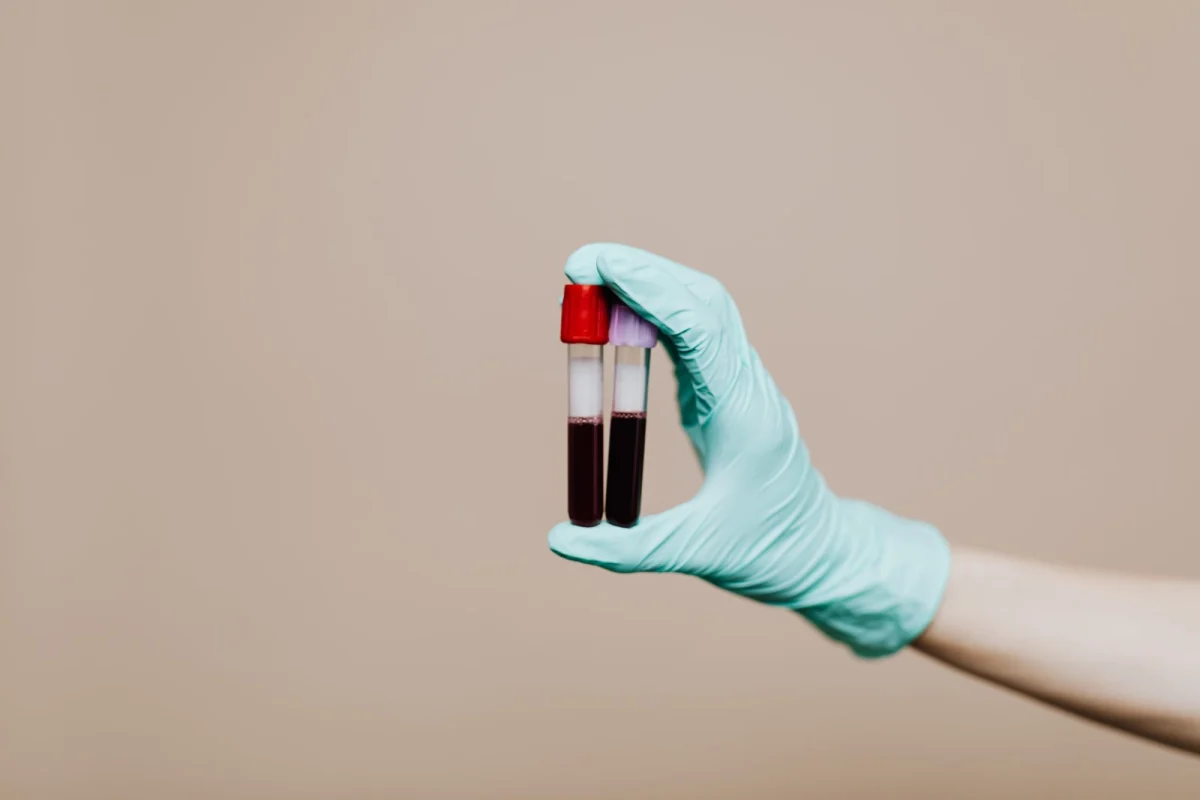
Table of contents
You played football for twelve years. Maybe you boxed, or served near blasts in the military. Now you forget names more than you used to, and your temper runs hotter than it should. You want to know whether it is CTE. Until now, the only answer anyone could give was "we will find out after you die."
Two studies published in JAMA in November suggest a CTE blood test may one day change that. ESPN and other outlets reported the findings as a possible first step toward diagnosing the disease in living people. The studies are real and promising. They are also small, early, and limited to advanced disease, and nobody can order this test today.
Why CTE Can Only Be Diagnosed After Death Today
Chronic traumatic encephalopathy is a brain disease linked to repeated hits to the head, not just the ones diagnosed as concussions. Over years, a protein called tau clumps into tangles in the brain. Those tangles are the disease's signature.
The problem is where they sit. A doctor cannot see tau tangles on a standard MRI or CT scan. The only way to confirm CTE is a pathologist looking at slices of brain tissue under a microscope, which means after death.
What doctors can offer living patients instead
In 2021, a panel of 20 experts convened by the National Institute of Neurological Disorders and Stroke published consensus criteria in the journal Neurology for traumatic encephalopathy syndrome (TES). TES is the clinical picture a doctor can assess in life. It requires:
- Substantial exposure to repetitive head impacts, such as years of contact sport.
- Core symptoms, mainly problems with memory, thinking, or controlling emotions and behavior.
- A progressive course that another condition does not fully explain.
Even a TES diagnosis only suggests CTE with a provisional level of certainty. The authors wrote the criteria mainly to support research and said they expected to revise them once biomarkers, such as blood tests and brain scans, became available. That is the gap these new studies are trying to fill.
What the New CTE Blood Test Studies Found
Both studies measured the same thing: a fragment of tau called eMTBR-tau, short for a piece of the protein's microtubule-binding region. Tau is the same protein that forms the tangles.
The Boston University study
Researchers at Boston University and Banner Health worked with 21 former American football players who had given blood for research while alive and later donated their brains. ESPN reported that 12 had played professionally, 7 in college and 2 only in high school. After death, pathologists found CTE in 18 of them and no CTE in 3.
According to the paper in JAMA, published November 19:
- Median eMTBR-tau was 0.019 pg/mL in players with CTE versus 0.001 pg/mL in those without.
- Levels were higher in high-stage CTE than in low-stage or no CTE.
- The highest levels, a median of 0.082 pg/mL, showed up in players who had both CTE and Alzheimer's changes.
- Levels rose with the total amount of tau found in the brain.
- A common Alzheimer's blood marker, p-tau217, did not track CTE at all.
The authors concluded that the marker "may represent a feasible biomarker" for high-stage CTE, and said larger studies are needed to establish how accurate it is.
The Washington University study
A week earlier, on November 13, a team at Washington University School of Medicine in St. Louis published its own JAMA paper on a version of the same fragment, eMTBR-tau243. The study drew on 229 participants from several research collections, including more than 80 people with brain diseases confirmed at autopsy.
The CTE link started almost by accident. One person with advanced CTE and no Alzheimer's had an unexpectedly high level. When the team then tested blood from 11 people with autopsy-confirmed CTE, levels were higher than in healthy volunteers and climbed with disease severity. The university says the test separated advanced CTE from healthy people with high accuracy, but could not reliably catch early-stage disease.
Two independent teams, using different patients and different lab methods, landed on the same marker. That is the strongest part of this news.
The Accuracy Limits You Should Know About
Neither paper reports the headline accuracy figures, such as sensitivity and specificity, that a clinical test needs. That is not an oversight. With 21 and 11 CTE cases, the samples are too small to pin those numbers down.
Here are the main limits, in the researchers' own framing:
- Small samples. Boston University's Michael Alosco told ESPN, "We are still in the discovery phase and it's a small sample size."
- Advanced disease only. Both teams found the signal in high-stage CTE. Early CTE, when a warning might actually change someone's choices, did not show up reliably.
- The Alzheimer's overlap. Alzheimer's drives eMTBR-tau far higher than CTE does. As Washington University's Chihiro Sato put it, "This is not going to be a standalone biomarker." A positive result would need an Alzheimer's test alongside it.
- No approval. The test is not FDA approved and has not been validated for diagnosing CTE. Washington University has licensed its version to C2N Diagnostics, a company in which the university and one co-author hold equity, as the paper discloses.
A worked example: why accuracy and prevalence both matter
Suppose a future version of the test turned out to be 90% sensitive and 90% specific. Those are hypothetical numbers, used only to show the math. Now test 1,000 former players, and assume 200 of them truly have CTE.
- The test would correctly flag 180 of the 200 with CTE.
- It would wrongly flag 10% of the 800 without CTE, which is 80 people.
- So of 260 positive results, only 180 would be real. That is about 69%.
Nearly one in three positives would be false. For a disease with no treatment yet, that is a heavy thing to tell someone wrongly. This is why researchers want large validation studies before any clinic offers the test. The same logic applies to other new tests; our breakdown of what biological age tests actually measure runs into similar problems.
How Common CTE Is Among Former Players
Researchers care so much about a living test partly because of the numbers coming out of brain banks. The Boston University CTE Center reports that among former NFL players who died between 2008 and 2021 and donated their brains, 315 of 338 (93.2%) had CTE.
That figure is skewed upward. Families who donate a brain often do so because they saw symptoms. So the same team also worked out a floor: all 1,712 former NFL players who died in that window. Even if every player who was not studied had no CTE, at least 18.5% of them had the disease.
Duration of play matters too. A 2019 study from the same center found that the odds of CTE roughly doubled for every 2.6 years of football played. Compare two players: one with 5.2 years of play and one with 10.4. The second player has two extra doublings, or about four times the odds. That dose-response pattern is a big part of why researchers see head impacts as a cause rather than a coincidence.
Who a Living CTE Test Could Matter For
If larger studies confirm the marker, the first people to benefit are those with heavy, long-term exposure to head impacts:
- Former football players, especially those with long careers.
- Boxers and other combat sport athletes.
- Military veterans exposed to repeated blasts, a group Washington University specifically names.
- Players in ice hockey and rugby, where Boston University studies also link years of play to CTE risk.
For these groups, a reliable test could do three things. It could separate CTE from conditions that look similar, such as depression or Alzheimer's, which have different care plans. It could track the disease over time. And it could make drug trials possible, since nobody can test a treatment for a disease they cannot diagnose.
Would players actually want to know?
Not everyone does. ESPN asked more than 30 current and former NFL players about CTE this year. Washington Commanders quarterback Marcus Mariota said he would take a test. Minnesota Vikings safety Joshua Metellus said he probably would not while still playing, because it might change how he plays.
That tension is real. A result with no treatment attached can weigh on someone's mental health, career and family. Any future test will need counseling built in, not just a lab report.
What You Can Do Now
If you or someone you love has a history of repeated head impacts and new problems with memory, mood or behavior, do not wait for a blood test. See a neurologist and describe the full exposure history, including years of play or service.
Many of the symptoms that worry people are treatable on their own, including depression, sleep problems, headaches and some causes of memory loss. A doctor can also check for Alzheimer's and other causes that need different care. Daily habits behind the growing focus on brain health still apply, from exercise to getting enough daylight, which is linked to dementia risk.
Frequently Asked Questions
Is there a blood test for CTE?
Not one you can get. Two JAMA studies in November found a tau fragment in blood that is higher in advanced CTE, but the test is not FDA approved, has not been validated, and is only used in research.
How is CTE diagnosed in living people?
It cannot be confirmed in life. Doctors can diagnose traumatic encephalopathy syndrome using 2021 consensus criteria based on head impact exposure and symptoms, which suggests CTE but cannot prove it.
How accurate is the CTE blood test?
No reliable accuracy figures exist yet. One study found it separated advanced CTE from healthy people with high accuracy, but neither detected early CTE reliably, and Alzheimer's raises the same marker.
When will a CTE blood test be available?
Boston University's Michael Alosco told ESPN he hopes to move the finding forward in roughly five years, describing himself as cautiously optimistic. Larger validation studies come first.
Can one concussion cause CTE?
Research links CTE to repeated head impacts over years, not a single blow. The 2021 diagnostic criteria require substantial repeated exposure, and Boston University's studies show risk rising with years of play.
The Bottom Line on the CTE Blood Test
For the first time, two separate teams have found a blood marker that tracks CTE in people whose diagnosis was later confirmed at autopsy. That is a genuine first step toward diagnosing CTE in the living, and the fact that both groups found the same marker makes it more convincing.
It is still a research finding. The samples were small, the signal showed up only in advanced disease, and Alzheimer's muddies the reading. If you are worried about your own brain after years of hits, the right move today is a neurologist, not a wait for a test that is still years from your doctor's order form.
Written by
Priya Raman
Health & Living
Covers health, wellness, and everyday living for Quick Trend Insights, with an interest in separating what the research supports from what the marketing claims.
Related Articles
View all
Daraxonrasib Pancreatic Cancer Trial: What It Found
Daraxonrasib pancreatic cancer trial explained: what the phase 3 study found on survival and side effects, why RAS was undruggable, and who can get it now.
Coronary Calcium Score: Do You Need a CAC Test?
A coronary calcium score can settle whether you need a statin. See what the CorCal trial found, what the scan costs, and who should skip the CAC test.

Clinical Obesity: The New Definition Beyond BMI
Clinical obesity is a new way to diagnose obesity beyond BMI. See what a study of 844,108 adults found and how to check your own waist and BMI numbers.