
GLP-1 Breast Density: Why Your Mammogram May Change
GLP-1 breast density can rise after weight loss. A new study found 62.5% of women moved up a category and recalls doubled. What it means for your mammogram.
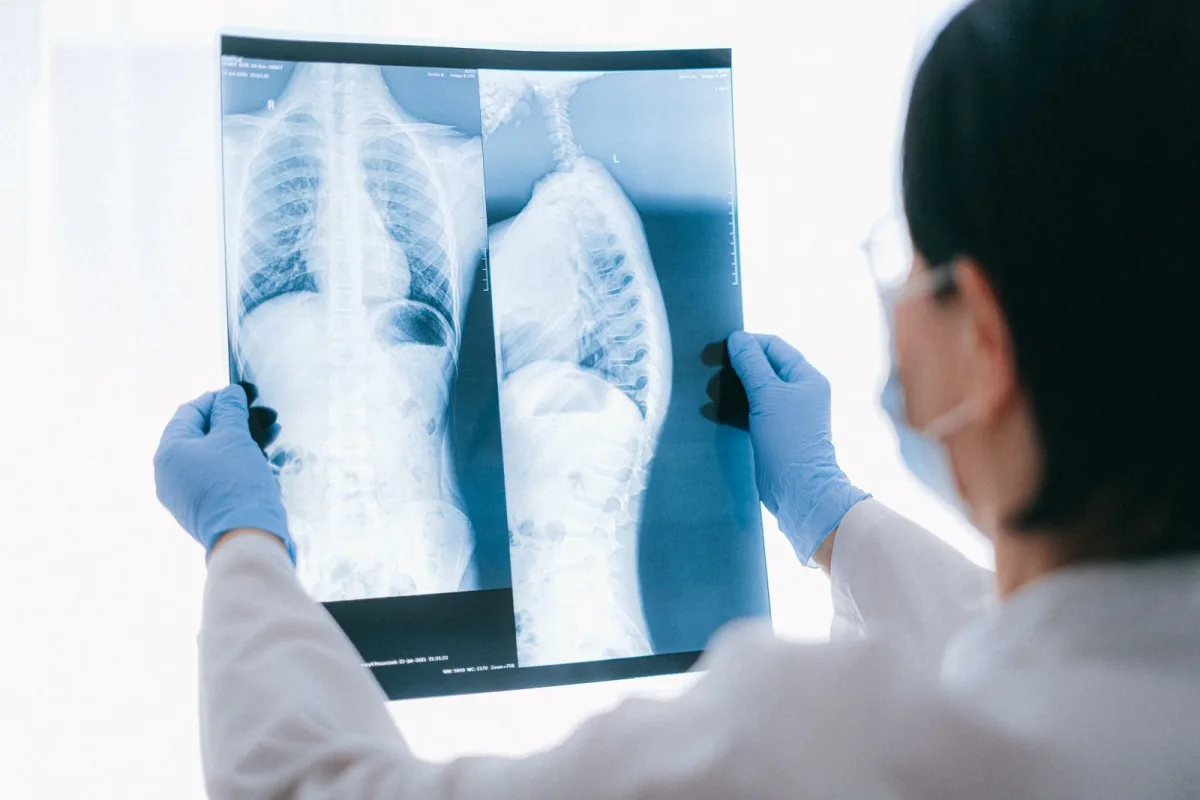
Table of contents
You have lost 35 pounds on a weight-loss shot. Your jeans fit again and your blood pressure is down. Then a letter arrives after your routine mammogram: you have been called back for more pictures, and the report now says your breasts are "dense."
That sequence is becoming common enough that radiologists studied it. New research on GLP-1 breast density found that most women who lost weight on these drugs moved up at least one density category on their mammogram, and far more of them were called back. The cause is not new tissue. It is mostly missing fat, and knowing that changes how you should read your own report.
What the GLP-1 Mammogram Study Found
The study came from a team led by Dr. Eva Gombos, a diagnostic radiologist at Brigham and Women's Hospital in Boston. It was presented at the RSNA annual meeting in Chicago and described in an RSNA press release dated November 24. The researchers looked back at 107 women aged 34 to 79 who had taken a GLP-1 medication for weight loss for at least a year.
Each woman had two screening mammograms: one before starting the drug and one after. That gave the team 214 exams to compare. Weight loss ranged from 6 to 107 pounds, with an average of about 40.
Here is what changed between the two exams:
- Density went up in 65 of 104 women (62.5%) who had automated density readings on both exams. Not one woman's density went down.
- Eight women jumped two categories, from "almost entirely fatty" to "heterogeneously dense."
- More weight loss, more change. Greater weight loss was linked to a larger density increase.
- Breasts got smaller in 57.9% to 78.5% of women, depending on which radiologist read the films. Skin thickening showed up in 9.3% to 17.8%.
"It was surprising that 62.5% of women had increased BI-RADS breast density despite substantial weight loss," Gombos said in the release. She also said the findings do not suggest that patients should be worried about taking GLP-1 medications.
Why Losing Fat Makes Breasts Look Denser
A mammogram does not weigh your breast tissue. It shows how X-rays pass through it. Fat looks dark and glandular tissue looks white, and density is the radiologist's judgment of how much of the picture is white.
That makes density a proportion, not an amount. If fat shrinks faster than the glandular and connective tissue around it, the white share of the image grows. Gombos suggested exactly this: weight loss may take a disproportionate amount of fat out of the breast, raising measured density even when the absolute volume of fibroglandular tissue goes down.
A worked example with simple numbers
Take a hypothetical breast of 1,000 milliliters, of which 150 milliliters is glandular tissue. Its density is 150 divided by 1,000, or 15%. That would usually read as a mostly fatty breast.
Now say weight loss removes 400 milliliters of fat, and glandular tissue shrinks slightly to 140 milliliters. The breast is now 600 milliliters minus the 10 lost from glandular tissue, so 590 milliliters in total. Density becomes 140 divided by 590, or about 24%.
Glandular tissue went down by 10 milliliters, yet density rose by roughly nine percentage points. That is enough to move a reading up a category. You can check ratios like this on your own with a percentage change calculator. The numbers are illustrative, not from the study, but the arithmetic is the mechanism the researchers describe.
The Four Breast Density Categories, Explained
Radiologists in the US sort density into four groups under the BI-RADS system, and the FDA now requires facilities to tell you which one you are in. That rule took effect on September 10, 2024, when enforcement of the updated Mammography Quality Standards Act began. Your lay summary has to say whether your breasts are dense or not dense.
- A: Almost entirely fatty. The easiest pattern to read.
- B: Scattered areas of fibroglandular density. Mostly fat with some white patches.
- C: Heterogeneously dense. The FDA notes this pattern may hide small masses.
- D: Extremely dense. The FDA says this lowers the sensitivity of mammography.
Categories C and D count as "dense." According to the FDA, about half of US women over 40 already fall into one of them. So a report that calls your breasts dense puts you in very large company, with or without a GLP-1 drug.
Why Recalls Jumped, and What They Found
The study's most practical number is the recall rate. 24 of 107 women (22.4%) were asked to come back for more imaging. RSNA puts the US average at about 10%.
Put that on a scale you can picture. Out of 1,000 women screened, about 100 would normally get a callback. At the study's rate, about 224 would. That is 124 extra phone calls, extra appointments and anxious weeks per 1,000 women.
What those recalls turned up matters just as much. Four biopsies were recommended and all four were benign. Three recalls were simple cysts. Every other recall was negative or benign, and two were technical repeats for image quality rather than anything suspicious.
Why would weight loss cause more callbacks? Radiologists find many problems by comparing this year's films with older ones. When a breast gets smaller, the skin thickens and the fat pattern shifts, normal tissue can look like a new spot. A radiologist who does not know you lost 40 pounds has no reason to expect that change.
Does GLP-1 Breast Density Raise Cancer Risk?
Dense breasts are an independent risk factor for breast cancer. That is why this finding drew headlines. But the study authors said their results do not suggest that GLP-1 weight loss increases breast cancer risk.
The key difference is where the density comes from. Natural density reflects a lot of glandular tissue. Density from fat loss reflects less fat around the same or less glandular tissue. Those two are not obviously the same risk, though the authors say the long-term implications are still uncertain and need more study.
Other research points the opposite way on cancer itself. A University of Pennsylvania analysis published in JCO Oncology Practice this June found that women exposed to a GLP-1 drug were about 30% less likely to be diagnosed with breast cancer than matched women who were not. That study was observational, so it cannot prove the drugs prevent cancer, and the Penn team has said it plans a clinical trial.
What this study cannot tell you
- It looked backward. A retrospective review can show a pattern but not prove cause.
- It had no comparison group of women who lost the same weight without a drug.
- It is small. 107 women from one hospital system is a starting point, not a verdict.
- It has not been through full peer review yet. RSNA notes that meeting data can differ from the final published abstract.
Weight loss shifting density is not unique to these drugs either. Earlier work on bariatric surgery patients also tracked density changes after large weight loss. What is new is the scale. Gallup data cited by RSNA found that 11% of US adults were taking a GLP-1 for weight loss this year, up from 3% in 2024.
What to Do Before Your Next Mammogram
None of this is a reason to stop screening or to stop a medication your clinician prescribed. The steps are about giving the reader of your images the context they need.
- Tell the technologist and the radiologist. Mention the drug and roughly how much weight you have lost. Gombos said technologists can record this at the visit so the radiologist reads your films with it in mind.
- Bring your prior images if you changed facilities. Comparison is how radiologists separate real change from weight-loss change.
- Read your density line. If it moved to C or D, ask whether that changes anything for you. Some clinicians may suggest extra imaging such as ultrasound based on your overall risk.
- Keep your schedule. The US Preventive Services Task Force recommends a mammogram every two years for women aged 40 to 74 at average risk.
- If you get a callback, go. In this study, most callbacks ended with a normal or benign result, but the only way to know is to finish the workup.
If you are still deciding whether a GLP-1 is right for you, our breakdown of what GLP-1 drugs actually cost each month covers the money side, and the newer oral GLP-1 weight-loss pill may change the choice for some people. Questions about dose, timing or whether to pause a drug before imaging belong with your prescribing clinician.
Related reading: Clinical Obesity: The New Definition Beyond BMI.
Frequently Asked Questions
Do GLP-1 drugs like Ozempic and Wegovy increase breast density?
In a Brigham and Women's Hospital study of 107 women, 62.5% moved up at least one density category after a year or more of GLP-1 weight loss. The researchers think the change mostly reflects lost breast fat rather than added glandular tissue.
Should I stop my weight-loss drug before a mammogram?
The study authors did not recommend stopping. They advised keeping routine screening and telling the imaging team about GLP-1 use and recent weight loss. Any change to your medication should be decided with your prescribing clinician.
Why was I called back after my mammogram on a GLP-1?
Weight loss changes breast size, fat pattern and sometimes skin thickness, which can look like new findings next to older images. In the study, 22.4% of women were recalled and all four biopsies that followed were benign.
Does higher breast density from weight loss mean higher cancer risk?
Not necessarily. Density from fat loss is a different situation from naturally high glandular tissue, and the authors said their data do not suggest higher cancer risk. A separate Penn study linked GLP-1 use to about 30% fewer breast cancer diagnoses, though it could not prove cause.
Do I need extra screening if my breasts are now dense?
It depends on your overall risk, family history and past results. Ask the clinician who orders your mammograms whether supplemental imaging makes sense for you.
The Bottom Line for Your Next Screening
A GLP-1 drug can change how your breasts look on a mammogram without changing what is inside them in any harmful way that research has shown so far. Density is a ratio, and losing fat moves the ratio. That is why more women on these drugs are being called back, and why almost all of those callbacks in the first study came back benign.
The fix is low effort. Say the words "I'm on a GLP-1 and I've lost weight" at check-in, keep your screening on schedule, and follow up on any callback. Larger studies are coming, and they will show whether this density shift carries any meaning beyond a harder-to-read picture.
Written by
Priya Raman
Health & Living
Covers health, wellness, and everyday living for Quick Trend Insights, with an interest in separating what the research supports from what the marketing claims.
Related Articles
View all
RSV Vaccine for Adults: Who Needs One This Winter
RSV vaccine for adults: the CDC now covers everyone 75+ and at-risk adults 50 to 74. Who qualifies, how well each shot works, and why one dose is enough.
PM2.5 Health Effects: What Smog Does Inside Your Body
PM2.5 health effects explained: what an AQI of 329 means in micrograms, why smog hits your heart first, and how to size a purifier and mask that protect you.

How Many Steps a Day Do You Actually Need?
How many steps a day do you need? Big studies show 7,000 steps cuts death risk 47% vs 2,000, with gains flattening early. Your target by age, plus a plan.