
Condensation on Windows: What Winter Glass Tells You
Condensation on windows is a humidity reading. See when single and double panes fog at 0°F, the EPA's indoor humidity guide and the fixes that keep sills dry.
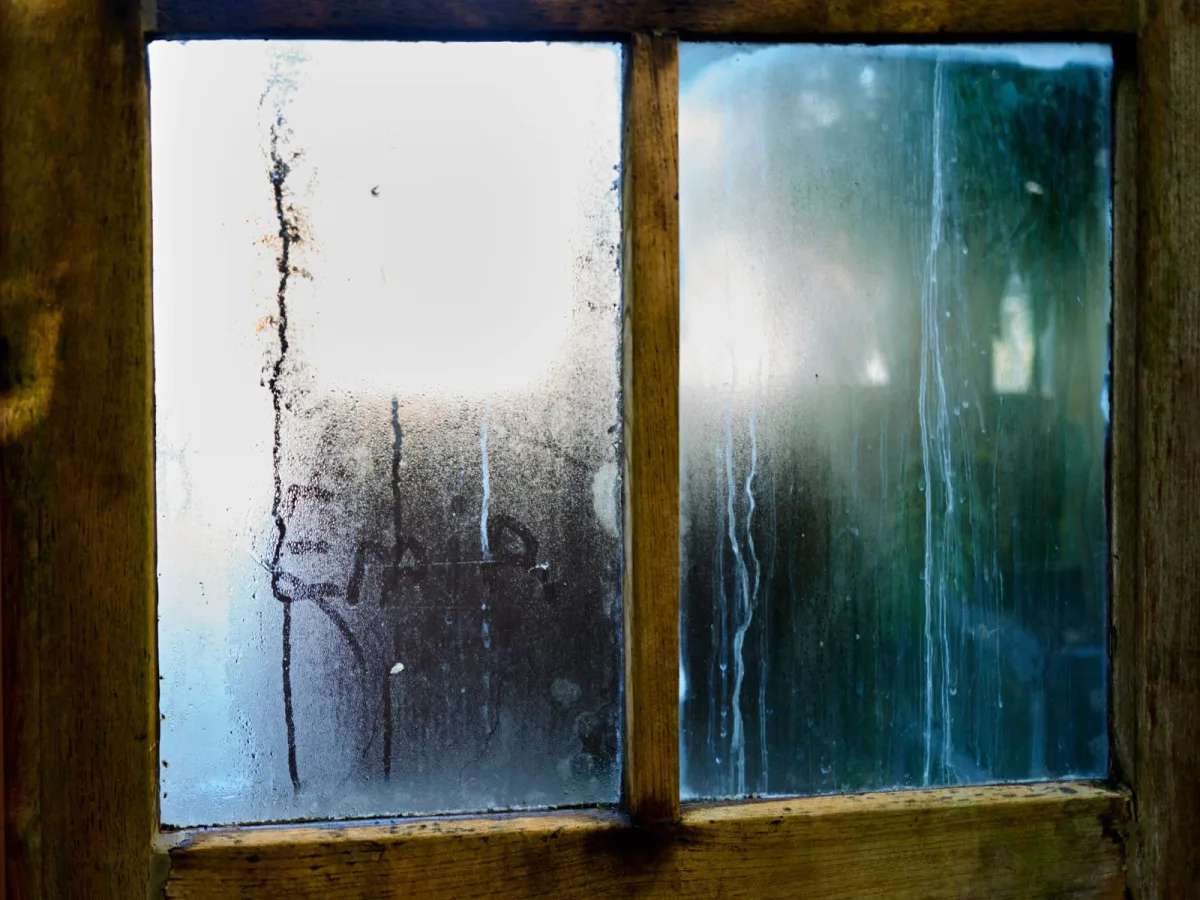
Table of contents
You open the bedroom curtains on the first properly cold morning of the season and the bottom third of every window is wet. Water has pooled on the sill, and the paint on the wooden frame looks a little darker than last year. You wipe it with a towel, and the next morning it is back. Condensation on windows is not a sign your windows are broken. It is your house telling you, very precisely, how much water is in the air.
Learn to read that signal and you can fix the cause in an afternoon, often without buying anything. Ignore it, and the same water that fogs the glass soaks into frames, sills and the drywall below them for months.
Why Condensation on Windows Shows Up in Winter
Warm air holds more water vapour than cold air. When room air brushes against something cold, it cools down, and below a certain temperature it cannot hold all its water. That point is the dew point, and the excess turns to liquid on the cold surface.
In winter, your windows are usually the coldest surface in the house. Walls have insulation behind them. Glass has, at best, a thin gap of air or gas. So the glass reaches the dew point first, and it fogs before anything else does.
The EPA says it plainly in its mold guidance: if a lot of moisture collects on windows and other cold surfaces, your humidity is set too high. That makes the window a free humidity gauge. It is reacting to the same air you are breathing.
The Numbers: When Your Glass Will Fog
National Research Council Canada published a table that remains one of the clearest guides to this. It shows, for a 70°F room, how cold the inside of the glass gets and the maximum indoor humidity before condensation forms. A few rows tell the story.
- 20°F outside, single pane: glass at about 45°F in still air, so it fogs above 41% humidity. Add a 15 mph wind and it fogs above just 24%.
- 0°F outside, single pane: glass at about 35°F, fogging above 27%, or above 12% in wind.
- 0°F outside, double pane: glass at about 50°F, fogging above 49% in still air and above 41% in wind.
- 0°F outside, triple pane: glass at about 56°F, fogging above 61% in still air.
Two lessons jump out. First, wind matters almost as much as temperature, because it strips heat from the outer pane. Second, each extra layer of glass buys you a lot of room. Going from single to double glazing at 0°F nearly doubles the humidity you can carry without fogging.
A Worked Example: The Windy 0°F Night
Say your thermostat sits at 70°F and a hygrometer reads 40% humidity. Using the standard dew point formula, that air reaches its dew point at about 44.6°F. Any surface colder than that will collect water.
Now a cold front brings a 0°F night with a steady wind. From the Canadian table, the centre of a typical double-pane window sits at about 45°F. That is less than half a degree above your dew point. The centre may stay clear, but the edges and bottom of the glass run colder, so that is where water appears first.
Drop the indoor humidity to 30% and the dew point falls to about 37°F. Now you have an 8 degree cushion, and the glass stays clear on the same night. That 10 point drop in humidity is the entire fix. It also lines up with the EPA's advice, which suggests around 25% when it is 0°F outside.
Why the Water Collects at the Bottom
If the fog always starts along the lower edge of your windows, you are not imagining it. The Canadian research explains why the bottom of the glass runs colder than the centre.
- Convection in the gap: air between double panes circulates, cooling as it falls, so the bottom of the gap sits several degrees colder.
- Edge spacers: the metal or composite strip holding the panes apart conducts heat outward, chilling the glass edges.
- Blocked airflow: deep sills, blinds and heavy curtains stop warm room air from washing over the glass.
The same research notes that a heat source under a window can partly offset the cold bottom zone. That is why old houses put radiators under windows. In a modern home, simply opening curtains during the day and keeping furniture away from the glass helps warm air reach it.
Inside, Between, or Outside the Glass?
Where the water sits tells you what kind of problem you have. This is the step most guides skip.
On the inside surface
This is the humidity problem described above. Fix it by reducing moisture or warming the glass. It is the only kind you control directly.
Between the panes
Fog trapped between two sealed panes means the seal has failed and moist air has leaked into the gap. No amount of drying the room will fix it. The glass unit itself needs replacing, so check whether your window warranty covers seal failure before paying for it.
On the outside surface
Dew on the outside of the glass on a cool, clear morning is usually good news. It means the outer pane is cold because the window is keeping your heat inside. It clears as the sun warms the glass.
How to Stop Window Condensation
You have two levers: put less water in the air, or keep the glass warmer. Start with the free ones.
- Buy or borrow a hygrometer. You cannot manage a number you do not measure. Compare it to the EPA's outdoor temperature guide.
- Turn down the humidifier. The EPA points to a humidistat set too high as a common cause. On very cold nights, switch it off.
- Run the fans. The EPA notes that showers, cooking, houseplants and drying clothes indoors all add moisture. Run bathroom and kitchen fans during and after use.
- Dry laundry outside or in a vented dryer. A rack of wet clothes in a bedroom releases its water straight into the room.
- Open a window briefly. The EPA suggests this for tightly sealed homes. Cold outdoor air carries little water, so a short airing lowers indoor humidity fast.
- Add a storm window or caulk gaps. The EPA says both keep the inner glass warmer and reduce condensation.
Avoid one trap. An unvented gas or kerosene space heater adds water vapour as it burns, and it carries a much bigger risk too. Our guide to why winter outages turn carbon monoxide deadly explains why fuel-burning heaters need proper venting.
What Happens If You Ignore It
A little fog that clears by mid-morning is harmless. The trouble comes from water that sits on frames and sills every day for a whole season. Wood frames swell and rot, paint peels, and the plaster or drywall under the sill stays damp enough for mold to grow.
General extension guidance points the same way as the EPA's table: keep indoor humidity lower in cold weather than in summer, which on cold days means roughly 25 to 35 percent. Lower winter numbers can feel dry at first, but a home that stays below the fogging point protects both the building and anyone with allergies or asthma. If you see black spotting that spreads or returns, treat it as a moisture problem, not just a cleaning job.
Your windows also connect to your heating bill. The same thin glass that fogs is where heat leaves fastest, so warmer glass means a warmer room. Our breakdown of how your fuel type sets your winter heating costs shows where that money goes, and our explainer on why frozen pipes burst covers the other cold-weather water problem worth checking this month.
Related reading: Christmas Tree Care: Why a Dry Tree Burns in Seconds.
Frequently Asked Questions
Is condensation on windows bad?
A little that clears within a few hours is normal on very cold nights. Heavy condensation that pools on sills every day is a sign your indoor humidity is too high, and over time it can rot frames and feed mold.
What humidity should my house be in winter to stop condensation?
It depends on outdoor temperature. The EPA, citing ASHRAE, suggests about 35% at 20°F outside, 30% at 10°F, 25% at 0°F and 15% at minus 20°F. Single-pane windows may need even lower levels.
Why is there condensation between my double-pane windows?
Fog between the panes means the seal around the glass unit has failed and moist air has got in. Lowering room humidity will not fix it. The sealed unit needs to be replaced, so check your window warranty first.
Does a dehumidifier stop window condensation?
It can help in a damp room or basement, because it pulls water out of the air and lowers the dew point. In most homes, cutting moisture at the source with fans and turning down humidifiers works just as well and costs less to run.
Why do my windows sweat in the morning?
Overnight the outdoor temperature hits its low, so the glass is at its coldest. Bedrooms also gain moisture from breathing during the night with the door closed. Both push the glass below the dew point just before you wake up.
Read the Glass, Then Turn the Dial
Every wet window is a reading you got for free. Note how cold it was outside, check your humidity, and compare it with the EPA's guide. In most homes, lowering humidity by 5 to 10 points on the coldest nights is enough to keep the glass clear.
Tonight, before the next cold snap, check your hygrometer and humidifier setting. A two-minute adjustment now can save you a rotted sill and a moldy wall by spring.
Written by
Priya Raman
Health & Living
Covers health, wellness, and everyday living for Quick Trend Insights, with an interest in separating what the research supports from what the marketing claims.
Related Articles
View all
Reheating Rice: Why Leftover Rice Can Make You Sick
Reheating rice is not the danger. The toxin forms while rice cools slowly. Here is the one-hour rule, the UK vs US storage gap and how to keep leftovers safe.

Pomodoro Technique: What the Studies Actually Found
Does the Pomodoro technique work? Two Maastricht studies tested 25 and 24 minute timers against self-chosen breaks. Here is what they found and which to try.

Foods Toxic to Dogs: What Your Holiday Table Hides
Foods toxic to dogs peak at the holidays. See the chocolate dose math by dog weight, why xylitol and grapes are so dangerous, and when to call the vet at once.