
Thanksgiving Leftovers: How Long They Last in the Fridge
Thanksgiving leftovers keep 3 to 4 days in the fridge, per the USDA. Get the day-by-day plan, the 2-hour rule, and how to freeze and reheat them safely.
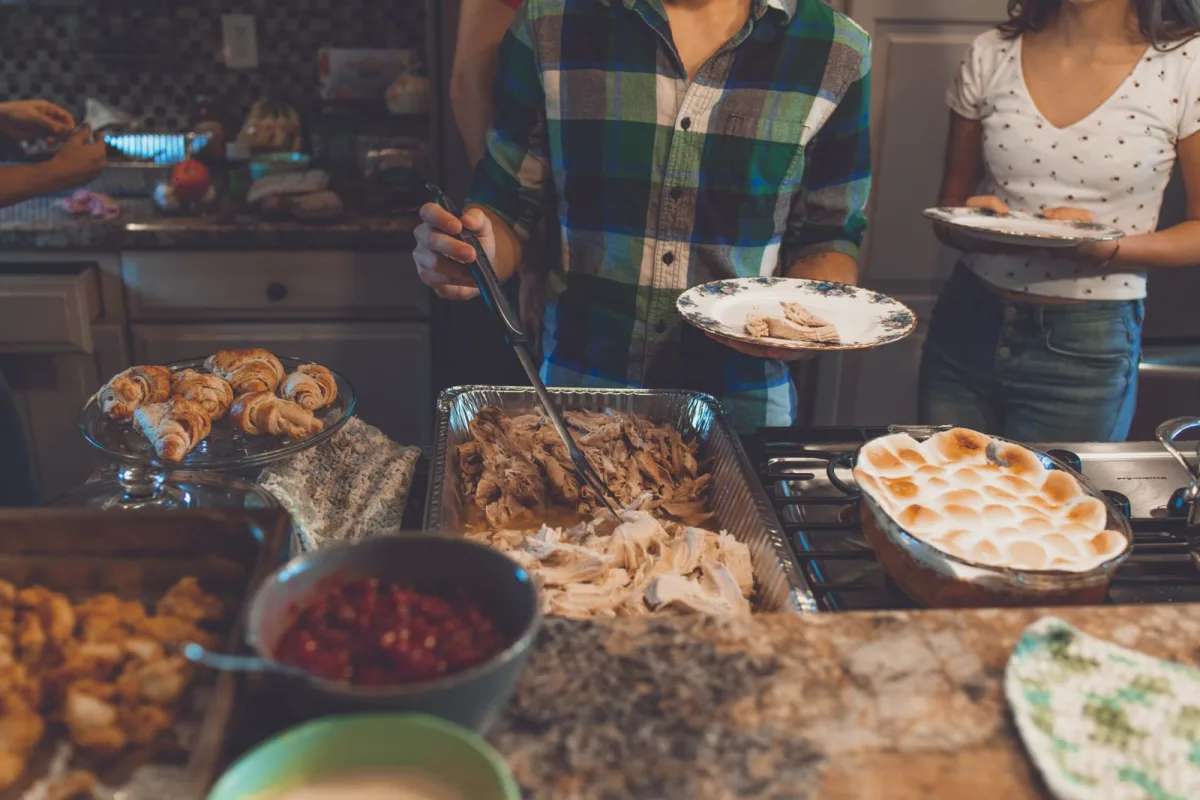
Table of contents
It is Saturday afternoon. You open the fridge and find the turkey platter, half a tray of stuffing and a gravy boat with a skin on top. You cooked all of it on Thursday, so it should be fine. Right?
Probably, for now. But Thanksgiving leftovers have a shorter safe window than most people assume, and the clock started earlier than you think. It started when the food came out of the oven, not when it went into the fridge.
This guide gives you the real numbers from the USDA and the CDC, a day-by-day plan for this week's leftovers, and the freezer moves that let you keep eating turkey into December without gambling on your stomach.
How Long Do Thanksgiving Leftovers Last in the Fridge?
The USDA's answer is 3 to 4 days for cooked leftovers kept at 40°F or below. NBC New York, reporting on the guidance in November, listed the same window for turkey, stuffing, mashed potatoes, green bean casserole, mac and cheese, cooked vegetables and gravy. There is no special extension for the turkey because it is the main event.
Count from the day you cooked, not the day you first opened the container. Thanksgiving falls on Thursday, November 26, so the week looks like this:
- Thursday (day 0): dinner, then everything goes into the fridge.
- Friday and Saturday (days 1 and 2): peak leftover days, best quality.
- Sunday (day 3): still inside the window. Freeze anything you will not finish tomorrow.
- Monday, November 30 (day 4): last call.
- Tuesday: anything still in the fridge goes in the bin.
Your fridge has to hold up its end too. The CDC sets the target at 40°F or colder, and a fridge that is packed full and opened all weekend can run warmer than its dial suggests. A cheap fridge thermometer tells you whether the 4-day rule even applies to your kitchen.
Why the Two-Hour Rule Is Harder on Thanksgiving
The CDC's rule is short: refrigerate perishable food within 2 hours, or within 1 hour if it is above 90°F. Between 40°F and 140°F, which the CDC calls the danger zone, bacteria multiply fast. Thanksgiving is the one meal built to break that rule, because people graze for hours.
Here is how a normal afternoon adds up.
- 1:30 p.m. The turkey comes out of the oven to rest.
- 2:15 p.m. Carving is done and dinner starts.
- 3:30 p.m. Plates are cleared, but the platter stays out for seconds.
- 4:30 p.m. Pie, coffee and the second half of the game.
By 4:30, the turkey has spent 3 hours below serving heat. That is an hour past the limit, and none of it felt careless. The fix is to set a phone timer for 2 hours when the turkey comes out of the oven, then pack the platter away when it goes off. People who want seconds can take a plate first.
The 1-hour rule matters for the drive home. A container of leftovers sitting in a warm car, or next to a heater on a long trip, burns through its margin quickly. Pack a cooler bag if the ride is longer than a short hop.
The Holiday Bacteria That Thrives in a Cooling Turkey
Most people blame food poisoning on undercooked meat. Thanksgiving has a different villain. The CDC estimates that Clostridium perfringens causes nearly 900,000 foodborne illnesses in the US each year, and it says most outbreaks happen in November and December.
The CDC links many of those outbreaks to holiday foods such as turkey and roast beef. The pattern is food cooked in large batches and then held between 40°F and 140°F. These bacteria form protective spores, so cooking does not always finish them off. If a big mass of food cools slowly, the survivors have hours to grow.
A whole carcass is the worst case. It cools from the outside in, and the meat near the bone can stay warm long after the skin feels cool. So the safest moves are mechanical:
- Carve the meat off the bone before you refrigerate it, rather than putting the whole bird in the fridge.
- Split big batches into small, shallow containers so the middle cools as fast as the edges.
- Store stuffing separately from the turkey, especially if it was cooked inside the bird.
- Put warm food straight into the fridge. Waiting for it to reach room temperature on the counter only adds time in the danger zone.
If you missed the earlier part of the process, our guide to how many days a frozen turkey needs to thaw covers the other end of the bird's food-safety timeline.
A Day-by-Day Plan for Your Thanksgiving Leftovers
The 4-day limit is easy to beat if you decide on Thursday night instead of Monday morning. The trick is to match the amount you keep in the fridge to the meals you will actually eat.
Try this quick math. Say you pack away 12 servings of turkey and there are 3 people at home eating one serving each at lunch. That is 3 servings a day. Friday, Saturday and Sunday use 9 servings, and Monday finishes the job with 12. That works.
Now suppose relatives leave Friday morning and it is just 2 of you eating turkey once a day. Four days at 2 servings is 8 servings. The other 4 servings should go in the freezer on Thursday night, while they are freshest, not on Monday as a rescue.
- Thursday night: portion everything into meal-sized containers and write the date on each lid.
- Friday: eat the dishes you like least fresh, such as gravy and mashed potatoes, while they are at their best.
- Saturday: look at what is left and freeze anything you will not finish by Monday.
- Sunday and Monday: finish the fridge portions.
- Tuesday: clear out anything you missed, without tasting it first.
That last step matters because your nose is not a safety test. The bacteria that cause illness usually do not change how food smells or looks. Food that has crossed the line can seem perfectly fine.
Freezing Thanksgiving Leftovers So They Last Into December
The freezer is where you buy time. Food held at 0°F stays safe indefinitely, because bacteria cannot grow at that temperature. What fades is quality. CBS News, citing USDA guidance, says frozen leftovers stay at their best for up to six months.
Three habits make frozen leftovers taste like food rather than freezer burn:
- Freeze flat. Lay sliced turkey or stuffing in zip bags, press out the air and freeze them flat. They stack well and thaw faster.
- Add liquid to turkey. A splash of broth or gravy in the bag keeps sliced meat from drying out.
- Label with the dish and the date. A mystery bag in February usually gets thrown out.
Throwing out a whole tray of food hurts more than it used to, since grocery bills have been rising faster than the inflation rate. A freezer plan turns that leftover tray into three or four easy dinners.
To thaw, use the fridge, a cold water bath or the microwave. USDA guidance, as reported by NBC New York, says never to thaw leftovers on the counter. Food thawed in cold water or the microwave should be heated and eaten right away.
How to Reheat Leftovers Safely
Warm is not the same as safe. The CDC says to reheat leftovers and casseroles to 165°F, checked with a food thermometer rather than a fingertip. Gravy, soups and sauces should be brought to a boil, according to the USDA's reheating guidance.
Microwaves heat unevenly, which is why a casserole can be scalding at the edge and cold in the middle. Cover the dish, stir halfway through and check the temperature in more than one spot. The CDC also notes that microwave wattage changes timing: use the minimum recommended time at 800 watts or more, and the maximum at 300 to 500 watts.
Reheat only what you will eat at that meal. Every round trip from fridge to plate and back adds time in the danger zone, so warm a portion rather than the whole container.
When a Stomach Bug Is Really Food Poisoning
Food poisoning is common. The CDC estimates that 48 million people in the US get sick from foodborne illness each year, with 128,000 hospitalized and 3,000 deaths. The CDC lists diarrhea and stomach cramps as the main symptoms of C. perfringens illness.
Holiday weeks muddy the picture, because a virus can sweep through a family gathering at the same time. Our explainer on how long norovirus stays contagious covers the other usual suspect. If symptoms are severe, last more than a couple of days or affect someone who is pregnant, older or has a weakened immune system, check with a clinician rather than waiting it out.
Frequently Asked Questions
Is turkey still good after 5 days in the fridge?
No. The USDA's limit for cooked leftovers is 3 to 4 days at 40°F or below. By day 5, throw the turkey out, even if it smells and looks normal, because the bacteria that cause illness usually do not change either.
Can you freeze Thanksgiving leftovers after 3 days?
Yes, as long as they are still inside the 3 to 4 day fridge window and were refrigerated promptly. Freezing pauses the clock but does not reset it, so food frozen on day 3 should be eaten soon after it thaws. Freezing on day 1 or 2 gives better quality.
How long can Thanksgiving food sit out?
Two hours from the time it comes out of the oven, according to the CDC. If the food is somewhere above 90°F, such as a hot car or a sunny patio, the limit drops to one hour.
Can you eat leftover stuffing that was cooked inside the turkey?
You can, if the stuffing reached 165°F when it was cooked and you scoop it out of the bird before refrigerating. Store it in its own shallow container, then reheat it to 165°F and eat it within the same 3 to 4 days.
The Short Version for This Week
Pack the food away within 2 hours, carve the bird off the bone, and use shallow containers so everything cools fast. Eat fridge leftovers by Monday, November 30, and freeze the rest early rather than late.
Do that and the meal you spent a day cooking turns into a week of easy lunches and a few December dinners. The only thing left to argue about is who gets the last slice of pie.
Written by
Priya Raman
Health & Living
Covers health, wellness, and everyday living for Quick Trend Insights, with an interest in separating what the research supports from what the marketing claims.
Related Articles
View all
Christmas Lights Electricity Cost: LED vs Old Strings
Christmas lights electricity cost at the latest US rate: why old C9 strings cost $34 a season, which to swap for LED first, and how a timer cuts the bill.
Turkey Thawing Time: How Many Days Your Bird Needs
Turkey thawing time by weight: how many days a frozen bird needs in the fridge, the cold water method, and how to cook a turkey from frozen if you started late.

Christmas Tree Care: Why a Dry Tree Burns in Seconds
Christmas tree care that prevents fires: how big a stand you need, why a fresh cut matters, what NIST tests show about dry trees, and when to take it down.